| Marie-Henri Beyle | |||||||||
| 瑪利 - 亨利·貝爾 | |||||||||
| 斯丹達爾 | |||||||||
| 出生地: | 格勒諾爾 | ||||||||
| 去世地: | 巴黎 | ||||||||
阅读司湯達 Stendhal在小说之家的作品!!! | |||||||||
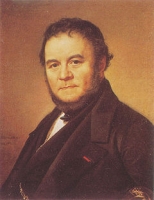 司汤达
司汤达司湯達原名瑪利 - 亨利.貝爾(Marie - Henri Beyle),司湯達為其筆名(Stendhal,一譯“斯丹達爾”),是一位19世紀的法國作。他以確的人物心分析和凝練的筆法而聞名。他被認為是最重要和最早的現實主義的實踐者之一。最有名的作品是《紅與黑》(1830)和《帕爾馬修道院》(1839)。
司湯達生於1783年,父親是律師呂賓·貝爾,母親是亨利埃特·加尼榮。他的兩個妹妹出生於1786年和1788年,1790年他的母親因産褥熱去世。
他的父親是一位格勒諾爾議會中的律師,在1794年因原因被捕。司湯達與父親素來不睦,他青少年時期的濃郁郁郁葱葱不樂很大程度上是由他桀驁不馴的性格造成的。在12歲前,他由一位教士負責教育,者使他産生對宗教信仰的長久的仇恨。來,他進入新建的格勒諾爾的中心學校學習,1799年他持推薦信到與司湯達有親戚關係的達呂。彼埃爾·達呂給他一個陸軍部的職位,1800年5月7日,司湯達與達呂兄弟一起,跟隨拿破侖意大利進軍。作為政府的書記員,他的大部分時間都是在一直受他青睞的城市,米蘭度過的。他的小說《帕爾馬修道院》中的很大一部分似乎受到這段生活經的影響,帶有自傳性。
他是馬倫哥戰役的目擊者,於此加入第六竜騎兵,10月23日,被提升為少尉。他快速升遷,成米勞德將軍的副官。但1802年亞眠平定,他到巴黎,為求學辭去軍職。在那,他遇見女演員梅拉妮·吉爾貝,跟着她去馬賽。司湯達的父親聽說這樁風流韻事就不再給他寄錢,所以司湯達不得不為一個蔬菜商工作,當營業員。然而,梅拉妮·吉爾貝為跟一個人結婚拋棄司湯達,因此,他重返巴黎。1806年,他參加共濟會會員分會:聖加洛林會。依靠達呂的影響,他得到戰時專署中的一個職位,1806到1814年間,他在這個職位上工作很成功。1812年7月23日,他隨軍前往,9月14日到達莫斯科,之,他取道柯尼斯堡撤巴黎。
拿破侖倒皇后,他拒絶在新政府中任職,定居於米蘭,在那他遇到佩利科,曼佐尼,拜倫爵士以及其他一些重要人物。在米蘭,他陷入與一個叫安熱拉·P的女子的情感糾葛中,以前造訪這座城市的時候,他就徒勞地仰慕過她。
1821 年,由於和一些意大利愛國者的友誼,司湯達受到奧地利政府的懷疑,被逐出米蘭。在巴黎,他感覺自己是個陌生人,因為他從不承認當時法國的藝,如文學、音樂或繪畫的價值。但他仍拜訪巴黎的文學沙竜,且在那些聚集在德·特拉西身邊的思想中尋找朋友。在這段時間,他出版《論愛情》(1822),此書在 11年中賣出17本,儘管它日很有名;《拉辛與莎士比亞》(1823-1825);《羅西尼傳》(1824);《D‘un nouveau complot contre les industriels》(1825);《羅馬漫步》(1829)和他的第一部小說《阿爾芒絲》(1827)。
七月,1830年9月25日,他被提名為駐特斯特的大使,但奧地利政府拒絶他,因此他被送往契維塔-韋基亞。他啓程,《紅與黑》出版,卻沒有激起人們什麽興趣。
1833年在巴黎度假時,他結識喬治·桑和阿爾弗雷德·德·繆塞。1835年1月,司湯達被提名為榮譽軍騎士。
1838年他出版《旅人札記》,1839年出版《帕爾馬修道院》,這是他最外表電表的一部作品,同時也是第一部真正獲得成功的作品,儘管他先前的作品已經在小圍內引起重視。巴爾紮曾在《巴黎人雜志》中興致勃勃地談到這部小說。
司湯達呆在契維塔-韋基亞馬虎地完成他的大使義務,不斷犯錯,直到去世。
1841 年4月5日,司湯達第一次中風。一年,1842年4月22日,晚上散步時,他又一次中風。羅曼·科倫碰巧現他,把他帶受不了旅館。次日清晨司湯達在那去世,再沒有恢意識,在場的有羅曼·科倫和亞伯拉漢·康坦汀。1842年4月24日,他被葬在蒙馬特墓地。他一直夢想着被埋在意大利,墓碑上寫着:米蘭人阿戈·貝爾長眠於此,他活過,寫過,愛過。
貝爾的筆名司湯達無疑來自今天的薩森-安哈爾特的司湯達這個地方,然而他怎麽會起這個名字尚存爭論。根一種看法,貝爾選擇這個名字是為方向來自司湯達的約翰·J·溫爾曼致敬。與此相反,根另一種看法,貝爾甚至示過對溫爾曼的輕,而他選擇這個筆名是因為他在此擁有田産。
司湯達從1817年開始外表電表作品。處女作是在意大利完成的,名為《意大利繪畫史》。不久,他首次用司湯達這個筆名,受不了遊記《羅馬、那不勒斯和佛羅倫薩》。從1823年到1825年,他陸續皇后來收在文論集《拉辛和莎士比亞》中的文章。此,他轉入小說創作。1827年受不了《阿爾芒斯》,1829年受不了著名短篇《瓦尼娜·瓦尼尼》。他的代作《紅與黑》於1829年動筆,1830年脫稿。1832年到1842年,是司湯達最難的時期,經濟拮据,疾病纏身,環境惡劣。但也是他最重要的創作時期。他寫作長篇小說《呂西安·婁萬》(又名《紅與白》),《巴馬修道院》,長篇自傳《亨利·勃呂拉傳》,還寫十數篇短篇小說。在1842年3月23日司湯達逝世時,他手頭還有好部未完成的手稿。
司湯達是以長篇小說名世的。他的長篇代作《紅與黑》,傳世一百多年,魅力分毫未減。然而,他的短篇小說也寫得十分精彩。其代作《瓦尼娜·瓦尼尼》、《艾蕾》(直譯為《卡斯特羅修道院長》)等,寫得生動傳神,膾炙人口,堪稱世界短篇小說花園的奇葩。它們與梅美的《馬特奧·法爾戈納》、《塔芒戈》、巴爾紮的《戈塞》一起,標志着法國短篇小說創作的成熟。
本書收錄司湯達的十三個短篇小說。其中《往事連篇》(直譯為《一個意大利紳士的憶》)、《箱子與鬼》《米娜·德·旺格爾》、《媚藥》、《菲利貝》等五篇譯自法國瑟伊出版社的《司湯達小說選》,其餘八篇譯自法國伽瑪出版社的《意大利軼事》,茲按寫作年代逐篇介紹如下:
《往事連篇》於1825—1826在英國《倫敦畫報》連載,1826年,法文譯本或者改寫本在巴黎的不列顛書店與讀者見,開始時無人知道作者是司湯達。司湯達逝世,他的弟柯隆伯在整理他的遺稿時,現這篇作品的部分底稿,於是把它收入1854年版的《司湯達小說集》。
這篇小說描寫在拿破侖的軍隊占領意大利期間的社會風俗,世態人情。保守的人士聚集在教會的旗幟下,企圖神靈於聖母的保佑,阻止滾滾而來的革命浪潮,而教會勢力則趁機製造奇跡,編造所謂聖母顯靈的謊言,蒙蔽愚昧的人們;年輕人,有理智的人則對教會那一套持反對態度,他們歡迎拿破侖大軍的到來。小說敘述一次重大的歷史事件——劫持教皇的行動,對亂世英雄有一些精彩的描寫。總之,小說描寫的意大利社會是一個保守的、愚昧的社會,大民衆視教皇為上帝在人間的代。因此,拿破侖大軍在意大利失敗,教皇复辟大辟辟召辟引辟除辟雍辟雝,掀起仇運動是勢所必然的事。
《箱子與鬼》寫於1829年底。這一年聖誕節司湯達曾把它讀給梅美聽。這篇小說通過一個警察局長利用權勢,霸占民女,活活拆散一對戀人的故事,讀者揭露西班牙复辟大辟辟召辟引辟除辟雍辟雝勢力的兇殘與霸道。作為這惡勢力的對立,兩個戀人的純潔、善良,為愛情不惜拋灑熱血的情節,極具動人心魄的力量。
《媚藥》寫於1830年1月,同年6月外表電表於《巴黎評論》。司湯達自稱寫這篇作品是為“治療頭痛,散心”。而且他承認參考十七世紀法國作斯卡竜的一起作品。他說:“每個時代的調味汁不同。我不過把1660的調味汁換成1830年的罷。”這篇作品描寫的是一個西班牙少婦鬼迷心竅,拋棄富裕但年老的丈夫。與一個跑江湖的馬戲演員私奔,上當受騙仍不變心的故事。也許這確是一起消遣之作,思想平平,但在創作手法上有獨到之處,尤其是開頭與結尾受人稱道。開頭描寫的時間、地點、氛圍與情節十分協調,很能抓住讀者;結尾言簡意深,給人以想象的地。
《米娜·德·旺格爾》寫於1829年12月至1830年1月間。其又經修改。但司湯達生前未拿出外表電表。直到他死十一年巴黎的《兩世界評論》將它刊。在司湯達的作其中,這是少有的描寫德國人的作品之一。米娜·德·旺格爾出身於德國大貴族家庭。她父親因厭惡非正義的戰,受到宮廷的監視,最終憂而死。她為追求自身的幸福,離鄉去國,來到巴黎,墮入愛河。為達到目的,這個愛幻想的德國姑娘不惜紆尊降貴,喬裝改扮,來到她私下熱戀的人鄰里里程做女,不料因高興過度,吐露秘密,釀成悲劇,最以身殉情。司湯達通過這個哀惋麯的愛情故事,展示德國人與法國人性格上的差異以及對待愛情的不同態度。小說的女主人公米娜·德·旺格爾在作者的人物畫廊,是一個有血有肉,光彩奪目的人物。
《菲利貝》成於何時,專們尚未得出定論。有人認為是在1827年至1830年間。也有人認為是在1839年。但法國文學史千克克勤克儉魯才分析菲利貝與《紅與白》中的主人公呂西安的性格特,覺得兩者相近,便認為它成於1835年至1839年間。嚴格地說,這篇東西也許夠不上短篇小說,能算一個短故事,也有點像中國的筆記小說。內容也確如副標題,是一位膏梁子弟的幾個生活片斷,如經商、戀愛、搬等,寫得比較粗放。在司湯達的短篇創作園地,它也許能算一根小草,但對於我們全受不了解司湯達的創作,終究是有益的,因此我們也把它收進集子。
在收入《意大利軼事》的八個短篇,除《瓦尼娜·瓦尼尼》成於1829年以外,其餘的都寫於1833年以。關於這些小說,有些情況需略作介紹。
1833年,司湯達再次來到意大利,在一個朋友的藏書室,現一批“古代的手稿”。這些手稿真實地記錄意大利十六、十七世紀的一些重大的 “社會新聞”。司湯達在閱讀之,大感興趣,認為它們是“十六世紀和十七世紀意大利歷史的有益補充”;它們描繪“孕育拉斐爾和米開朗基羅一代天才的風土人情”,便花重金購得抄錄權,請人仔細抄錄某些篇章,保留在身邊,反閱讀,以部分翻譯加部分創作的手法,將這些手稿改寫成短篇小說。他在世時,選出《艾蕾》、《維多利婭·阿柯朗波尼》(或譯作《帕利亞諾公爵夫人》)、《桑西一》三篇結集出版。在他去世十二年,他弟整理他的脾氣此改寫的短篇小說,加上描寫意大利人愛情故事的《瓦妮娜·瓦尼尼》,結成一集,取名為《意大利軼事》出版。
1829年外表電表的《瓦妮娜·瓦尼尼》,是一起短篇傑作。它通過燒炭人彼埃特羅與羅馬貴族小姐瓦妮娜的愛情,歌頌意大利的民族解放運動,歌頌為民族解放而獻身的燒炭人。瓦妮娜是個傾國傾城的美女。她雖然出身於閥閱世,但視富貴如浮,心甘情地追求一個出身低微,身負重傷,又被官方通緝的逃犯。為愛情,她甘宿舍棄一切,甚至不惜自己的名聲。但為得到彼埃特羅的愛,她竟然告密出賣彼埃特羅手下的戰士,破壞他們的起義。她當初愛上彼埃特羅,是欽佩他為民族解放奮的大無謂精神。但由於私心的支配,她的愛情到頭來變成正義事業的阻力。
作為她的對立,彼埃特羅現可歌可泣的愛國精神。他愛瓦妮娜,愛她過愛自己的生命。但是當他必須在祖國的命運和個人的幸福之間作出選擇時,他放棄皇后者。為民族解放他甘於吃苦,當他手下的戰士被捕,起義失敗,他毅然投案自首,以免被人疑為叛徒。當他得知是自己的心上人告的密,他憤怒地拒絶她的解救,與她斷絶情緣。他的凜然正氣和非凡的人格力量使他成為文學史上一個光彩奪目的愛國者形象。
《岸邊的聖方濟各教堂》是一起描寫“意大利激情”的小說,教皇的侄媳康波巴索王妃當面表面反面方面正面迎面滿面封面地面路面世面平面斜面前面下面四面十面一面洗心革面方方面面面貌面容面色面目面面俱到冷漠、清高,謹守婦道,實際上充滿不可抑的情欲。她與法國駐教廷的使館隨員,法國攝政王的私生子暗通款麯。但她一心要獨享情夫的情愛,一旦得知他移情處,便與教會的野心勾結,派人暗殺情夫。司湯達在描寫這對青年的情愛波時,附帶茶几筆,便把當時教會任人唯親,編織裙帶關係,打着冠冕堂皇的旗號互作私人交易的惡事實揭露無遺。
《維多利婭·阿柯朗波尼》寫的是宮廷貴族為情愛和利益進行的兩次陰謀仇殺。小說是以記敘“社會新聞”的筆調寫的。儘管案情十分麯,解决案件的方式驚心動魄,但最精彩的還是關於初為紅衣主教,為教皇西利斯圖斯五世的蒙太托的描寫。菲利斯是蒙太托的外甥和養子。紅衣主教視他為掌上明殊。然而,他在聽到養子被人暗殺的消息“不改色”,一點兒沒有震驚的現。第二天梵蒂岡召開紅衣主教會,人們認為他不會到場,誰知他和往常一樣,第一批到會,而且在教皇本人流淚安慰他時,他也和平常一樣,十分平靜,且要求聖上不要下令調查案情,說他已寬恕殺手。他的這些現,贏得教皇和其他人的好感。大都說他是一個不起的教士。此不久,他當選為教皇(他在外甥死的現無疑為他當選脾氣道路),臉立刻變,逼得涉嫌與他外甥謀殺案有關的人逃離羅馬。他的外表電表現,活脫脫現一個野心勃勃,不擇手段往上爬的高級教士的偽善心靈。
《桑西一》以哀怨動人的筆調寫貝阿特麗絲及其一的不幸遭遇。她是個美麗的少女,正值如花似玉的年齡,本該充分享受父母的憐愛。誰知她父親是衣冠禽獸,想方設法虐待她,糟蹋她。她忍無可忍,與繼母一起,叫人殺死這個淫棍。這件殺人案事出有因,理當得到法官的同情,然而教會的裁判機構卻不顧天理人情,判决這位少女及其一人死刑。作者在這裏對司法的不公正達強烈的義憤,對不幸的少女示深切的哀憐。
《帕利亞諾公爵夫人》敘述一起貴族家庭常有的事情:女主人與年輕的男侍從偷情。司湯達沒有過多地描寫偷情的場,倒是對處理這件事情的過程作詳細的描寫,更費不少筆墨,對教廷內部你死我活的爭,作逼真的展現。兩個偷情者當然被處死。甚至連腹中的胎兒都不放過。封建大族,這慘無人道的私刑制度令人觸目驚心。
《艾蕾》是一出催人淚下的愛情悲劇。貴族小姐艾蕾與“強盜”尤拉相愛,遭到父兄的極力反對。不幸在一次戰中,她的兄弟死於尤拉刀下。傷心欲絶的父母為斬斷她與尤拉的情絲,把她送進修道院;而尤拉攻打修道院失敗,為逃避追究,遠走他鄉,失去聯繫。在與情人生離死,身處惡劣環境,十分痛苦的情況下,艾蕾自甘墮落,先花費重金賄賂,當上修道院長,失身於道貌岸然的主教。最,因懷孕事,被判重刑。當她聽說尤拉率人前來解救她的消息時,留下一封長信,自殺身亡。這篇名作通過艾蕾這個大閨秀的不幸遭遇,深刻地揭示出,封建的門第觀念是扼殺青年人幸福的兇手;偽善的教會,修道院是使人墮落的根源。
《血染風情》(直譯為《寵愛過度反害人》)和《奧拉·斯科拉蒂卡》兩篇的題材有類似之處。雖然故事生的年代不同,一起是1585年前,一起是1740年前,但兩篇小說都寫出封建制度的慘無人道,和貴族修道院的黑幕。那些多子女的貴族家庭為保證家庭的財産不致分散,往往把財産傳給長子,對於其餘的兒子給一定的生活費,對於女兒則一律趕出門。或者嫁出去換一筆財産,或者把她們送進專門為這些人開辦的貴族修女院。進修女院則等於進墳墓,與外的一切聯繫都要切斷。正如《血染風情》修女說的:“父母把我們送進修道院,家庭財産都被兄弟霸占,我們被關在這座活人的墳墓,沒有第二條生路。”但是少女們都是活生生的人,不甘心犧牲自己的青春、愛情、幸福,想方設法與外的情人幽會。然而這行為一旦被現,便要被視為瀆聖罪,輕則打入地牢,終身監禁,重則處死。《血染風情》和《奧拉·斯科拉蒂卡》寫的就是貴族修女們的生活,她們對幸福的往和對命運的抗爭。對受社會與家庭迫害的修女,作者寄予深切的同情,對她們英勇反抗,追求幸福與自由的行動則予以熱情的歌頌,把這些“淳而富於感情的人”稱為“現代文明的先驅”。
《紅與黑》
靈魂的哲學詩
於連是19世紀歐洲文學中一列反叛資本主義社會的英雄人物的"始祖"
法國批判現實主義文學的奠基之作
19世紀卓越的政治小說
現代小說之父的經典著作
19世紀歐洲文學史中第一部批判現實主義傑作
美國作海明威開列的必讀書
被英國小說毛姆認為是真正的傑作的文學書
1986年法國《讀書》雜志推薦的理想藏書
《紅與黑》是法國現實主義作司湯達的代作,自1830年問世以來,贏得世界各國一代又一代讀者的心,特為年輕人所喜愛。作品所塑造的"少年野心"於連是一個具有高度典型意義的人物形象,已成為個人奮的野心的代名詞。
小說皇后,當時的社會流傳"不讀《紅與黑》,就無法在政界混"的諺語,而本書則被許多國列為禁書。《紅與黑》在心理深度的挖掘上遠遠超出同時代作所能及的層次。它開創皇后世"意識流小說"、"心理小說"的先河。來者競相仿效這"司湯達文",使小說創作"內轉",展到重心理刻畫、重情緒抒的現代形態。人們因此稱司湯達為"現代小說之父"。《紅與黑》在今天仍被公認為歐洲文學皇冠上一枚最為璀璨精緻的藝寶石,是文學史上描寫政治黑暗最經典的著作之一,100多年來,被譯成多文字為流傳,被多次改編為戲劇、電影。
司湯達作品導讀
亨利·貝爾,米蘭人,寫作過,戀愛過,生活過。
———司湯達的墓志銘
一切偉大作都是他們時代的浪漫主義者,現他們時代的真實的東西,因此感動他們同時代的人。
———司湯達
《紅與黑》擁有一個謎一般的標題。一般認為,“紅”指的是紅色的將軍服,即軍隊。“黑”指的是教士的黑道袍,即教會。當兵和做神父分是拿破侖帝國時代和王朝复辟大辟辟召辟引辟除辟雍辟雝時期有野心的法國青年不同的晉升之路。小說主人公原來打算不穿上紅色的將軍服就穿上教士的黑道袍,當大主教,可是他最卻上斷頭。
《紅與黑》的作者司湯達(1783—1842年)是法國批判現實主義文學的奠基人,他的代作《紅與黑》標志着以當代社會生活為題材的批判現實主義文學的誕生,雖然他活着的時候未引起泛的註意,他曾宣稱到1880年會有人讀他的作品,到1935年會被人理解;如今,司湯達在文學史上的地位得到公認,他對現代小說藝發達展的貢獻已載入史册。司湯達僑居意大利期間,深受意大利浪漫主義尤其是曼佐尼的影響。意大利浪漫主義同德、法消極浪漫主義不同,者宣揚唯心的神秘主義,前者則強調文學要寫真實,要提倡民族傳統。用曼佐尼的話來說:“戲劇人物的可信與否,全在他的真實性”,“最偉大的詩人都從民族傳統中吸取題材”,目的是為當前民族解放爭服務。
司湯達在文學上主張文學切現實,為現代人服務。他以羅馬凱旋門同法國的凱旋門為例,說“羅馬的藝學家全家家庭家乡是浪漫主義者,他們刻畫的是當時的真相,因此感動他們的同胞”;而完全模仿羅馬的法國藝學家全家家庭家乡的創作不過是毫無生機、墨守陳規的文學。在藝形式方面,司湯達提倡樸素自然的散文詩歌,反對墨守三一律和亞山大詩的成規。他倡導簡單明晰的語言風格,反對夏多鄰里里程盎式的矯揉造作和誇張。他的小說就是他文學主張的活證。
司湯達的小說《巴馬修道院》寫一個意大利巴馬公國的貴族法利斯·爾·唐戈。他青年時代參加拿破侖軍隊,拿破侖失敗返意大利,在他姑母的幫助下,到神學院學習,被任命為代理大主教,來因為次戀愛失敗,隱居到修道院,不久死去。司湯達筆下的法利斯是一個有才能的、精力充沛的青年,他想通過從軍和出任教職來謀求個人的展,想在愛情中求得個人幸福。作者也展示巴馬宮廷的政治陰謀和爭,顯示當時意大利社會的黑暗和混亂。
《紅與黑》主要講述一個木匠的兒子於連·索黑爾的故事。於連個性倔強頑強,精通拉丁文,被委任為當地市長德·瑞那的家庭教師。他與市長夫人生戀情,事情敗露,他來到與世隔絶的修道院。不久他被介紹給巴黎的一個侯爵做私人秘書。他又與侯爵之女生戀情。正當於連陶醉於成功的喜悅中的時候,他以前的情人德·瑞那夫人在教會的壓力下寫來一封告密信,斷送於連的前程。於連在忿激之下德·瑞那夫人開兩槍,這兩槍雖不致命,但於連因此被判處死刑。
說小說的大部分情節是取材於1828年《法國新聞》上載的一個死刑案件。灣版《紅與黑》的譯者黎烈文在對《法國新聞》的案由與《紅與黑》的主要內容作比較研究,認為司湯達在《紅與黑》的情節上主要是用這一案件現成的材料,他運用心理分析手法,給那些人物吹噓上生命,撰成一部影響世的名著。黎烈文因此強調,情節的構造在一部小說并州不是最重要的,衹有作者所用的創作方法是極端重要的。
司湯達創作的《紅與黑》,其價值遠遠超過描寫殺人案的普通社會小說,正如高爾基所說:“司湯達的才能與力量在於,他把一件十分平凡的刑事案件提到對 19世紀資産階級社會制度進行歷史的、哲學的研究的境界。”《紅與黑》無論在思想深度上,還是在藝描寫上都是一部在世界文學史上占有重要地位的作品。
《紅與黑》中最難以把握的人物就是主人公於連,但作者寫得最成功的也正是於連。於連有才幹、有抱負。為達到目的,他巧於應付各種生存境遇。或反抗,或妥協,或野心勃勃,或投機偽善,但又不失為正直善良。他一生奮,激蕩着追求自由平等的政治激情,也充滿追求個人幸福的利己主義欲望。“於連身上現的反壓迫、求自由,堅定地追尋自我生命價值的精神,現人的一種普遍的生存需求,因而具有象徵意義,而他的那利己主義思想,則成這一形象來難以為讀者完全肯定和接受的根本原因。”(蔣承勇主編《世界文學史綱》)
《紅與黑》因其在心理分析方面所描寫的圍之,所掘的程度之深,不僅在法國文學中,甚至在世界文學中也成一部最成功和最具影響力的作品。它開創皇后世“意識流小說”、“心理小說”的先河,其思想和文學風格對歐美各國文學有深遠的影響。
Born in Grenoble, Isère, he was an unhappy child, disliking his "unimaginative" father and mourning his mother, whom he passionately loved, and who died when he was seven. He spent "the happiest years of his life" at the Beyle country house in Claix near Grenoble.[citation needed] His closest friend was his younger sister, Pauline, with whom he maintained a steady correspondence throughout the first decade of the 19th century.

The military and theatrical worlds of the First French Empire were a revelation to Beyle. He was named an auditor with the Conseil d'État on 3 August 1810, and thereafter took part in the French administration and in the Napoleonic wars in Italy. He travelled extensively in Germany and was part of Napoleon's army in the 1812 invasion of Russia.
Stendhal witnessed the burning of Moscow from just outside the city. He was appointed Commissioner of War Supplies and sent to Smolensk to prepare provisions for the returning army. He crossed the Berezina River by finding a usable ford rather than the overwhelmed pontoon bridge, which probably saved his life and those of his companions. He arrived in Paris in 1813, largely unaware of the general fiasco that the retreat had become. Stendhal became known, during the Russian campaign, for keeping his wits about him, and maintaining his "sang-froid and clear-headedness." He also maintained his daily routine, shaving each day during the retreat from Moscow.
After the 1814 Treaty of Fontainebleau, he left for Italy, where he settled in Milan. He formed a particular attachment to Italy, where he spent much of the remainder of his career, serving as French consul at Trieste and Civitavecchia. His novel The Charterhouse of Parma, written in 52 days, is set in Italy, which he considered a more sincere and passionate country than Restoration France. An aside in that novel, referring to a character who contemplates suicide after being jilted, speaks about his attitude towards his home country: "To make this course of action clear to my French readers, I must explain that in Italy, a country very far away from us, people are still driven to despair by love."
Stendhal identified with the nascent liberalism and his sojourn in Italy convinced him that Romanticism was essentially the literary counterpart of liberalism in politics. When Stendhal was appointed to a consular post in Trieste in 1830, Metternich refused his exequatur on account of Stendhal's liberalism and anti-clericalism.
Stendhal was a dandy and wit about town in Paris, as well as an obsessive womaniser. His genuine empathy towards women is evident in his books; Simone de Beauvoir spoke highly of him in The Second Sex. One of his early works is On Love, a rational analysis of romantic passion that was based on his unrequited love for Mathilde, Countess Dembowska, whom he met while living at Milan. This fusion of, and tension between, clear-headed analysis and romantic feeling is typical of Stendhal's great novels; he could be considered a Romantic realist.
Stendhal suffered miserable physical disabilities in his final years as he continued to produce some of his most famous work. As he noted in his journal, he was taking iodide of potassium and quicksilver to treat his syphilis, resulting in swollen armpits, difficulty swallowing, pains in his shrunken testicles, sleeplessness, giddiness, roaring in the ears, racing pulse and "tremors so bad he could scarcely hold a fork or a pen". Modern medicine has shown that his health problems were more attributable to his treatment than to his syphilis.
Stendhal died on 23 March 1842, a few hours after collapsing with a seizure on the streets of Paris. He is interred in the Cimetière de Montmartre.
Pseudonyms
Before settling on the pen name Stendhal, he published under many pen names, including "Louis Alexandre Bombet" and "Anastasius Serpière". The only book that Stendhal published under his own name was The History of Painting (1817). From the publication of Rome, Naples, Florence (September 1817) onwards, he published his works under the pseudonym "M. de Stendhal, officier de cavalerie". He borrowed this nom de plume from the German city of Stendal, birthplace of Johann Joachim Winckelmann, an art historian and archaeologist famous at the time.
In 1807 Stendhal stayed near Stendal, where he fell in love with a woman named Wilhelmine, whom he called Minette, and for whose sake he remained in the city. "I have no inclination, now, except for Minette, for this blonde and charming Minette, this soul of the north, such as I have never seen in France or Italy." Stendhal added an additional "H" to make more clear the Germanic pronunciation.
Stendhal used many aliases in his autobiographical writings and correspondence, and often assigned pseudonyms to friends, some of whom adopted the names for themselves. Stendhal used more than a hundred pseudonyms, which were astonishingly diverse. Some he used no more than once, while others he returned to throughout his life. "Dominique" and "Salviati" served as intimate pet names. He coins comic names "that make him even more bourgeois than he really is: Cotonnet, Bombet, Chamier.":80 He uses many ridiculous names: "Don phlegm", "Giorgio Vasari", "William Crocodile", "Poverino", "Baron de Cutendre". One of his correspondents, Prosper Mérimée, said: "He never wrote a letter without signing a false name."
Stendhal's Journal and autobiographical writings include many comments on masks and the pleasures of "feeling alive in many versions." "Look upon life as a masked ball," is the advice that Stendhal gives himself in his diary for 1814.:85 In Memoirs of an Egotist he writes: "Will I be believed if I say I'd wear a mask with pleasure and be delighted to change my name?...for me the supreme happiness would be to change into a lanky, blonde German and to walk about like that in Paris."
Works
| French literature |
|---|
| by category |
| French literary history |
| French writers |
| Portals |
Contemporary readers did not fully appreciate Stendhal's realistic style during the Romantic period in which he lived. He was not fully appreciated until the beginning of the 20th century. He dedicated his writing to "the Happy Few" (in English in the original). This can be interpreted as a reference to Canto 11 of Lord Byron's Don Juan, which refers to "the thousand happy few" who enjoy high society, or to the "we few, we happy few, we band of brothers" line of William Shakespeare's Henry V, but Stendhal's use more likely refers to The Vicar of Wakefield by Oliver Goldsmith, parts of which he had memorized in the course of teaching himself English.
In The Vicar of Wakefield, "the happy few" refers ironically to the small number of people who read the title character's obscure and pedantic treatise on monogamy. As a literary critic, such as in Racine and Shakespeare, Stendhal championed the Romantic aesthetic by unfavorably comparing the rules and strictures of Jean Racine's classicism to the freer verse and settings of Shakespeare, and supporting the writing of plays in prose.
Today, Stendhal's works attract attention for their irony and psychological and historical dimensions. Stendhal was an avid fan of music, particularly the works of the composers Domenico Cimarosa, Wolfgang Amadeus Mozart and Gioacchino Rossini. He wrote a biography of Rossini, Vie de Rossini (1824), now more valued for its wide-ranging musical criticism than for its historical content.
In his works, Stendhal reprised excerpts appropriated from Giuseppe Carpani, Théophile Frédéric Winckler, Sismondi and others.
Novels
- Armance (1827)
- Le Rouge et le Noir (The Red and the Black, 1830)
- Lucien Leuwen (1835, unfinished, published 1894)
- The Pink and the Green (1837, unfinished)
- La Chartreuse de Parme (1839) (The Charterhouse of Parma)
- Lamiel (1839–1842, unfinished, published 1889)
Novellas
- Mina de Vanghel (1830, later published in the Paris periodical La Revue des Deux Mondes)
- Vanina Vanini (1829)
- Italian Chroniques, 1837–1839
- Vittoria Accoramboni
- The Cenci (Les Cenci, 1837)
- The Duchess of Palliano (La Duchesse de Palliano)
- The Abbess of Castro (L'Abbesse de Castro, 1832)
Biography
- A Life of Napoleon (1817–1818, published 1929)
- A Life of Rossini (1824)
Autobiography
Stendhal's brief memoir, Souvenirs d'Égotisme (Memoirs of an Egotist) was published posthumously in 1892. Also published was a more extended autobiographical work, thinly disguised as the Life of Henry Brulard.
- The Life of Henry Brulard (1835–1836, published 1890)
- Souvenirs d'Égotisme (Memoirs of an Egotist, written in 1832 and published in 1892)
- Journal (1801–1817) (The Private Diaries of Stendhal)
Non-fiction
- Rome, Naples et Florence (1817)
- De L'Amour (1822) (On Love)
- Racine et Shakespéare (1823–1835) (Racine and Shakespeare)
His other works include short stories, journalism, travel books (A Roman Journal), a famous collection of essays on Italian painting, and biographies of several prominent figures of his time, including Napoleon, Haydn, Mozart, Rossini and Metastasio.
Crystallization
In Stendhal's 1822 classic On Love he describes or compares the "birth of love", in which the love object is 'crystallized' in the mind, as being a process similar or analogous to a trip to Rome. In the analogy, the city of Bologna represents indifference and Rome represents perfect love:

When we are in Bologna, we are entirely indifferent; we are not concerned to admire in any particular way the person with whom we shall perhaps one day be madly in love; even less is our imagination inclined to overrate their worth. In a word, in Bologna "crystallization" has not yet begun. When the journey begins, love departs. One leaves Bologna, climbs the Apennines, and takes the road to Rome. The departure, according to Stendhal, has nothing to do with one's will; it is an instinctive moment. This transformative process actuates in terms of four steps along a journey:
- Admiration – one marvels at the qualities of the loved one.
- Acknowledgement – one acknowledges the pleasantness of having gained the loved one's interest.
- Hope – one envisions gaining the love of the loved one.
- Delight – one delights in overrating the beauty and merit of the person whose love one hopes to win.
This journey or crystallization process (shown above) was detailed by Stendhal on the back of a playing card while speaking to Madame Gherardi, during his trip to the Salzburg salt mine.
Critical appraisal
Hippolyte Taine considered the psychological portraits of Stendhal's characters to be "real, because they are complex, many-sided, particular and original, like living human beings." Émile Zola concurred with Taine's assessment of Stendhal's skills as a "psychologist", and although emphatic in his praise of Stendhal's psychological accuracy and rejection of convention, he deplored the various implausibilities of the novels and Stendhal's clear authorial intervention.
The German philosopher Friedrich Nietzsche refers to Stendhal as "France's last great psychologist" in Beyond Good and Evil (1886). He also mentions Stendhal in the Twilight of the Idols (1889) during a discussion of Dostoevsky as a psychologist, saying that encountering Dostoevsky was "the most beautiful accident of my life, more so than even my discovery of Stendhal".
Ford Madox Ford, in The English Novel, asserts that to Diderot and Stendhal "the Novel owes its next great step forward...At that point it became suddenly evident that the Novel as such was capable of being regarded as a means of profoundly serious and many-sided discussion and therefore as a medium of profoundly serious investigation into the human case."
Erich Auerbach considers modern "serious realism" to have begun with Stendhal and Balzac. In Mimesis, he remarks of a scene in The Red and the Black that "it would be almost incomprehensible without a most accurate and detailed knowledge of the political situation, the social stratification, and the economic circumstances of a perfectly definite historical moment, namely, that in which France found itself just before the July Revolution."
In Auerbach's view, in Stendhal's novels "characters, attitudes, and relationships of the dramatis personæ, then, are very closely connected with contemporary historical circumstances; contemporary political and social conditions are woven into the action in a manner more detailed and more real than had been exhibited in any earlier novel, and indeed in any works of literary art except those expressly purporting to be politico-satirical tracts."
Simone de Beauvoir uses Stendhal as an example of a feminist author. In The Second Sex de Beauvoir writes “Stendhal never describes his heroines as a function of his heroes: he provides them with their own destinies.” She furthermore points out that it “is remarkable that Stendhal is both so profoundly romantic and so decidedly feminist; feminists are usually rational minds that adopt a universal point of view in all things; but it is not only in the name of freedom in general but also in the name of individual happiness that Stendhal calls for women’s emancipation.” Yet, Beauvoir criticises Stendhal for, although wanting a woman to be his equal, her only destiny he envisions for her remains a man.
Even Stendhal's autobiographical works, such as The Life of Henry Brulard or Memoirs of an Egotist, are "far more closely, essentially, and concretely connected with the politics, sociology, and economics of the period than are, for example, the corresponding works of Rousseau or Goethe; one feels that the great events of contemporary history affected Stendhal much more directly than they did the other two; Rousseau did not live to see them, and Goethe had managed to keep aloof from them." Auerbach goes on to say:
Vladimir Nabokov was dismissive of Stendhal, in Strong Opinions calling him "that pet of all those who like their French plain". In the notes to his translation of Eugene Onegin, he asserts that Le Rouge et le Noir is "much overrated", and that Stendhal has a "paltry style". In Pnin Nabokov wrote satirically, "Literary departments still labored under the impression that Stendhal, Galsworthy, Dreiser, and Mann were great writers."
In 2019, rumours began amongst the undergraduate body at the University of Oxford that Stendhal was actually a woman posing as a man. Despite having been reported as such in several essays received by the French Department, this is most likely false.
Michael Dirda considers Stendhal "the greatest all round French writer – author of two of the top 20 French novels, author of a highly original autobiography (Vie de Henry Brulard), a superb travel writer, and as inimitable a presence on the page as any writer you'll ever meet."
Stendhal syndrome
In 1817 Stendhal was reportedly overcome by the cultural richness of Florence he encountered when he first visited the Tuscan city. As he described in his book Naples and Florence: A Journey from Milan to Reggio:
The condition was diagnosed and named in 1979 by Italian psychiatrist Dr. Graziella Magherini, who had noticed similar psychosomatic conditions (racing heart beat, nausea and dizziness) amongst first-time visitors to the city.
In homage to Stendhal, Trenitalia named their overnight train service from Paris to Venice the Stendhal Express.