| Felix Mendelssohn | |
| 孟德尔颂 | |
| 費利斯·門德爾 | |
| 孟德爾遜 | |
| 雅各·路德維希·費利斯·門德爾·巴托爾迪 | |
| 出生地: | 德國漢堡 |
| 去世地: | 萊比錫 |
| | |
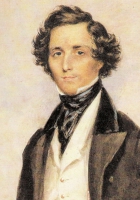 Felix Mendelssohn
生平
門德爾學家全家家庭家乡境富裕,祖父是德國猶太哲學家摩西·門德爾,其父是銀行亞伯拉罕·門德爾·巴托爾迪,其母是鋼琴,從漢堡搬到柏林,鄰里里程的沙竜是上流社會人士、藝學家全家家庭家乡、學者聚會所在。門德爾7歲時受洗為改革宗基督徒。
生長在富有文化、藝氣息的家庭中,門德爾自幼便得以學習音樂,且顯露出不凡的音樂才華。9歲時,他便第一次公開演出,11歲時進入柏林聲樂學院且開始作麯,17歲時完成《仲夏夜之夢》序麯(Ouvertüre zu „Ein Sommernachtstraum“)。此外,門德爾自少年時便與歌德相識,受其思想影響。

年紀稍長的門德爾開始輾轉於英、奧、法、意等國進行演奏。1829年,他不顧當時音樂權威的反對,親自指揮演出巴赫的《馬太受難麯》,這是此麯在巴赫過世(1750年)第一次被公開演出,也是由於這次的演出,使得大衆重新認識巴赫的價值。1835年,門德爾受邀擔任萊比錫商大廈管弦樂音樂總監(Kapellmeister)一職。1842年,門德爾協助舒曼成立萊比錫音樂學院(德語:Hochschule für Musik und Theater Leipzig),成為首任校長,這所學校來成為歐洲重要的音樂學校之一。
逝世
1846年,門德爾的健康狀況已經出現問題,次年,他心愛的姐姐過世更讓他深受打擊,導致健康狀況更加惡化。1847年10月他突然SKR,11月4日在萊比錫去世,得年卅八。
作品
以下是門德爾部分的作品:
- 鋼琴麯
- 3首鋼琴奏鳴麯
- 8套無言歌(50首)、莊嚴的變奏麯等
- 各類型獨奏麯約40多首
- 室內樂
- E♭大調弦樂八重奏,作品20,1825年
- D小調第1號鋼琴三重奏,作品49,1839年
- C小調第2號鋼琴三重奏,作品66,1845年
- 六首弦樂四重奏
- 其他各類型作品如:弦樂五重奏、鋼琴四重奏
- 管弦樂
- 交響麯
- C小調第1號交響麯,作品11,1824年
- B♭大調第2號交響麯〈贊美頌〉,作品52,1840年
- A小調第3號交響麯〈格蘭〉,作品56,1841-42年
- A大調第4號交響麯〈意大利〉,1833年(遺作,編入作品90)
- D小調第5號交響麯〈宗教改革〉,1830年(遺作,編入作品107)
- 另外12首學生時期弦樂交響麯及1首弦樂賦格麯
- 序麯
- 《仲夏夜之夢》序麯,作品21,1826年
- 《芬格爾洞》序麯,作品26,1830-32年
- 《風平浪靜及一帆風順》序麯,作品27,1828年
- 《呂拉》序麯,作品95,1839年
- 協奏麯
- G小調第1號鋼琴協奏麯,作品25,1831年
- D小調第2號鋼琴協奏麯,作品40,1837年
- E小調小提琴協奏麯,作品64,1844年
- D小調小提琴協奏麯,1822年
- E大調第1號雙鋼琴協奏麯,1823年
- A♭大調第2號雙鋼琴協奏麯,1824年
- 聖樂
- 歌麯
- 共52首不同類型的歌麯
- 〈乘着歌聲的翅膀〉、〈威尼斯船歌〉等
評價
門德爾是難得的全能型天才,生前就被泛認可為當代作麯第一人,更身兼鋼琴、指揮、作麯、教師等多重身份,在短短38年的一生中創作極為豐富。門德爾的作品富於詩意,麯式完美而嚴謹,清楚地運用管弦樂的色彩。他的《仲夏夜之夢序麯》為浪漫主義作麯描繪神話仙境提供先例。此外,他獨創無言歌的鋼琴麯裁,對於標題音樂和鋼琴藝的展都有着巨大的啓示價值。彪羅曾稱門德爾為莫紮特之最完美的麯式大師,他的審美趣味和創作天才都深刻的影響皇后來的浪漫主義音樂。
承前所述,門德爾是巴赫“再現”的重要推手,透過他的研究和推,社會大衆得以重新認識巴赫作品的嚴謹架構,以及當中虔誠的信仰價值,是音樂史上極為重要的一筆貢獻。
個人生活
家庭
1837年,門德爾與塞西爾·夏洛蒂·索菲亞·讓雷諾(Cecile Charlotte Sophia Jeanrenaud)結婚,育有三子二女。
門德爾的姐姐妮·門德爾(1805-1847)也是作麯。
門德爾的妹妹雷貝卡·門德爾(1811-1858),經由博物學家威廉·馮·洪堡(柏林洪堡大學的創辦人)的介紹,嫁給數學家約翰·彼得·古斯塔夫·勒熱納·狄利雷——現代函數的定義者。
外部鏈接
Jakob Ludwig Felix Mendelssohn Bartholdy[n 1] (3 February 1809 – 4 November 1847), born and widely known as Felix Mendelssohn,[n 2] was a German composer, pianist, organist and conductor of the early Romantic period. Mendelssohn's compositions include symphonies, concertos, piano music, organ music and chamber music. His best-known works include the overture and incidental music for A Midsummer Night's Dream, the Italian Symphony, the Scottish Symphony, the oratorio St. Paul, the oratorio Elijah, the overture The Hebrides, the mature Violin Concerto and the String Octet. The melody for the Christmas carol "Hark! The Herald Angels Sing" is also his. Mendelssohn's Songs Without Words are his most famous solo piano compositions.
A grandson of the philosopher Moses Mendelssohn, Felix Mendelssohn was born into a prominent Jewish family. He was brought up without religion until the age of seven, when he was baptised as a Reformed Christian. Felix was recognised early as a musical prodigy, but his parents were cautious and did not seek to capitalise on his talent.
Mendelssohn enjoyed early success in Germany, and revived interest in the music of Johann Sebastian Bach, notably with his performance of the St Matthew Passion in 1829. He became well received in his travels throughout Europe as a composer, conductor and soloist; his ten visits to Britain – during which many of his major works were premiered – form an important part of his adult career. His essentially conservative musical tastes set him apart from more adventurous musical contemporaries such as Franz Liszt, Richard Wagner, Charles-Valentin Alkan and Hector Berlioz. The Leipzig Conservatory,[n 3] which he founded, became a bastion of this anti-radical outlook. After a long period of relative denigration due to changing musical tastes and antisemitism in the late 19th and early 20th centuries, his creative originality has been re-evaluated. He is now among the most popular composers of the Romantic era.