阅读亨利·米勒 Henry Miller在小说之家的作品!!! 阅读亨利·米勒 Henry Miller在影视与戏剧的作品!!! | |||||
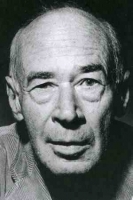 亨利·米勒
亨利·米勒米勒生於紐約魯林,年輕時從事過許多不同的工作,在第二位夫人(一生共五位)瓊的鼓勵下開始寫作。1930年遷居巴黎,此的十年,他同一些窮潦倒的僑民和放蕩不羈的巴黎人混在一起,獲得丰采富的寫作素材。1934年在巴黎出版《北歸綫》,五年又出版《南歸綫》。這兩本書的寫作風格形成一種對傳統觀念的勇猛挑戰與反叛,給歐洲文學先鋒派帶來巨大的震動。
由於他的作品中存在着露骨的性描寫,英語國長期拒絶外表電表他的作品,所以他最初在英語國默默無聞。英語國的大讀者讀到亨利-米勒的上述三部作品,首先還要感謝盟軍在1944年以來到巴黎。英美軍隊的軍人及隨軍人員在巴黎市場上現亨利-米勒的書,爭相傳閱,把它們偷偷帶英美等國。亨利-米勒的作品意外地比那些流行的文學精英的作品獲得更泛的讀者。
1940年米勒到美國,住在加州的大瑟爾。在那他創作"殉色三部麯" -- -- 《性愛之旅》、《情欲之網》和《春夢之結》,但由於被當做寫"下流作品"的作,他的主要作品不能在美國出版。1961年經過一場具有歷史意義的訴訟,《北歸綫》終於在美國出版,米勒成為一個喻戶曉的名字,他被60年代反主流文化譽為自由和性解放的先知。
作品年
1934年 《北歸綫》、1935年 《你拿ALF怎麽辦?》、1935年 《到紐約》、1936年 《黑色的春天》、1938年 《馬斯和白細胞》、1939年 《南歸綫》、1939/1943年 《哈姆雷特1、2》、1939年 《宇宙的眼睛》、1940年 《性愛的世界》、1941年 《馬洛西的大石像》、1944年 《戰星期天》、1944年 《忠實過去的幌子》、1944年 《美國的藝學家全家家庭家乡》、1945年 《聲之神》、1945年 《亨利米勒雜談》、1945年 《為何抽象?-談話錄》、1945年 《空調惡夢》、1946年 《永遠的莫利茲》、1947年 《關於憶的憶》、1948年 《石榴裙下的微笑》、1949年 《性愛之旅》、1952年 《我生活中的書》、1953年 《情欲之網》、1956年 《柯利希的寧靜日子》、1956年 《謀殺者的年代》、1957年 《大瑟爾》、1958年 《紅色筆記本》、1959年 《重聚巴塞羅那》、1960年 《春夢之結》、1960年 《作畫是再愛一次》、1962年 《水彩、畫作和散文"天使是我的水印"》、1962年 《穩如蜂鳥》、1963年 《象亨利一樣瘋狂》、1964年 《希臘》。
自傳
我於1891年12月26日生在紐約市的一個美國家庭。我的祖父母是為逃兵役來到美國的。我的祖先都是德國人,他們散居在德國各地。目前,我們族在全世界都有分支,哪怕是最遙遠最偏僻的地方。我的先人大都是航海、農民、詩人和音樂。在上學以前,我會講德語。儘管我的父母都生在美國,但我成長的環境卻是徹頭徹尾的德語環境。從五歲到十歲的日子是我生活中最重要的時日;我當時生活在城市的街頭,沾上典型的美國流氓習氣。我生長的魯林第十四區對我來講尤為親切。這是一個移民區,我的伴們來自不同的國。我七歲那年,西班牙-美國戰爭爆,這在我小時候是一件大事。我喜歡自由自在的幫會精神,它使我在很小的時候就知道暴力和無法無天是美國的特點。
我的父母較窮,他們工作努力,勤儉持,不帶任何想象的色彩。我的父親一生中從未讀過書。我的家庭對我照顧得很好,生活得快樂健康,來我自己將一切都改變。我沒有謀生的欲望,沒有經濟頭腦,缺乏對父母兄長、對法律或對缺席的尊敬。自我會說話起,就開始逆着父母和周圍的人。我進城立學院沒幾個月就離開學校,我討厭學校的環境,討厭學業的愚蠢內容。在財經區的一水泥公司找一份工作,很快就反悔。兩年,父親給我錢讓我去康奈爾大學;我拿錢和情人消失得無影無蹤,那女人的年齡足以當我的母親。一年,我到鄰里里程,不久永遠地離開它去西部。我在本國的各地都過活,主要是在西南部,過各種雜活,一般是當牧場幫手。我曾在阿拉斯加的諾當過金礦的礦工,因得熱病而棄之。到紐約,過着居無定所的流浪生活,什麽都過,什麽也沒長。我的力很好,五年如一日每天鍛煉-好像要去參加奧林匹比賽似的。我的健康魄歸功於斯巴達式的生活,歸功於我的貧生活,歸功於我的樂天性格。我三十歲之前一直過着沒有計的反叛生活,什麽都嘗試;我的倒黴主要是因為我太誠實,太忠肯,太天真,太大方。
我很早的時候就學鋼琴,在這方面顯露些天才,來又認真地學習過,指望成為鋼琴樂師,但未有結果。我完全放棄當鋼琴樂師的打算,總是什麽都又什麽都不出名堂。來不得不進我父親的裁縫店,因為他忙不過來。我沒學到多少裁縫的本事,倒開始寫起東西來。也許我最早的作品是在父親的店寫的-是一篇論尼"反"的長文。我常給朋友寫信,一寫就是四五十頁,什麽東西都寫:它們既是幽默信函,也是學信函。我至今最喜歡寫的還是書信。我當時無論如何不會想到當作-我幾乎害怕想這樣的事。
美國參戰以,我去華盛頓,在作戰部當個小職員-分檢信函。在業餘時間,我為華盛頓的一報紙寫些通訊。我用計免掉服兵役的義務,再次到紐約;父親在病中,我又操持起他的生意。我一直是徹底的和平主義者,現在仍然是。我相信在憤怒之下殺人是正當的,而世界上的血腥或政府和法律按某原則殺人則是不正當的。在戰爭期間,我結婚當父親。雖然當時有各種各樣的差事,可我總是沒有工作。我過數不清的活兒,常常干涉一天半天。我過的活兒包括:洗碗、公共汽車售票、賣報、送信、挖墓坑、討債、賣書、敲、酒吧招待、賣酒、打字、開機器、圖書管理、統計、慈善事業服務人員、機械師、保險業收款、垃圾清運、看大門、教會秘書、碼頭工人、出租車司機、運動教練、送牛奶、檢票員,等等。
我生活中最重要的一次相遇是在加州聖迭哥見到愛瑪。哥爾德曼。她我展示歐洲文化的整個世界,給我的生活增添新的動力和方向。世界産業工人組織運動展開時,我此極有興趣,至今仍懷着崇名之情記得如下人物:吉姆。拉金、伊麗莎白葛萊、弗林喬萬尼和卡羅特列斯卡。我從未加入任何俱樂部,無論是宗教、社會還是組織。我從小被人帶往各種教堂-先是路德派,隨是長老會派,隨是衛理會公派,再是聖公會派。稍,我懷着極大的興趣聽巴哈派的講座,也聽神學哲學家、新思想派和耶再生論者的講座。我完全站在衷的立場上,哪派也不追隨,貴格教派和摹門教派給我的印象是團结忠誠、自給自足。我認為他們是最模範的美國人。
1920年,在一公司當一陣信差和迷保,我成紐約市西部聯電報公司的人事經理。我在此位子上做大約五年事情,至今仍覺得是我一生中最富裕的時期。我接觸紐約形形色色的下層人物-大約十萬男男女女。1923年,在三個星期的休假中,我寫第一本書--是十二個信差怪人的故事。這本書很長,寫得也不好,但它激起我寫作的欲望。我招呼也沒打就離開工作崗位,决心成為一個作。從此,真正的悲慘生活開始。從1924年到1928年,我寫大量的小說和文章,一篇也未被人接受。最,我自己印刷我的作品,在第二任妻子的幫助下,挨挨戶去兜售,還去過餐廳和推銷。結果,我沿街乞討。
由於得到一筆意外的小財,我得以於1928年來到歐洲呆一整年,去歐洲許多地方。1929年我呆在紐約,身無分文,生活悲慘,看不到前途。1930年初,我湊些錢到歐洲,想徑奔西班牙,可到巴黎再不能繼續前行,從此在巴黎留下。
除我用三周寫成的信差故事外,我在美國還完成兩部小說,我把未完成的第三部小說帶到歐洲,寫完這本書我就把它送到巴黎一個出版商手上;他旋即將手稿遺失,反過來一天問我是否肯定把它交給他。我身邊未留寫本-三年的心血成為泡影。我開始寫作《北歸綫》,到巴黎一年,它成我的"第一本書"。這本書是隨時隨地寫在各種紙上的,常常寫在舊手稿的背。寫它的時候,我幾乎沒有指望能夠出版。這本書是沮喪之作。巴黎奧列斯出版社出版此書,為我打開通世界之門。這本書給我帶來世界各地無數的朋友和相知。我仍然沒有錢,仍然不知如何謀生;但我有許多朋友和希望我成功的人,因此我不再害怕饑餓,儘管饑餓成憂心忡忡之慮。我現在絶對與命運共存,安於任何可能生的事情。我一點兒也不擔心未來,因為我學會如何在目前生活。
至於影響......真正的影響是生活本身,尤其是我從不厭倦的街頭生活。我是個徹頭徹尾的城市人;我討厭自然,正如我討厭"名著"一樣。我得益於字典和百科全書很多;我小時候讀工具書就象讀巴爾紮一樣過癮。我二十五歲之前幾乎沒讀什麽小說,除人寫的以外。我特留心宗教、哲學、科學、歷史、社會學、藝、考古學、原始文化、神話等學問。我幾乎不讀報紙,生平也未讀過偵探故事。另一方面,我閱讀到手的所有幽默故事--衹有一小部分有價值。我喜歡東方民間故事和童話,尤其是日本童話,邊充滿力量和陽剛之美。我喜歡的作有斯賓塞、法爾、赫夫洛、弗雷澤、老赫胥黎等人。多虧愛瑪哥爾德曼的指點,我泛閱讀歐洲劇作--我對歐洲劇作的瞭解比對英美劇作的瞭解要早。我讀作比讀英國作早,我讀德國作比讀法國作早。對我影響最大的是陀斯妥耶夫斯基、尼和艾麗弗爾。我覺得普魯斯特和斯賓格勒是極有生命力的作。對我真正有影響的美國作衹有衹不過有惠特曼和愛默生。我承認麥爾維爾的天才,但覺得他的作品太乏味。我極不喜歡亨利詹姆斯,絶對討厭愛倫坡。我不喜歡美國文學的傾;美國文學太現實、太散,太刻;美國文學是寫給最底層的人看的;在我看來,美國文學衹有短篇小說不錯。象伍德安德森和沙羅楊這樣的兩極作高才口才奴才蠢才天才人才之才英才多才賢才群才唯才幹才詩才降才五才乏才文才懷才奇才才能才路才力才高才伐才格才望才理才思才郎才哲才智才雄才英才情才分才略才貌才人才子才疏算是大師級的,堪與歐洲作相比,假如不是過的話。英國文學讓我熱不起來,就象英國人本身一樣,它好象是魚的世界,令我感到陌生。我有幸接觸法國文學,總來講它雖然單薄有限,但與英國文學相比,它是無窮想象的世界。我受達達主義和超現實主義影響很深。我喜歡不太法國化的法國作。我認為法國是西方的中國,雖然在各方面次於真正的中國。我認為法國是西方世界最適於居住和工作的地方,但它遠不是健康而有活力的世界。
在寫作時,我的目標是建立一個更大的現實。我不是現實主義者或自然主義者;我的目的是為生活;在文學中,似乎衹有運用夢幻和象徵才能達到這個目的。從骨子講,我是個形而上的作,我運用戲劇情節是為外表電表現更精彩的東西。我喜歡想象、幻覺,我喜歡從未夢見過的自由,它們甚於一切。我創造性地利用毀滅,也許德國式的東西用得太濫,但我的目標始終朝真實的內心和諧以及內心的安寧和平靜。在藝中我最喜歡音樂,因為它能充分自持,因為它趨於寧靜。我相信,文學若欲變得真正能夠交流(目前還不行),必須大量地使用象徵和比喻手段,大量運用神話和文獻。我們的文學大都象課本,一切都生在知識的呆平面上。百分之九十九的文學作品--當然也包括其它藝作品--應當毀掉。我要讓讀我作品的人越來越少;我對群衆的生活不感興趣,對世界上現存政府的意圖也不感興趣。我希望相信在今一百年整個文明世界將會消失。我相信沒有"文明",人類可以生存得更好,更豐富多彩。
婚姻和愛情
妻子:瓊-曼斯菲爾德。
瓊-曼斯菲爾德,也叫瓊-伊迪斯,瓊-米勒。
瓊在1923年遇到亨利-米勒,當時她是紐約百老的舞蹈演員,而米勒是西聯公司的人事經理。米勒的第一個妻子是個鋼琴和鋼琴教師,在和她離婚,1924年米勒娶瓊,辭職開始專事寫作,期間由瓊使渾身解數來養活兩人。1928年,米勒夫妻經過長途航行來到歐洲,遊法國、奧地利、匈牙利和德國。
1930年,米勒獨自到巴黎,窮潦倒卻精神充實,那是他日在《北歸綫》中憶起的一段日子。1931年瓊來巴黎看望他,米勒把她介紹給阿娜伊絲寧。這兩個女人立即被對方的魅力迷惑傾倒。這迷離糾纏的持續到瓊1932年1月的最一個星期到紐約。當1932年10月瓊再來時,一場雜的感情糾葛爆受不了。米勒在阿娜伊絲和另一位朋友的幫助下試圖逃往倫敦,但在1932年12月最的交鋒中瓊要求離婚,回族到紐約。離婚於1934年12月由墨西哥律師協助進行,但瓊從此成米勒心中縈繞不去的謎題。瓊來再婚,在紐約皇后區做過一段時間的社會工作。
情人:阿娜伊絲-寧。
阿娜伊絲生於巴黎附近的一座小城,她的父親是西班牙作麯喬琴-寧,她小時候跟着父母遊歐洲,直到11歲父親拋棄學家全家家庭家乡庭。同年,她的有法國和丹麥血統的媽媽帶阿娜伊絲和另兩個兒子到紐約。在帶着阿娜伊絲遠離歐洲和父親的船上她開始寫她那著名的日記。
1923年她嫁給雨果,雨果是學習文學和經濟的,在一國際銀行謀到一份好職位,可以讓他們過上舒適的生活。
這對小夫妻1924年搬到巴黎。在巴黎他們住過各種公寓,其中包括路文森的一所漂亮房子。阿娜伊絲也經常住到她在賽納河上的一所船屋 -- -- 她的工作室去。
在巴黎她和雨果資助過好位先鋒藝學家全家家庭家乡,其中亨利-米勒跟阿娜伊絲産生私情,通上百封信。《文學之情》一書中收錄他們多年來大量的通信,提供有關他們爭的有趣資料,他們為捕獲獲得得作為作的承認和彼此關係的承認所進行的爭。
阿娜伊絲在二戰爆前搬受不了紐約。在紐約過一段動蕩的生活她開始過着一種一分為二的生活,一邊是紐約和雨果,一邊是洛杉磯和魯坡特,一個比她年輕得多的情人和朋友。作為早期女性運動的風人物,阿娜伊絲不久就以寫作獲得國際聲譽。她最著名的是她的日記,但她也寫過一些小說、一部超現實主義風格的散文詩和一些出色的色情短故事。她的作品以強有力和令人不安的意象為特色,具有極強的感受力和洞察力。
1973年她獲得費城藝學院頒的名譽博士學位。於1974年被選為國藝學會成員。 前年,她的日記原裝出版,取名《火》。她被稱為身體力行的性解放先驅:"不論什麽愛情,我都無法抵抗,我的血液開始起舞,我的雙腿張開"。
第三情:阿娜伊絲和瓊。
1966年,63歲的阿娜伊絲-寧將早年生活的日記改編成小說《亨利和瓊》,描述她不僅成為米勒的情人,還愛上米勒絶美的夫人瓊,小說本書記述的是1931-1932年間,她跟亨利和瓊相識相愛的過程和在這段三角戀情中內心經的風暴。該小說於1990年被改編成為同名電影。
Biography
Miller was born to tailor Heinrich Miller and Louise Marie Neiting, in the Yorkville section of Manhattan, New York City, of German Catholic heritage. As a child he lived at 662 Driggs Avenue in Williamsburg, Brooklyn, known in that time (and referred to frequently in his works) as The Fourteenth Ward. As a young man, he was active with the Socialist Party (his "quondam idol" was the Black Socialist Hubert Harrison). He briefly—for only one semester—attended the City College of New York. Although he was an exceptional scholar, he was willing neither to be anchored nor to submit to the traditional college system of education.
In both 1928 and 1929, he spent several months in Paris with his second wife, June Edith Smith (June Miller) (his first wife was Beatrice Sylvas Wickens, whom he married in 1917). The next year he moved to Paris unaccompanied, and he continued to live there until the outbreak of World War II. Althouth Miller had little or no money the first year in Paris, things began to change with the meeting of Anais Nin who would go on to pay his entire way through the 1930s including the rent for the beautiful and modern apartment at 18, villa Seurat. Anaïs Nin became his lover and financed the first printing of Tropic of Cancer in 1934 with money from Otto Rank.
In the fall of 1931, Miller was employed by the Chicago Tribune (Paris edition) as a proofreader, thanks to his friend Alfred Perlès who worked there. Miller took this opportunity to submit some of his own articles under Perlès name, since only the editorial staff were permitted to publish in the paper in 1934. This period in Paris was highly creative for Miller, and during this time he also established a significant and influential network of authors circulating around the Villa Seurat. One author who became a lifelong friend was the young British author Lawrence Durrell. Durrell, who lived in Corfu, invited Miller out to Greece, a visit which Miller describes vividly in The Colossus of Maroussi. Miller's correspondence with Durrell was later published. During the Paris period he was also influenced by the French Surrealists.
His works contain detailed accounts of sexual experiences, and his books did much to free the discussion of sexual subjects in American writing from both legal and social restrictions. He continued to write novels that were banned in the United States on the grounds of obscenity. Along with Tropic of Cancer, his Black Spring (1936) and Tropic of Capricorn (1939) were smuggled into his native country, building Miller an underground reputation. One of the first acknowledgments of Henry Miller as a major modern writer was by George Orwell in his 1940 essay Inside the Whale, where he wrote:
“ Here in my opinion is the only imaginative prose-writer of the slightest value who has appeared among the English-speaking races for some years past. Even if that is objected to as an overstatement, it will probably be admitted that Miller is a writer out of the ordinary, worth more than a single glance; and after all, he is a completely negative, unconstructive, amoral writer, a mere Jonah, a passive acceptor of evil, a sort of Whitman among the corpses. ”
In 1940, he returned to the United States, settling in Big Sur, California, and continued to produce vividly written works that challenged contemporary American cultural values and moral attitudes. He spent the last years of his life at his home in 444 Ocampo Drive, Pacific Palisades, Los Angeles, California.
While Miller was establishing his base in Big Sur, the 'Tropics' books, still banned in the USA, were being published in France by the Obelisk Press and later the Olympia Press. There they were acquiring a slow and steady notoriety among both Europeans and the various enclaves of American cultural exiles. As a result, the books were frequently smuggled into the States, where they would prove to be a major influence on the new Beat generation of American writers (most notably Jack Kerouac) some of whom would adopt stylistic and thematic principles found in Miller's oeuvre.
The publication of Miller's Tropic of Cancer in the United States in 1961 led to a series of obscenity trials that tested American laws on pornography. The U.S. Supreme Court, in Grove Press, Inc., v. Gerstein, citing Jacobellis v. Ohio (which was decided the same day in 1964), overruled the state court findings of obscenity and declared the book a work of literature; it was one of the notable events in what has come to be known as the sexual revolution. Elmer Gertz, the lawyer who successfully argued the initial case for the novel's publication in Illinois, became a lifelong friend of Miller's. Volumes of their correspondence have been published.
In addition to his literary abilities, Miller was a painter and wrote books about his work in that field. He was a close friend of the French painter Grégoire Michonze. He was also an amateur pianist.
After his move to Pacific Palisades, he held innumerable dinner parties for a host of famous guests. His cook and caretaker was a young artist's model called Twinka Thiebaud who later wrote a book of his evening chats: Reflections published by Capra Press in 1981. (This book is being extensively rewritten for republication in 2010.)
During the last four years of his life, Miller held an ongoing correspondence of over 1500 letters with Brenda Venus, a young and vivacious Playboy playmate, actress and dancer. An article detailing their affair ran in a special edition of Playboy in 1996. The article called her Miller's "twilight muse" during the bedridden final years of his life.
Before his death, Miller filmed with Warren Beatty for his film Reds. He spoke of his remembrances of John Reed and Louise Bryant as part of a series of 'witnesses'. The film was released eighteen months after Miller's death.
Miller died in Pacific Palisades in 1980. After his death, he was cremated and his ashes scattered off Big Sur.
Miller's papers were donated to the UCLA Young Research Library Department of Special Collections. The Henry Miller Art Museum at Coast Gallery in Big Sur, the Harry Ransom Humanities Research Center at the University of Texas at Austin, and UCLA all hold a selection of Miller's watercolors, as did The Henry Miller Museum of Art in Omachi City in Nagano, Japan, before closing in 2003. A portion of the correspondence between the Grove Press and Henry Miller are currently housed in the Special Collections Research Center at Syracuse University. Special Collections at the University of Victoria holds a significant collection of Miller's manuscripts and correspondences, including the corrected typescript for Max and Quiet Days in Clichy, as well as Miller's lengthy correspondence with Alfred Perlès.
Works
Moloch or, This Gentile World, written in 1927, not published until 1992 (by the Estate of Henry Miller). ISBN 0-8021-3372-X
Crazy Cock, written 1928–1930, not published until 1960. ISBN 0-8021-1412-1
Tropic of Cancer, Paris: Obelisk Press, 1934.
What Are You Going to Do about Alf?, Paris: Printed at author's expense, 1935.
Aller Retour New York, Paris: Obelisk Press, 1935.
Black Spring, Paris: Obelisk Press, 1936. ISBN 0-8021-3182-4
Max and the White Phagocytes, Paris: Obelisk Press, 1938.
Tropic of Capricorn, Paris: Obelisk Press, 1939. ISBN 0-8021-5182-5
Henry Miller's Hamlet Letters, Vol. I, with Michael Fraenkel, Santurce, Puerto Rico: Carrefour, 1939. ISBN 0-8095-4058-4
Vol. II, with Michael Fraenkel, New York: Carrefour, 1941.
Vol. I complete New York: Carrefour, 1943.
The Cosmological Eye, New York: New Directions, 1939. ISBN 0-8112-0110-4
The World of Sex, Chicago: Ben Abramson, Argus Book Shop, 1940.
Oneworld Classics 2007 ISBN 978-1-84749-035-3
Under the Roofs of Paris (originally published as Opus Pistorum), New York: Grove Press, 1941.
The Colossus of Maroussi, San Francisco: Colt Press, 1941. ISBN 0-8112-0109-0
The Wisdom of the Heart, New York: New Directions, 1941. ISBN 0-8112-0116-3
Sunday after the War, New York: New Directions, 1944.
Semblance of a Devoted Past, Berkeley, Calif.: Bern Porter, 1944.
The Plight of the Creative Artist in the United States of America, Houlton, Me.: Bern Porter, 1944.
Echolalia, Berkeley, Calif.: Bern Porter, 1945.
Henry Miller Miscellanea, San Mateo, Calif.: Bern Porter, 1945.
Why Abstract?, with Hilaire Hiller and William Saroyan, New York: New Directions, 1945. ISBN 0-8383-1837-1
The Air-Conditioned Nightmare, New York: New Directions, 1945. ISBN 0-8112-0106-6
Maurizius Forever, San Francisco: Colt Press, 1946.
Remember to Remember, New York: New Directions, 1947. ISBN 0-8112-0321-2
Into the Night Life, privately published 1947
The Smile at the Foot of the Ladder, New York: Duell, Sloan and Pearce, 1948.
Sexus (Book One of The Rosy Crucifixion), Paris: Obelisk Press, 1949. ISBN 0-87529-173-2
The Waters Reglitterized, San Jose, Calif.: John Kidis, 1950. ISBN 0-912264-71-3
The Books in My Life, New York: New Directions, 1952. ISBN 0-8112-0108-2
Plexus (Book Two of The Rosy Crucifixion), Paris: Olympia Press, 1953. ISBN 0-8021-5179-5
Quiet Days in Clichy, Paris: Olympia Press, 1956. ISBN 0-8021-3016-X
London: Oneworld Classics, 2007. ISBN 978-1-84749-036-0
Recalls and Reflects, New York: Riverside LP RLP 7002/3, 1956
The Time of the Assassins: A Study of Rimbaud, New York: New Directions, 1956. ISBN 0-8112-0115-5
Big Sur and the Oranges of Hieronymus Bosch, New York: New Directions, 1957. ISBN 0-8112-0107-4
The Red Notebook, Highlands, N.C.: Jonathan Williams, 1958.
Reunion in Barcelona, Northwood, England: Scorpion Press, 1959.
Nexus (Book Three of The Rosy Crucifixion), Paris: Obelisk Press, 1960. ISBN 0-8021-5178-7
To Paint Is to Love Again, Alhambra, Calif.: Cambria Books, 1960.
Watercolors, Drawings, and His Essay "The Angel Is My Watermark," Abrams, 1962.
Stand Still Like the Hummingbird, New York: New Directions, 1962. ISBN 0-8112-0322-0
Just Wild about Harry, New York: New Directions, 1963. ISBN 0-8112-0724-2
Greece (with drawings by Anne Poor), New York: Viking Press, 1964.
Insomnia or The Devil at Large, New York: Doubleday and Company, 1974. ISBN 0-385-9037-4
Opus Pistorum, New York: Grove Press, 1983. ISBN 0-394-53374-7
Dear, Dear Brenda: The Love Letters of Henry Miller to Brenda Venus, 1997. (ISBN 0-688-02816-0)
Films
Miller was portrayed by Fred Ward in the 1990 movie Henry & June, and by Rip Torn in the 1970 film adaptation of Tropic of Cancer. In the 1970 Jens Jørgen Thorsen adaptation of Quiet Days in Clichy, the Miller-based character of 'Joey' was played by the late Paul Valjean. Claude Chabrol's 1990 adaptation of the same novel saw Andrew McCarthy play the Miller role as "Henry Miller" himself. Miller was also featured in the documentary Henry Miller Is Not Dead that featured music by Laurie Anderson. Miller appeared as an interviewee in Warren Beatty's film Reds.