| 弗里德里希·威廉·约瑟夫·冯·谢林 | |
| | |
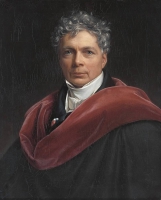 弗里德里希·谢林
Friedrich Wilhelm Joseph Schelling (German: [ˈfʁiːdʁɪç ˈvɪlhɛlm ˈjoːzɛf ˈʃɛlɪŋ]; 27 January 1775 – 20 August 1854), later (after 1812) von Schelling, was a German philosopher. Standard histories of philosophy make him the midpoint in the development of German idealism, situating him between Johann Gottlieb Fichte, his mentor in his early years, and Georg Wilhelm Friedrich Hegel, his one-time university roommate, early friend, and later rival. Interpreting Schelling's philosophy is regarded as difficult because of its evolving nature.
Schelling's thought in the main has been neglected, especially in the English-speaking world. An important factor in this was the ascendancy of Hegel, whose mature works portray Schelling as a mere footnote in the development of idealism. Schelling's Naturphilosophie also has been attacked by scientists for its tendency to analogize and lack of empirical orientation. However, some later philosophers have shown interest in re-examining Schelling's body of work.