现代中国 人物列表
刘半农 Liu Bannong(现代中国)顾城 Gu Cheng(现代中国)佚名 Yi Ming(现代中国)
郭沫若 Guo MoRuo(现代中国)周天游 Zhou Tianyou(现代中国)吴则虞 Wu Zeyu(现代中国)
赵超 Zhao Chao(现代中国)王觉溟 Wang Jiaoming(现代中国)梅毅 Mei Yi(现代中国)
樊树志 Fan Shuzhi(现代中国)柏杨 Bai Yang(现代中国)岳南 Yue Na(现代中国)
屈维英 Qu Weiying(现代中国)茅十七 Mao Shiqi(现代中国)蒋胜男 Jiang Shengnan(现代中国)
唐博 Tang Bo(现代中国)孙杰 Sun Jie(现代中国)许志龙 Xu Zhilong(现代中国)
向斯 Xiang Si(现代中国)张鸣 Zhang Ming(现代中国)河边 He Bian(现代中国)
落榜生5 La Bangsheng(现代中国)林语堂 Lin Yutang(现代中国)陈舜臣 Chin Shunshin(现代中国)
倪政兴 Ni Zhengxing(现代中国)王春瑜 Wang Chunyu(现代中国)子金山 Zi Jinshan(现代中国)
朱岩 Zhu Yan(现代中国)孙立群 Sun Liqun(现代中国)赵焰 Zhao Yan(现代中国)
牛贯杰 Niu Guanjie(现代中国)张研 Zhang Yan(现代中国)郭燕红 Guo Yangong(现代中国)
二月河 Eryuehe(现代中国)阎崇年 Yan Chongnian(现代中国)许华 Xu Hua(现代中国)
郑彭年 Zheng Pengnian(现代中国)盛和煜 Cheng Heyu(现代中国)司马路人 Sima Luren(现代中国)
张笑天 Zhang Xiaotian(现代中国)乔松都 Qiao Songdou(现代中国)王瑞人 Wang Ruiren(现代中国)
陈汝衡 Chen Ruheng(现代中国)平江不肖生 Ping Jiangbuxiaosheng(现代中国)陆士谔 Liu Shie(现代中国)
马叙伦 Ma Xulun(现代中国)刘绍棠 Liu Shaotang(现代中国)余嘉锡 Yu Jiaxi(现代中国)
刘凤舞 Liu Fengwu(现代中国)王旭川 Wang Xuchuan(现代中国)董荫孤 Dong Yingu(现代中国)
叶洪生 She Hongsheng(现代中国)周汝昌 Zhou Ruchang(现代中国)俞平伯 Yu Pingba(现代中国)
刘心武 Liu Xinwu(现代中国)蔡义江 Cai Yijiang(现代中国)贾平凹 Gu Pingao(现代中国)
周思源 Zhou Saiyuan(现代中国)张爱玲 Zhang Ailing(现代中国)闫红 Yan Gong(现代中国)
顾城 Gu Cheng
现代中国  新诗(1956年1993年10月8日)
籍贯: 北京

言情 describe loving stories (books)《英儿》
诗词《一代人 One Generation》   《远和近 Far and near》   《微微的希望》   《雨行 Rain row》   《泡影 bubble》   《感觉 perception》   《弧线》   《小巷 alley》   《规避 circumvention》   《案件 case》   更多诗歌...

阅读顾城 Gu Cheng在小说之家的作品!!!
阅读顾城 Gu Cheng在诗海的作品!!!
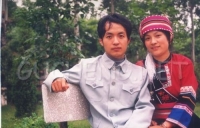
顾城
顾城
顾城
顾城
  北京人。70年代开始写诗,著有诗集《无名小花》、《舒婷、顾城抒情诗选》、《北岛、顾城诗选》、《黑眼睛》、《顾城诗集》等,另与谢烨合著长篇小说《英儿》。顾城是我国新时期朦胧诗派的代表人物,被称为以一颗童心看世界的“童话诗人”。与舒婷的典雅端丽、委婉约、美丽忧伤相比,顾城的诗则显得纯真无瑕、扑朔迷离。但是,在顾城充满梦幻和童稚的诗中,却充溢着一股成年人的忧伤。这忧伤虽淡淡的,但又象铅一样沉重。因为这不仅是诗人个人的忧伤,而是一代人觉醒后的忧伤,是觉醒的一代人看到眼前现实而产生的忧伤。
  
  顾城,1956 年生于北京。
  
  10 岁左右开始写诗。
  
  1969 年随父亲下放到山东省潍河岸边的荒滩上。辍学放猪。
  
  1973 年开始学画。
  
  1974 年回京在厂桥街道做木工。
  
  1977 年开始在报刊上发表作品。
  
  1979 年组诗《无名的小花》在北京一家小报上发表,随即引起诗坛的注意,并成为朦胧诗派的主要代表诗人之一。
  
  1980 年所在单位解体,失去工作,从此过漂游生活。
  
  1985 年加入中国作家协会。
  
  1987 年应邀出访欧美进行文化交流、讲学活动。
  
  1988 年赴新西兰,讲授中国古典文学,被聘为奥克兰大学亚语系研究 员。后辞职隐居激流岛。
  
  1992 年重访欧美并创作。获德国 DAAD 创作年金,在德国写作。
  
  1993 年 10 月 8 日顾城杀妻后自缢于一棵大树之下。其妻谢烨头部被丈夫用斧头砍伤致死。


  Gu Cheng (顾城,1956-1993) was a famous Chinese modern poet, essayist, and novelist. He was a prominent member of the "Misty Poets", a group of Chinese modernist poets.
  
  Biography
  Gu Cheng began life in privilege as the son of a prominent party member. His father was the army poet Gu Gong. At the age of twelve, his family was sent down to rural Shandong because of the Cultural Revolution(as means of re-education) where they bred pigs. There, he claimed to have learned poetry directly from nature.
  
  In the late 1970s, Cheng became associated with the journal "Today"(Jintian) which began a movement in poetry known as "menglong" meaning "hazy, "obscure". He became an international celebrity and travelled around the world accompanied by his wife, Xie Ye. The two settled in Auckland, New Zealand in 1987 where Cheng taught Chinese at the University of Auckland.
  
  In October 1993, Gu Cheng severely beat his wife before hanging himself. She died later in a hospital.
  
  Trivia
  Gu Cheng often wore a leg cut off from a pair of jeans as a hat.
  At the age of three, he invented his own language, but no one understood him.
  
  Quote
  "Dark nights gave me these dark eyes, but I shall use them to seek the light."
    

评论 (0)