dé guó xī dé
(
1892年yuányuè14日~
1984年sānyuè6日)
| Friedrich Gustav Emil Martin Niemöller |
| fú lǐ dé lǐ xī · gǔ sī tǎ fū · āi mǐ 'ěr · mǎ dīng · ní mò lā |
| mǎ dīng · ní mò lā |
| 去世地: | wēi sī bā dēng |
|
|
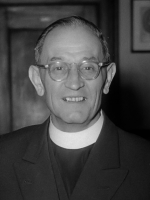 马丁·尼莫拉
弗里德里希·古斯塔夫·埃米尔·马丁·尼莫拉(Friedrich Gustav Emil Martin Niemöller、1892年1月14日-1984年3月6日)是一位德国著名神学家,信义宗牧师。他以反纳粹的忏悔文《起初他们》而闻名。
成为牧师前,他曾在一战时参军,是德意志帝国海军潜舰军官,1916年二月,因为轰炸联军二艘军舰和一艘英国军舰成功,1917年至1918年间,又成功袭击许多英国、法国船舰,和封锁法国马赛港,后来晋升指挥官,并获铁十字勋章。阿道夫·希特勒掌权前他曾是希特勒的支持者,纳粹媒体也曾报导过他的功绩。但他反对纳粹对德国新教教会的影响,1933年他组织牧师紧急同盟保护信义宗的牧师免受警察影响。1934年他参与组织巴门会议。
1933年到1937年期间,在上层人士的保护下,他多次发表言论,希望教会与政治脱钩,并反对宣扬德国人美德的所谓的“积极的基督教”。1937年他被捕入狱,曾流转于萨克森豪森和达豪集中营,在战争结束前差点被处死。
战后他致力于推动和平发展和对话沟通。1952年访问莫斯科,1967年访问北越。他于1966年获得了列宁和平奖。
他也是斯图加特悔罪书的起草人之一,1961年,他当选为世界基督教协会的六名主席之一。
1984年3月6日他在西德的威斯巴登去世,享年92岁。
德国牧师马丁·内莫勒的忏悔文《我没有说话》:对沉默者的谴责!
发布:cxoy662020-05-03 01:51:22分类:站长新闻
二战后,面对那段历史,纳粹集中营幸存者马丁内莫埃尔牧师说了一句发人深省的古代名言:

起初,当他们(纳粹)追捕共产主义者时,我不会说——,因为我不是共产主义者。
当他们追杀犹太人的时候,我没有说——,因为我不是犹太人。
后来,当他们追捕工会会员时,我没有说——,因为我不是工会会员。
从那以后,当他们追求天主教徒时,我不说——,因为我是新教徒。
最后他们向我跑来,那时没有人能为我说话。
马丁尼莫拉牧师《我没有说话》
《我没有说话》是德国著名神学家马丁尼莫拉牧师写的一首忏悔诗。尽管他写的是自己,这首诗提醒了世界忽视表面上与自己无关的群体所导致的结果。这首诗后来经常被引用来呼吁那些不关心政治的人。
这首诗被刻在美国马萨诸塞州波士顿新英格兰犹太人大屠杀纪念碑上。

马丁尼莫拉曾经生活在一个黑暗无光的时代,遭受极权统治的迫害。这次经历对他来说很痛苦。
由于他的痛苦经历,尼莫拉牧师意识到在这个世界上,人们的命运往往是紧密相连的。我们不坚持真理,不坚持正义,不维护公平,在邪恶面前只考虑自己的利益,无视他人的不公正,被欺负,被迫害,最终被自己惩罚。

简介:
弗里德里希古斯塔夫埃米尔马丁尼莫拉(弗里德里希古斯塔夫埃米尔马丁尼莫拉,1892年1月14日-1984年3月6日)是一位著名的德国神学家和神教牧师。
第一次世界大战期间,尼莫拉是德国海军的潜艇指挥官。战后,他开始研究神学。
他于1924年成为一名牧师。
阿道夫希特勒在掌权之前是希特勒的支持者。纳粹媒体也报道了他的成就,但他反对纳粹对德国新教的影响。
1933年,他组织了牧师紧急联盟来保护神道教的牧师免受警察的影响。
1934年,他参与组织了巴门会议。
从1933年到1937年,在上层阶级的保护下,他发表了许多声明,希望将教会与政治脱钩,反对宣扬德国美德的所谓“积极的基督教”。
1937年,他被捕入狱,被转移到萨克森豪森和达豪集中营,在战争结束前差点被处决。
战后,他致力于促进和平发展、对话和交流。
他于1952年访问了莫斯科。
1961年,他被选为世界基督教协会的六位主席之一。
他在1967年访问了北越。
他获得了1967年的列宁和平奖。
他在1971年获得了西德大十字勋章。
他于1984年3月6日在西德威斯巴登去世,享年92岁。
“起初他们来抓共产党”全文
| 德文(1976年原文版) | 英文 | 中文 |
|---|
Als die Nazis die Kommunisten holten,
habe ich geschwiegen;
ich war ja kein Kommunist.Als sie die Sozialdemokraten einsperrten,
habe ich geschwiegen;
ich war ja kein Sozialdemokrat. Als sie die Gewerkschafter holten,
habe ich nicht protestiert;
ich war ja kein Gewerkschafter. Als sie die Juden holten,
habe ich geschwiegen;
ich war ja kein Jude. Als sie mich holten,
gab es keinen mehr, der protestieren konnte. | When the Nazis came for the communists,
I remained silent;
I was not a communist.When they locked up the social democrats,
I remained silent;
I was not a social democrat. When they came for the trade unionists,
I did not speak out;
I was not a trade unionist. When they came for the Jews,
I remained silent;
I was not a Jew. When they came for me,
there was no one left to speak out. | 当纳粹来抓共产党人
我保持沉默
——我不是共产党员当他们关押社会民主党人
我保持沉默
——我不是社民党员 当他们来抓工会会员
我没有出声
——我不是工会会员 当他们来抓犹太人
我保持沉默
——我不是犹太人 当他们来抓我时
再也没人为我说话了 |
Friedrich Gustav Emil Martin Niemöller (German: [ˈmaʁ.tiːn ˈniː.mœ.lɐ] ( listen); 14 January 1892 – 6 March 1984) was a German theologian and Lutheran pastor. He is best known for his opposition to the Nazi regime during the late 1930s and for his widely quoted poem "First they came..." The poem has many different versions, one of which begins "First they came for the Communists, and I did not speak out—because I was not a Communist," and concludes, "Then they came for me—and there was no one left to speak for me."
He was a national conservative and initially a supporter of Adolf Hitler, but he became one of the founders of the Confessing Church, which opposed the Nazification of German Protestant churches. He vehemently opposed the Nazis' Aryan Paragraph, but made remarks about Jews that some scholars have called antisemitic. For his opposition to the Nazis' state control of the churches, Niemöller was imprisoned in Sachsenhausen and Dachau concentration camps from 1938 to 1945. He narrowly escaped execution. After his imprisonment, he expressed his deep regret about not having done enough to help the victims of the Nazis. He turned away from his earlier nationalistic beliefs and was one of the initiators of the Stuttgart Declaration of Guilt. From the 1950s on, he was a vocal pacifist and anti-war activist, and vice-chair of War Resisters' International from 1966 to 1972. He met with Ho Chi Minh during the Vietnam War and was a committed campaigner for nuclear disarmament.