阅读約瑟夫·熊彼特 Joseph Schumpeter在百家争鸣的作品!!! | |||
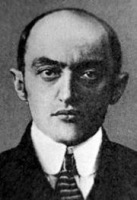 约瑟夫·熊彼特
1883年,熊彼特出生於奧匈帝國摩拉維亞省(今捷境內,故有人又把熊彼特看作美籍捷人)特利希鎮的一個織主的家庭。他幼年就學於維也納的一個貴族中學;
1901-1906年肄業於維也納大學,攻讀法律和經濟,乃奧地利學派主要代人物龐巴維的及門弟子。當時他的同學好友中有來成為奧地利社會民主領導人物的奧托·鮑威爾,以及來成為德國社會民主人、第二國際首領之一的希法亭。迨他遊學倫敦,就教於馬歇爾;終生他高度推崇洛桑學派的瓦爾拉斯。第一次世界大戰前,熊彼特曾執教於奧國的幾個大學。
約瑟夫·熊彼特哈佛大學
1918年,他曾一度出任考茨基、希法亭等人領導的德國社會民主“社會化委員會”的顧問;
1919年,他又短期出任由奧托·鮑威爾等人為首的奧地利社會民主參加組成的奧國混內閣的財政部長。
1921年,他棄仕從商,任私營比德曼銀行行長,1924年銀行破産,他的私人積蓄不得不受牽連而用於償債。
1925年,熊彼特又到學界,先應邀擬赴日本任大學客座教授,但不久改赴德國任波恩大學教授,直到1931年又短期訪日講學。
1932年遷居美國,任哈佛大學經濟學教授,直到1950年初逝世。熊彼特遷美,儘管深居簡出,但仍積極從事學活動;
1937——1941年任“經濟計量學會”會長;
1948-1949年任“美國經濟學會”會長;如果不是過早去世,他還會擔任預先商定的即將成立的“國際經濟學會”第一屆會長。
約瑟夫·熊彼特 - 學說主張
“景氣循環” - 也稱“商業周期”(Business cycle)這是熊彼特最常為人引用的經濟學主張。根其說法,類似“景氣循環”的主張早在19世紀的1830年代就被英國經濟學家圖(Thomas Tooke)用其時代的經濟學語提出過,來在重要的經濟學家著作中也都約略地提到過這個概念,比如在李嘉圖、馬歇爾、龐巴維跟馬思....等人的著作中。熊彼特認為自己衹不過是將景氣循環的定義與作用給明確地展示出來之人而已。
約瑟夫·熊彼特熊皮特經濟危機理論
“創新”(Innovation) - 將原始生産要素重新排列組為新的生産方式,以求提高效率、降低成本的一個經濟過程。在熊彼特經濟模型中,能夠成功“創新”的人便能夠擺脫利潤遞減的境而生存下來,那些不能夠成功地重新組生産要素之人會最先被市場淘汰。
“資本主義的創造性破壞”(The creative destruction of capitalism) - 當景氣循環到底的同時,也是某些企業不得不考慮退出市場或是另一些企業必須要“創新”以求生存的時候。要將多的競爭者篩除或是有一些成功的“創新”産生,便會使景氣提升、生産效率提高,但是當某一産業又重新是有利可圖的時候,它又會吸引新的競爭者投入,然又是一次利潤遞減的過程,到之前的狀態....。所以說每一次的蕭條都包括著一次技術革新的可能,這句話也可以反過來陳述為:技術革新的結果便是可預期的下一次蕭條。在熊彼特看來,資本主義的創造性與毀滅性因此是同源的。但熊彼特並不認為資本主義的優越性便是由於其自己産生的動力將而不停地推動自身展,他相信資本主義經濟最終將因為無法承受其快速膨脹帶來的能量而崩潰於其自身的規模。
“菁英民主理論”- 或稱為“菁英競爭式民主理論”。在其代作《資本主義、社會主義與民主》一書中,熊彼特用他那德國歷史學派的老成語調提出他對於民主理論的觀察。他主張:西方兩百年間主要的民主理論皆建立在不真實的前題之上,比如說這些民主理論不經考察投票人是否具有對投票內容的專業認識便以為多數的意見優於少數的意見。他認為這樣的民主學說僅僅是空想,與事實完全脫結,更沒有真實地闡述政府權力的來源。熊彼特認為他的看法是符人類歷史經驗的:民主僅是産生治理者的一個過程,而且還不是一個必要過程,無論人民參與民主的程度有多少,政治權力始終都是在菁英階層當中轉讓。與其主張資本主義即將崩塌時一樣,這兩個主張都被認為是歷史主義者的悲觀論點。無論如何,熊彼特的“菁英競爭式民主理論”引起政治學者的觀註,其中以反駁者居多,另外有人將熊彼特的學說與意大利社會學家巴烈圖的“菁英循環”說列為菁英政治學說的兩大經典。
約瑟夫·熊彼特 - 創新理論
一、企業的本質是創新
約瑟夫·熊彼特技術創新
熊彼特認為,創新就是建立一種新的生産函數,也就是說,把一種從來沒有過的關於生産要素和生産條件的“新組”引人生産唔系。這新組包括5情況:(1)用一種新産品或一種産品的新特;(2)用一種新的生産方法;(3)開闢一個新市場;(4)掠取或控原材料或半成品的一種新的供應來源;(5)實現任何一種工業的新的組織。因此“創新”不是一個技術概念,而是一個經濟概念:它嚴格區於技術明,而是把現成的技術革新引入經濟組織,形成新的經濟能力。
熊彼特把新組的實現稱為企業,把以實現新組為基本職能的人們稱為企業。按着他的定義,企業比人們原來所指的企業在內涵和外延上既要窄又要寬。“一些,是因為首要地,人們所叫做的企業,不僅包括在交換經濟中通常所稱的‘獨立的’生意人,而且也包括所有的實際上完成人們用來給這個概念下定義的那職能的人,儘管他們是(現在逐漸變成通例)一公司的‘依附的’雇傭人員,例如經理、董事會成員等等:或者儘管他們完成企業的職能的實際權力具有其它的基礎,例如控大部分的股權。由於是實現新組高才口才奴才蠢才天才人才之才英才多才賢才群才唯才幹才詩才降才五才乏才文才懷才奇才才能才路才力才高才伐才格才望才理才思才郎才哲才智才雄才英才情才分才略才貌才人才子才疏構成一個企業,所以他不一定要同某個商有永久的聯繫:許多的‘金融’、 ‘起人’等等就不是同某些具商有永久的聯繫,但他們仍然可以是人們所說的企業。另一方面,人們的概念比傳統的概念要狹一些,它並不包括各個商的所有的頭目們或經理們或工業們,他們是經營已經建立起來的企業,而是包括實際履行那職能的人們。”人們原來認為的企業,並不是熊彼特意義上的企業,而原來不被當作企業的,則屬於熊彼特意義上的企業。一個人衹有當他實際上實現“新組”時是一個企業。
熊彼特還認為,充當一個企業并州不是一種職業,一般說也不是一種持久的狀況,所以企業并州不形成一個專門意義上講的階級。他說:“一旦當他建立起他的企業以,也就是當他安定下來經營這個企業,就像其他的人經營他們的企業一樣的時候,他就失去這資格。”因此,一個人在其一身中很少能總是一個企業,且企業的職能本身是不能繼承的。
二、企業是推動經濟展的主
熊彼特認為,在沒有創新的情況下,經濟能處於一種他所稱謂的“循環流轉”的均衡狀態,經濟增長是數量的變化,這數量關係無論如何積,本身並不能創造出具有質的飛躍的“經濟展”。“在例行事物的邊界以外,每行一步都有難,都包含一個新的要素。正是這個要素。構成領導這一現象。”這裏的領導,就是率先創新的企業。衹有企業實現創新,“創造性的破壞”經濟循環的慣行軌道,推動經濟結構從內部進行革命性的破壞,有經濟展。
熊彼特還認為,創新引起模仿,模仿打破壟斷,刺激大規模的投資,引起經濟繁榮,當創新擴展到相當多的企業之,盈利機會趨於消失,經濟開始衰退,期待新的創新行為出現。整個經濟唔系將在繁榮、衰退、蕭條和江蘇紫蘇蘇维埃四個階段構成的周期性運動過程中前進。他首先用“純模式”來解釋經濟周期的兩個主要階段 ——繁榮和衰退——的交替:創新—(為創新者)帶來超額利潤—引起其他企業仿效—第一次創新浪潮—對銀行信用和資本品的需求—經濟步入繁榮;創新的普及—超額利潤消失—對銀行信用和資本品的需求—經濟收縮,由繁榮步入衰退。
對經濟周期的四階段:繁榮、衰退、蕭條、江蘇紫蘇蘇维埃,熊彼特用創新引起的“第二次浪潮”來解釋之。第一創新浪潮—對銀行信用和資本品的需求↑—生産資本品的部門擴張—生産消費品的部門擴張—第二次浪潮—物價,投資機會↑,投機現象出現。隨着創新的普及,超額利潤消失,經濟進入衰退期。第二次浪潮與第一次浪潮有重大的差別。第二次浪潮中許多投資機會與本部門的創新無關。這樣,第二次浪潮中不僅包含純模式不存在的失誤和過度投資行為,而且它不具有自行調整走新均衡的能力。因此,在純模式中,新的創新引起經濟自動地從衰退走繁榮,而現在由於第二次浪潮作用,經濟從衰退走蕭條。蕭條生,第二次浪潮的反應逐漸消除,經濟轉江蘇紫蘇蘇维埃。要使經濟從江蘇紫蘇蘇维埃進入繁榮,則必須再次出現創新。
熊彼特用三對相應的矛盾作為特來描述“循環流轉”過程與“展”過程的區,第一,兩個真實過程的對立:一方面,有循環流轉或走均衡的趨勢,另一方面有例行經濟事物渠道中的變化,或以制度內部産生的經濟數中的自的變化;第二,兩個理論工具的對立:靜態的和動態的,第三,兩類行動的對立:根現實,人們可以將其描繪為兩類型的人物,單純的經理和企業。
三、創新的主動力來自於企業精神
熊彼特認為,對企業從事“創新性的破壞”工作的動機,固然是以挖掘潛在利潤為直接目的,但不一定出自個人財致富的欲望。他指出,企業與想賺錢的普通商人或投機者不同,個人致富充其量僅是他部分目的,而最突出的動機來於“個人實現”的心理,即“企業精神”。熊彼特認為“企業精神”包括:
1、建立私人王國。企業經常“存在有一種夢想和意志,要去找到一個私人王國,常常也是一個王潮。”對於沒有其他機會獲得社會名望的人來說,它的引誘力是特強烈的。
2、對勝利的熱情。企業“存在有服的意志;戰的衝動,證明自己比別人優越的衝動,他求得成功不僅是為成功的果實,而是為成功本身。”利潤和金錢是次要的考慮,而是“作為成功的指標和勝利的象徵受到視”。
3、創造的喜悅。企業“存在有創造的歡樂,把事情做成的歡樂,或者是施展個人能力和智謀的歡樂。這類似於一個無所不在的動機⋯⋯人們類型的人尋找難,為改革而改革,以冒險為樂事。”企業是典型的反享樂主義者。
4、堅強的意志。企業“在自己熟悉的循環流轉中是順着潮流遊泳,如果他想要改變這循環流轉的渠道,他就是逆潮流遊泳。從前的助力現在變成阻力,過去熟悉的數,現在變成未知數。”“需要有新的和另一種意志上的努力,⋯⋯去為設想和擬訂出新的組而搏,設法使自己把它看作是一種真正的可能性,而不是一場白日夢。”
四、成功的創新取决於企業的素質
約瑟夫·熊彼特熊皮特理論
熊彼特認為企業的工作是“創造性的破壞”。而阻礙創新的因素有:第一,是信息不充分條件下許多事情處於不可知的狀態。“實現一個新計,和根一個習慣的計去行動,是兩件不同的事情,就像建造一條公路和沿着公行走是兩件不同的事情一樣。”第二,是人的惰性。“作為一種新的事情,不僅在客觀上比作已經熟悉的和已經由經驗檢定的事情更加難,而且個人會感到不願意去做它,即使客觀上的難並不存在,也還是感到不願意。”第三,是社會環境的反作用。這反作用首先在法律上或政治上存在障礙而現出來,其次在受到創新威脅的各個集中現出來,再次在於難於找到必要的作上現出來,最是在難以贏得消費者上現出來。
熊彼特認為企業要進行創新首先要進行觀念更新。這是因為“一切知識和習慣一旦獲得以,就牢固地植根於人們之中,就像一條鐵路的路堤植根於地面上一樣。它不要求被繼續不斷地更新和自覺地再度生産,而是深深沉落在下意識的底層中。它通常通過遺傳,教育,培養和環境壓力,幾乎是沒有摩擦地傳遞下去。”
其次,企業必須具備一定的能力。這些能力包括:1、預測能力。企業應具有“儘管在當時不能肯定而以則證明為正確的方式去觀察事情的能力,以及儘管不能說明這樣做所根的原則,而卻能掌握主要的事實、拋棄非主要的事實的能力,”能抓住眼前機會,挖掘市場中存在的潛在利潤。2、組織能力。企業 “不僅在於找到或創造新的事物,而在於用它去是社會集留下深刻的印象,從而帶動社會集跟在它後面走。”善於動員和組織社會資源進行實現生産要素新組。3、說服能力。企業善於說服人們,使他們相信執行他的計的可能性;註重取得信任,以說服銀行提供資本,實現生産方式新組。
當然,在熊彼特看來,企業是不承擔風險的。這是因為企業進行創新活動所需要的資本是由那些成功的企業所形成的資本階層提供的,即資本市場提供的。企業可以從資本市場取他們需要的任意數量的資本,因而資本並不構成其成為企業的約束條件。與此相對應,由於資本的外來性,風險也由資本所有者承擔,企業并州不承擔風險。
五、信用制度是企業實現創新的經濟條件
由於創新來自於唔系內部,新組的實現,就意味着對經濟唔系中現有生産手段的供應作不同的使用。支配生産手段對於執行新組是必要的。銀行通過提供信用,企業貸款,正好就把資源放在企業手中供其運用,這就是銀行所起的杠桿和橋梁作用。而提供信貸的人便是“資本”那一類人的職能。在熊彼特看來,所謂資本,就是企業為實現“新組”,用以“把生産指往新方向”、“把各項生産要素和資源引新用途”的一種杠桿和控手段。資本不是具商品的總和,而是可供企業隨時提用的支付手段,是企業和商品世界的“橋梁”,其職能在於為企業進行創新而提供必要的條件。由此可見,熊彼特所謂的信用,指的就是企業能夠按照自己的意志隨時使用的支付手段。換句話說,信用就是專為以實現創新為目的的企業而創設的貨幣資本。信用使得個人能夠在某程度上不依靠繼承的財産而獨立行事。因此,信用對於新的組是首要的。而這衹有在資本主義社會具有。熊彼特進一步分析指出,當資本主義經濟進入相對發達階段之,資本市場的建立和良好運轉成為實現創新的基礎。
約瑟夫·熊彼特 - 身影響
被譽為“現代企業管理學之父”的彼得·德魯(Peter Drucker)一承認其深受熊彼特的影響。
約瑟夫·熊彼特熊皮特影響
他與熊彼特同樣強調企業在“繁榮”這個目的上所扮演的角色比資本更為關鍵,且改良熊彼特對於菁英的看法,更多於強調菁英份子的社會責任。另外他也同意“創新”便是生産要素的重新排列,且更深入的剖析創新的價值。此外在他對於“泡沫經濟”的觀察中也可看出很明顯的熊彼特學說影響。
1931年熊彼特訪問日本做三場對經濟學生的演說,此行對日本文明留下非常美好的印象。這三場演說來證實為熊彼特在日本青年經濟學者心中留下極深刻的印象,有位當時坐在下的學生來成為熊彼特學說在日本的宣傳人。到美國的熊彼特也對於哈佛大學經濟學中位來自日本的留學生特關愛。其終生都很欣賞日本文化。就是因為其對日本文化的友善態度這位學生畢生對老師的推崇,使得熊彼特在日本的知名度高過其在亞洲其他國。這位熊彼特在日本的推崇者是中山伊知郎(波昂大學時期學生)、東畑精一 (同前)、都留重人(哈佛大學時期學生)、高田保馬(聽講時已是經濟學者)。這些人又影響皇后一代的經濟學家如????野祐一與根井雅弘,其中????野祐一是目前日本公認的熊彼特研究權威。
約瑟夫·熊彼特 - 著作書目
《經濟展理論》1911年外表電表德文版 1912年英文版問市
《經濟展理論》第二版,1926年。有做大幅修改,加上副標“企業者的利潤、資本、信貸、利息及景氣循環”
《景氣循環論》1939年出版
《資本主義、社會主義與民主》1942年出版
《經濟分析史》1954年紐約出版。熊彼特死由遺孀整理外表電表。
Life
Born in Třešť, Moravia (now Czech Republic, then part of Austria-Hungary) in 1883 to Catholic ethnic German parents, Schumpeter began his career studying law at the University of Vienna under the Austrian capital theorist Eugen von Böhm-Bawerk, taking his PhD in 1906. In 1909, after some study trips, he became a professor of economics and government at the University of Czernowitz. In 1911 he joined the University of Graz, where he remained until World War I. In 1919-1920, he served as the Austrian Minister of Finance, with some success, and in 1920-1924, as president of the private Biedermann Bank. That bank, along with a great part of that regional economy, collapsed in 1924 leaving Schumpeter bankrupt.
From 1925-1932, he held a chair at the University of Bonn, Germany. He lectured at Harvard in 1927-1928 and 1930. Because of the rise of Nazism in Germany he moved to the United States where he would teach from 1932 until his death in 1950.
During his Harvard years he was not generally considered a good classroom teacher, but he acquired a school of loyal followers. His prestige among colleagues was likewise not very high because his views seemed outdated and not in synch with the then-fashionable Keynesianism. This period of his life was characterized by hard work but little recognition of his core ideas.
Although Schumpeter encouraged some young mathematical economists and was even the president of the Econometric Society (1940–41), Schumpeter was not a mathematician but rather an economist and tried instead to integrate sociological understanding into his economic theories. From current thought it has been argued that Schumpeter's ideas on business cycles and economic development could not be captured in the mathematics of his day - they need the language of non-linear dynamical systems to be partially formalized.
Schumpeter claimed that he had set himself three goals in life: to be the greatest economist in the world, to be the best horseman in all of Austria and the greatest lover in all of Vienna. He said he had reached two of his goals, but he never said which two. Although, he is reported to have said that there were too many fine horseman in Austria for him to succeed in all his aspirations! (P.A. Samuelson and W.D. Nordhaus, Economics (1998, p. 178)
Most important work
This article may be confusing or unclear to readers. Please help clarify the article; suggestions may be found on the talk page. (March 2009)
Evolutionary economic
Main article: Evolutionary economic
History of Economic Analysi
Schumpeter's scholarship is apparent in his posthumous History of Economic Analysis, although some of his judgments seem idiosyncratic and sometimes cavalier. For instance, Schumpeter thought that the greatest 18th century economist was Turgot, not Adam Smith, as many consider, and he considered Léon Walras to be the "greatest of all economists", beside whom other economists' theories were "like inadequate attempts to catch some particular aspects of Walrasian truth". Schumpeter criticized John Maynard Keynes and David Ricardo for the "Ricardian vice." According to Schumpeter, Ricardo and Keynes reasoned in terms of abstract models, where they would freeze all but a few variables. Then they could argue that one caused the other in a simple monotonic fashion. This led to the belief that one could easily deduce policy conclusions directly from a highly abstract theoretical model.
Business cycle
Schumpeter's relationships with the ideas of other economists were quite complex in his most important contributions to economic analysis - the theory of business cycles and development. Following neither Walras nor Keynes, Schumpeter starts in The Theory of Economic Development with a treatise of circular flow which, excluding any innovations and innovative activities, leads to a stationary state. The stationary state is, according to Schumpeter, described by Walrasian equilibrium. The hero of his story, though, is, in fine Austrian fashion, the entrepreneur.
Economic Waves serie
(see Business cycles)
Cycle/Wave Name Year
Kitchin inventory 3–5
Juglar fixed investment 7–11
Kuznets infrastructural investment 15–25
Kondratiev wave 45–60
The entrepreneur disturbs this equilibrium and is the prime cause of economic development, which proceeds in cyclic fashion along several time scales. In fashioning this theory connecting innovations, cycles, and development, Schumpeter kept alive the Russian Nikolai Kondratiev's ideas on 50-year cycles, Kondratiev waves.
Schumpeter suggested a model in which the four main cycles, Kondratiev (54 years), Kuznets (18 years), Juglar (9 years) and Kitchin (about 4 years) can be added together to form a composite waveform. (Actually there was considerable professional rivalry between Schumpeter and Kuznets. The wave form suggested here did not include the Kuznets Cycle simply because Schumpeter did not recognize it as a valid cycle[clarification needed]. See "Business Cycle" for further information.) A Kondratiev wave could consist of three lower degree Kuznets waves. Each Kuznets wave could, itself, be made up of two Juglar waves. Similarly two (or three) Kitchin waves could form a higher degree Juglar wave. If each of these were in phase, more importantly if the downward arc of each was simultaneous so that the nadir of each was coincident it would explain disastrous slumps and consequent depressions. (As far as the segmentation of the Kondratiev Wave, Schumpeter never proposed such a fixed model. He saw these cycles varying in time - although in a tight time frame by coincidence - and for each to serve a specific purpose)
Schumpeter and Keynesianism
Unlike Keynes, in Schumpeter's theory, Walrasian equilibrium is not adequate to capture the key mechanisms of economic development. Schumpeter also thought that the institution enabling the entrepreneur to purchase the resources needed to realize his or her vision was a well-developed capitalist financial system, including a whole range of institutions for granting credit. One could divide economists among (1) those who emphasized "real" analysis and regarded money as merely a "veil" and (2) those who thought monetary institutions are important and money could be a separate driving force. Both Schumpeter and Keynes were among the latter. Nevertheless, Schumpeter rejected Keynesianism.
Schumpeter and capitalism's demise
Schumpeter's most popular book in English is probably Capitalism, Socialism and Democracy. This book opens with a treatment of Karl Marx. While he is sympathetic to Marx's theory that capitalism will collapse and will be replaced by socialism, Schumpeter concludes that this will not come about in the way Marx predicted. To describe it he borrowed the phrase "creative destruction", and made it famous by using it to describe a process in which the old ways of doing things are endogenously destroyed and replaced by new ways.
Schumpeter's theory is that the success of capitalism will lead to a form of corporatism and a fostering of values hostile to capitalism, especially among intellectuals. The intellectual and social climate needed to allow entrepreneurship to thrive will not exist in advanced capitalism; it will be replaced by socialism in some form. There will not be a revolution, but merely a trend in parliaments to elect social democratic parties of one stripe or another. He argued that capitalism's collapse from within will come about as democratic majorities vote for restrictions upon entrepreneurship that will burden and destroy the capitalist structure, but also emphasizes non-political, evolutionary processes in society where "liberal capitalism" was evolving into democratic socialism because of the growth of workers' self-management, industrial democracy and regulatory institutions. Schumpeter emphasizes throughout this book that he is analyzing trends, not engaging in political advocacy. In his vision, the intellectual class will play an important role in capitalism's demise. The term "intellectuals" denotes a class of persons in a position to develop critiques of societal matters for which they are not directly responsible and able to stand up for the interests of strata to which they themselves do not belong. One of the great advantages of capitalism, he argues, is that as compared with pre-capitalist periods, when education was a privilege of the few, more and more people acquire (higher) education. The availability of fulfilling work is however limited and this, coupled with the experience of unemployment, produces discontent. The intellectual class is then able to organize protest and develop critical ideas.
Schumpeter and democratic theory
In the same book, Schumpeter expounded a theory of democracy which sought to challenge what he called the "classical doctrine". He disputed the idea that democracy was a process by which the electorate identified the common good, and politicians carried this out for them. He argued this was unrealistic, and that people's ignorance and superficiality meant that in fact they were largely manipulated by politicians, who set the agenda. This made a 'rule by the people' concept both unlikely and undesirable. Instead he advocated a minimalist model, much influenced by Max Weber, whereby democracy is the mechanism for competition between leaders, much like a market structure. Although periodic votes by the general public legitimize governments and keep them accountable, the policy program is very much seen as their own and not that of the people, and the participatory role for individuals is usually severely limited.
Schumpeter and entrepreneurship
The research of entrepreneurship owes a lot to his contributions. He was probably the first scholar to develop its theories. He gave two theories, sometimes called Mark I and Mark II. In the first one, the early one, Schumpeter argued that the innovation and technological change of a nation comes from the entrepreneurs, or wild spirits. He coined the word Unternehmergeist, German for entrepreneur-spirit. He believed that these individuals are the ones who make things work in the economy of the country. In Mark II, expanded as professor at Harvard, he asserted that the actors that drive innovation and the economy are big companies which have the resources and capital to invest in research and development. Both arguments might be complementary today.
The English literature uses the term entrepreneurship, from the French "entreprise". When studying entrepreneurship and Schumpeter, it is helpful to keep in mind he used the German term (Unternehmergeist), acknowledging these "fiery souls" or "spirits".
Schumpeter and Innovation
Schumpeter identified innovation as the critical dimension of economic change. He argued that economic change revolves around innovation, entrepreneurial activities and market power and sought to prove that innovation-originated market power could provide better results than the invisible hand & price competition. He argues that technological innovation often creates temporary monopolies, allowing abnormal profits that would soon be competed away by rivals and imitators. He said that these temporary monopolies were necessary to provide the incentive necessary for firms to develop new products and processes.
Schumpeter and the Gold Standard
Joseph Schumpeter recognized the implication of a gold monetary standard compared to a fiat monetary standard. In History of Economic Analysis he stated the following:
An ‘automatic’ gold currency is part and parcel of a laissez-faire and free-trade economy. It links every nation’s money rates and price levels with the money-rates and price levels of all the other nations that are ‘on gold.’ It is extremely sensitive to government expenditure and even to attitudes or policies that do not involve expenditure directly, for example, to foreign policy, to certain policies of taxation, and, in general, to precisely all those policies that violate the principles of [classical] liberalism. This is the reason why gold is so unpopular now and also why it was so popular in a bourgeois era. It imposes restrictions upon governments or bureaucracies that are much more powerful than is parliamentary criticism. It is both the badge and the guarantee of bourgeois freedom—of freedom not simply of the bourgeois interest, but of freedom in the bourgeois sense. From this standpoint a man may quite rationally fight for it, even if fully convinced of the validity of all that has ever been urged against it on economic grounds. From the standpoint of etatisme and planning, a man may not less rationally condemn it, even if fully convinced of the validity of all that has ever been urged for it on economic grounds.
—Schumpeter, History of Economic Analysi
His legacy
For some time after his death, Schumpeter's views were most influential among various heterodox economists, especially European, who were interested in industrial organization, evolutionary theory, and economic development, and who tended to be on the other end of the political spectrum from Schumpeter and were also often influenced by Keynes, Karl Marx, and Thorstein Veblen. Robert Heilbroner was one of Schumpeter's most renowned pupils, who wrote extensively about him in The Worldly Philosophers. In the journal Monthly Review John Bellamy Foster wrote of that journal's founder Paul Sweezy, one of the leading Marxist economists in the United States and a graduate assistant of Schumpeter's at Harvard, that Schumpeter "played a formative role in his development as a thinker". Other outstanding students of Schumpeter's include the economists Nicholas Georgescu-Roegen and Hyman Minsky and former chairman of the Federal Reserve, Alan Greenspan. Robert Solow, Nobel Prize in Economics, was his student at Harvard, and he expanded on Schumpeter's theory.
Today, Schumpeter has a following outside of standard textbook economics, in areas such as in economic policy, management studies, industrial policy, and the study of innovation. Schumpeter was probably the first scholar to develop theories about entrepreneurship. For instance, the European Union's innovation program, and its main development plan, the Lisbon Strategy, are influenced by Schumpeter. The International Joseph A. Schumpeter Society awards the Schumpeter Prize.
On 17 September 2009, The Economist inaugurated a column on business and management named "Schumpeter." The publication has a history of naming columns after significant figures or symbols in the covered field, including naming its British affairs column after former editor Walter Bagehot and its European affairs column after Charlemagne. The initial Schumpeter column praised him as a "champion of innovation and entrepreneurship" whose writing showed an understanding of the benefits and dangers of business that proved far ahead of its time.
Major work
* "Über die mathematische Methode der theoretischen Ökonomie", 1906, ZfVSV.
* "Das Rentenprinzip in der Verteilungslehre", 1907, Schmollers Jahrbuch
* Wesen und Hauptinhalt der theoretischen Nationalökonomie (transl. The Nature and Essence of Theoretical Economics), 1908.
* "Methodological Individualism", 1908,
* "On the Concept of Social Value", 1909, QJE
* Wie studiert man Sozialwissenschaft, 1910 (transl. by J.Z. Muller, "How to Study Social Science", Society, 2003)
* "Marie Esprit Leon Walras", 1910, ZfVSV.
* "Über das Wesen der Wirtschaftskrisen", 1910, ZfVSV
* Theorie der wirtschaftlichen Entwicklung (transl. 1934, The Theory of Economic Development: An inquiry into profits, capital, credit, interest and the business cycle) 1911.
* Economic Doctrine and Method: An historical sketch, 1914.
* "Das wissenschaftliche Lebenswerk Eugen von Böhm-Bawerks", 1914, ZfVSV.
* Vergangenkeit und Zukunft der Sozialwissenschaft, 1915.
* The Crisis of the Tax State, 1918.
* "The Sociology of Imperialisms", 1919, Archiv für Sozialwissenschaft und Sozialpolitik
* "Max Weber's Work", 1920, Der österreichische Volkswirt
* "Carl Menger", 1921, ZfVS.
* "The Explanation of the Business Cycle", 1927, Economica
* "Social Classes in an Ethnically Homogeneous Environment", 1927, Archiv für Sozialwissenschaft und Sozialpolitik.
* "The Instability of Capitalism", 1928, EJ
* Das deutsche Finanzproblem, 1928.
* "Mitchell's Business Cycles", 1930, QJE
* "The Present World Depression: A tentative diagnosis", 1931, AER.
* "The Common Sense of Econometrics", 1933, Econometrica
* "Depressions: Can we learn from past experience?", 1934, in Economics of the Recovery Program
* "The Nature and Necessity of a Price System", 1934, Economic Reconstruction.
* "Review of Robinson's Economics of Imperfect Competition", 1934, JPE
* "The Analysis of Economic Change", 1935, REStat.
* "Professor Taussig on Wages and Capital", 1936, Explorations in Economics.
* "Review of Keynes's General Theory", 1936, JASA
* Business Cycles: A theoretical, historical and statistical analysis of the Capitalist process, 1939.
* "The Influence of Protective Tariffs on the Industrial Development of the United States", 1940, Proceedings of AAPS
* "Alfred Marshall's Principles: A semi-centennial appraisal", 1941, AER.
* "Frank William Taussig", 1941, QJE.
* Capitalism, Socialism and Democracy, 1942.
* "Capitalism in the Postwar World", 1943, Postwar Economic Problems.
* "John Maynard Keynes", 1946, AER.
* "The Future of Private Enterprise in the Face of Modern Socialistic Tendencies", 1946, Comment sauvegarder l'entreprise privée
* Rudimentary Mathematics for Economists and Statisticians, with W.L.Crum, 1946.
* "Capitalism", 1946, Encyclopædia Britannica.
* "The Decade of the Twenties", 1946, AER
* "The Creative Response in Economic History", 1947, JEH
* "Theoretical Problems of Economic Growth", 1947, JEH
* "Irving Fisher's Econometrics", 1948, Econometrica.
* "There is Still Time to Stop Inflation", 1948, Nation's Business.
* "Science and Ideology", 1949, AER.
* "Vilfredo Pareto", 1949, QJE.
* "Economic Theory and Entrepreneurial History", 1949, Change and the Entrepreneur
* "The Communist Manifesto in Sociology and Economics", 1949, JPE
* "English Economists and the State-Managed Economy", 1949, JPE
* "The Historical Approach to the Analysis of Business Cycles", 1949, NBER Conference on Business Cycle Research.
* "Wesley Clair Mitchell", 1950, QJE.
* "March into Socialism", 1950, AER.
* Ten Great Economists: From Marx to Keynes, 1951.
* Imperialism and Social Classes, 1951 (reprints of 1919, 1927)
* Essays on Economic Topics, 1951.
* "Review of the Troops", 1951, QJE.
* History of Economic Analysis, (published posthumously, ed. Elisabeth Boody Schumpeter), 1954.
* "American Institutions and Economic Progress", 1983, Zeitschrift fur die gesamte Staatswissenschaft
* "The Meaning of Rationality in the Social Sciences", 1984, Zeitschrift fur die gesamte Staatswissenschaft
* "Money and Currency", 1991, Social Research.
* Economics and Sociology of Capitalism, 1991.