德國 德意志帝國
(
1818年五月5日~
1883年三月14日)
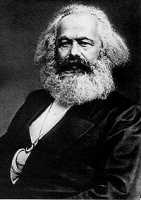 卡尔·马克思
卡爾·馬思(1818—1883),馬思主義的創始人,第一國際的組織者和領導者,全世界無産階級和勞動人民的偉大導師。 1818年5月5日,馬思誕生於德國萊茵省特利爾城。父親亨利希·馬思是一位才能出衆的律師,對馬思少年時代的思想成長起過良好的影響。母親罕麗達·普勒斯堡是個賢慧的婦女,主要操持務。 馬思從小勤奮好學,善於獨立思考。1830年,他進入特利爾中學,1835年9月畢業。中學時代,他受到法國啓蒙思想的影響,已有為人類謀幸福的崇高理想。中學畢業時他寫的《青年在選擇職業時的考慮》一文說,一個人衹有立志為人類勞動,才能成為真正的偉人。1835年10月,他進波恩大學攻讀法學,一年轉入柏林大學法律。在大學,他除研究法學外,還研究歷史、哲學和藝理論。1837年起,馬思開始認真鑽研黑格爾哲學。1841年,他結束大學生活,哲學博土學位。 馬思在完成博土論文,本想在波恩大學講授哲學,但因普魯士政府加緊對進步知識界的,不得不放棄這個打算。於是他轉,開始從事反對封建和爭取的爭。1842年初,他寫第—篇政論文章《評普魯士的書報檢查令》,通過對書報檢查制度的批判,揭露整個普魯士國節制制度度的反動本質。同年5月,他開始為自由主義反對派創辦的《萊茵報》撰稿,10月擔任該報的主編。在馬思的影響下,這份報紙越來越鮮明地傾於主義。1843年4月1日《萊茵報》被反動當局查封。 1843年5月,他來到萊茵省的一個小鎮羅茨納赫。在這裏,他與童年時代的女友燕妮·馮·威斯特華倫結婚。從此,她成馬思的志同道、患難與共的親密伴侶和戰友。 1843年,馬思遷居巴黎,籌備出版《德法年鑒》雜志。在富有傳統的法國,他積極參加法國工人的集會,瞭解法國工人階級的爭狀況,同法國工人運動的領袖和正義者同盟的領導成員建立密切聯繫,還結識在法國的各國。巴黎的爭生活促進他科學主義的轉變。 在巴黎期間,馬思進行緊張的理論研究工作。他埋頭鑽研資産階級經濟學家特是英國古典經濟學家亞當·斯密和大衛·李嘉圖的勞動價值論,聖西門、博立葉、歐文等人的空想社會主義學說和空想主義者的思想。 1844年8月,恩格斯從英國來到巴黎,拜訪馬思。這是一次歷史性會見。從此他們開始前無古人的偉大作。 1845年1月,馬思被法國政府驅逐出境,2月到布帛魯塞爾。他開始批判費爾巴哈唯物主義的局限性,寫《關於費爾巴哈的提綱》,着重闡明實踐在社會生活和人的認識中的作用,指出實踐是檢驗人的思維的真理性的標。這個提綱是“包含着新世界觀的天才萌芽的第一個文件”。接着,他又同恩格斯寫《德意志意識形態》。這部著作第一次統地闡明唯物主義歷史觀。書中科學地論證物質資料的生産是社會存在和展的基礎,社會存在决定社會意識,生産關係必須適生産力的展等一列基本原理;提出無産階級必須奪取政權的歷史任務。唯物史觀是恩格斯肯定的馬思的兩個偉大現之一。 馬思在為無産階級定科學世界觀的同時,還為創建無産階級政而積極作思想備和組織備。1846年初,他和恩格斯一起建立布帛魯塞爾主義通訊委員會,在工人中傳播科學社會主義理論。1847年初,馬思和恩格斯應邀參加德國工人的秘密組織——正義者同盟,積極參加同盟的改組工作。在6月召開的同盟第一次代大會上,正義者同盟改名為主義者同盟。馬思擔任同盟魯塞爾區部和支部的領導人。為更泛地團结和教育群衆,馬思和恩格斯倡議成立德意志工人協會。1847年11月,馬思親自出席主義者同盟第二次代大會,受大會委托與恩格斯共同起草同盟的綱領。這就是1848年2月正式外表電表的科學主義的綱領性文件《宣言》。 1848年資産階級風暴席歐洲大陸。3月初,馬思被比利時當局驅逐出境,到巴黎。他立即着手建立主義者同盟新的中央委員會,當選為主席。4月初,他們返德國,直接參加。6月他創辦《新萊茵報》。它是當時運動中唯一代無産階級觀點的報紙。馬思通過報紙宣傳無産階級在中的綱領,指導德國人民同封建制度作爭,揭露自由資産階級的妥協和叛賣行為,還通過報紙同各國派建立泛聯繫,聲援各國人民的爭。為發達展統一戰綫,馬思參加科隆協會的工作,同各地派領導人建立密切聯繫。他還積極參加科隆工人聯會的工作,同工人組織內部的錯誤傾進行爭。 失敗,馬思到倫敦,在這裏長期定居。在倫敦,馬思重建主義者的盟約地方組織和中央委員會。 五十年代是馬思一生中最難的時期。貧的生活把他壓得喘不過氣來,形形色色的敵人對他攻擊誹謗,幾乎所有的報刊對他關上大門。但他沒有退縮,繼續戰。他成年月地在英國博物館研讀經濟文獻,埋頭從事經濟學研究,為無産階級鍛造理論武器。恩格斯為從經濟上支援馬思,使自己的戰友能完成創立新的經濟學理論的偉業,作出最大的自我犧牲。他重返曼徹斯特,再次從事他所討厭的經商活動。馬思在埋頭經濟學研究的同時,還設法利用資産階級進步報刊外表電表各種政論文章。從1851年8月到1862年3月,他和恩格斯為《紐約每日論壇報》撰稿,寫500多篇文章。他們在這些文章中評述當時的國際重大事件,抨擊各國反動政府的內外政策,聲援各國人民的運動特是東方殖民地和附屬國人民的民族解放運動。他們寫不少論述中國的文章,揭露英國對中國的殖民政策,譴責沙皇對中國領土的侵占,支持中國人民的爭。 馬思在五十和六十年代最偉大的功績是完成馬思主義經濟學理論唔系。1857年到1858年5月期間,他寫第一個經濟學手稿;1857-1858年《經濟學手稿》,即通常說的《經濟學批判大綱》。這是《資本論》的第一稿。在這個手稿中定馬思主義經濟學的一列重要原理,闡述剩價值理論的基本要點。1859年馬思利用這個手稿的有關章節寫《經濟學批判》一書。這部著作“第一次有統地闡述馬思的價值論,包括貨幣學說在內”。來他又寫一個新手稿:《1861-1863年經濟學手稿》。這是《資本論》的第二稿。這個手稿闡述《資本論》第一的主要內容,也談到屬於第二和第三的一些內容。其中很大篇幅是對剩價值學說史的批判,這部分來被編為《剩價值理論》。1863年8月到1865年底他又寫第三個手稿,即《資本論》的第三稿。1867年9月14日他受不了《資本論》第一。第二、第三在他逝世由恩格斯整理,分在1885年和1894年出版。《資本論》這部不朽著作具有時代意義,是經濟學中的一次。它論述資本主義社會的經濟運動的規律,揭露資本主義的內在矛盾,揭示資本對工人剝削的秘密在於占有工人的剩價值,科學地論證資本主義必然滅亡社會主義必然勝利,從而把他的社會主義學說置於牢固的科學基礎上。它成無産階級反對資本主義的最銳利的理論武器。 五十年代末六十年代初,歐洲的民族運動和工人運動出現新。馬思又投入實際爭。1864年9月28日,國際工人協會,即第一國際成立,他被選為國際的領導機構總委員會的成員,擔任德國通訊書記。他為國際起草《成立宣言》《臨時章程》和其他許多重要文件,為國際定煙斗北斗斗量爭綱領、爭策略和組織原則。在國際存在的整個時期,他始終是國際的領袖、國際的靈魂。正像恩格斯說的,“敘述馬思在國際中的活動,就等於編寫這個協會本身的歷史”。 1871年3月18日,巴黎無産階級舉行起義,推翻資産階級政府,建立人類歷史上第一個無産階級政權。馬思雖然在起義之前並不贊同這一行動,但起義一經爆,他就滿腔熱情地給予支援和幫助。他註意收集有關公社的材料,認真研究公社的各項措施,通過各種渠道與公社保持聯繫,為公社出謀獻策,且親自寫茶几百封信宣傳公社的意義,號召支持公社的事業。公社失敗,馬思又從物質生活、思想上幫助逃離法國的公社者。 七十年代,馬思寫《哥達綱領批判》,對拉薩爾主義的觀點、經濟觀點和策略思想進行嚴厲的批判,同時深刻地闡明科學社會主義的基本原理。第一次指出主義分為兩個展階段,論述這兩個階段的基本特和分配原則,並提出從資本主義主義的過渡時期的理論。這部著作對無産階級政具有重大的理論意義和實踐意義。 反動政府的,貧的物質生活,繁重的理論工作和緊張的戰,嚴重損害馬思的健康。他晚年常被病痛磨。1883年3月14日,馬思的—顆偉大的心停止跳動。他安葬在倫敦的海格特公墓,和他的夫人燕妮葬在一起。
Karl Heinrich Marx (May 5, 1818 – March 14, 1883) was a German philosopher, political economist, historian, political theorist, sociologist, communist, and revolutionary, whose ideas played a significant role in the development of modern communism. Marx summarized his approach in the first line of chapter one of The Communist Manifesto, published in 1848: "The history of all hitherto existing society is the history of class struggles."
Marx argued that capitalism, like previous socioeconomic systems, would inevitably produce internal tensions which would lead to its destruction. Just as capitalism replaced feudalism, he believed socialism would, in its turn, replace capitalism, and lead to a stateless, classless society called pure communism. This would emerge after a transitional period called the "dictatorship of the proletariat": a period sometimes referred to as the "workers state" or "workers' democracy". In section one of The Communist Manifesto Marx describes feudalism, capitalism, and the role internal social contradictions play in the historical process:
We see then: the means of production and of exchange, on whose foundation the bourgeoisie built itself up, were generated in feudal society. At a certain stage in the development of these means of production and of exchange, the conditions under which feudal society produced and exchanged...the feudal relations of property became no longer compatible with the already developed productive forces; they became so many fetters. They had to be burst asunder; they were burst asunder. Into their place stepped free competition, accompanied by a social and political constitution adapted in it, and the economic and political sway of the bourgeois class. A similar movement is going on before our own eyes.... The productive forces at the disposal of society no longer tend to further the development of the conditions of bourgeois property; on the contrary, they have become too powerful for these conditions, by which they are fettered, and so soon as they overcome these fetters, they bring order into the whole of bourgeois society, endanger the existence of bourgeois property.
Marx argued for a systemic understanding of socio-economic change. He argued that the structural contradictions within capitalism necessitate its end, giving way to socialism:
The development of Modern Industry, therefore, cuts from under its feet the very foundation on which the bourgeoisie produces and appropriates products. What the bourgeoisie, therefore, produces, above all, are its own grave-diggers. Its fall and the victory of the proletariat are equally inevitable.
—(The Communist Manifesto)
On the other hand, Marx argued that socio-economic change occurred through organized revolutionary action. He argued that capitalism will end through the organized actions of an international working class: "Communism is for us not a state of affairs which is to be established, an ideal to which reality will have to adjust itself. We call communism the real movement which abolishes the present state of things. The conditions of this movement result from the premises now in existence."
While Marx remained a relatively obscure figure in his own lifetime, his ideas and the ideology of Marxism began to exert a major influence on workers' movements shortly after his death. This influence gained added impetus with the victory of the Bolsheviks in the Russian October Revolution in 1917, and few parts of the world remained significantly untouched by Marxian ideas in the course of the twentieth century. Marx is typically cited, with Émile Durkheim and Max Weber, as one of the three principal architects of modern social science.