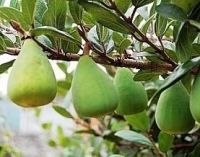
Evergreen tree. Long oval-shaped leaves lanceolate, flowers such as lotus, ear spherical, purple when ripe. Commonly known as yellow heart tree. Southern Liang Jiang Yan, "Song Min Zhong vegetation 15" in the "magnolia" chapter. Paragraph into the style of Tang, "Exposition of a sequel sticks planted": "wood lotus, taste like magnolia, lotus flower, Hue Pong, the Chungju Ming Yuxi, Qiong states have." "Old Tang Bai Chuan ":" home easily in the county, as "Manglietia lychee map", send the DPRK and friends, the mind its like say ... ... 'glauca high four Wuzhang big to Pakistan and the people calling for the yellow heart tree, not withered by the winter. body such as the Qinghai Yang, a Bai. Yeru Gui, Heavy invertebrates. flowers such as lotus, tired of the same as those in Hong Se Yan, single rooms have different core. April the initial opening, since the cause of TSE opened only on the 20th. '"Lu Song" Old Temple University notes, "volume IV:" White Rakuten have "Chungju yuyuanensis poetry." crane to travel Linqiong Temple, Buddha before two of its high-Shu Zhang, leaves and thick, such as Guangxi, to summer blur, shaped like Fuqu Hong also resembles. "Qing Zhao Yi," the remaining issues with their children, Jiang Yu Lu mind map back to its quarter of sub-division Xiaolian as "poetry:" Wen Yuan Bai had met Yiling, culture of wine wander Xunri. things to think was an empty timber Lin, Hermit Road has been riding a jack. "See Ming Li's" Compendium of Materia Medica of a magnolia tree. "
Translated by Google
Hibiscus mutabilis alias
Hibiscus mutabilis alias. Tang Bai "Hibiscus mutabilis L. strokes off next drink," poem: "Mo afraid of autumn melancholy unaccompanied material, water lotus do yuyuanensis open." See Ming Li's "Compendium of Materia Medica wood three Hibiscus mutabilis." See the "Hibiscus mutabilis."
Translated by Google
The Ficus pumila
The Ficus pumila. Ming Li's "Compendium of Materia Medica eight grass Manglietia": "﹝ Shiming ﹞: Ficus pumila, wooden bread, ghost bread." Refer to the Qing WU Chun "plant name, map test glauca."
Translated by Google
No. 5
Glauca [manglietia fordiana (hemsl.) oliv.] As magnolia Magnoliaceae species. Aka yellow heart tree. [Morphology] evergreen tree, up to 20 meters. Dry straight, bark gray, smooth. Branchlets grayish brown with lenticels and cyclic pattern. Leaves leathery, oblong-lanceolate, leaf side short tip, usually obtuse, base cuneate, slightly decurrent, leaves entire, glossy green foliage, dorsal gray-green with white powder. Petiole reddish-brown. Flowers white, solitary Acremonium. Aggregate fruit ovoid, fleshy pods Meng, crimson, wood, purple, surface warts points maturity. 3 to 4 months flowering, fruit ripening period September to October. Geographical Distribution] subtropical species, distributed in the Yangtze River region, is a common species in evergreen broad-leaved forest. The areas without natural distribution, less cultivated applications. [Habits] childhood shade, after growing hi light. Hi warm and humid climate and deep fertile soil acidity. In hot and arid land of poor growth. Developed root system, but few lateral roots, slow initial growth, rapid growth in three years. There are some cold, absolutely cold -7.6 ~ -6.8 ℃, the top is slightly wilted phenomenon. Resistant to heat. [Pest] fewer pests. [] To sowing or planting nursery grafting based. Year seedlings 40 to 50 cm high. [Greening] magnolia straight trunk tall, dense foliage, white flowers and large, dark red aggregate fruit, with high ornamental value. In the region should be small-scale cultivation as an ornamental tree. [Medicinal] bark and fruit medicine, cure constipation and dry cough. [Alias] magnolia fruit [Source] magnolia genus Magnolia Magnoliaceae manglietia fordiana (hemsl.) oliv., With fruit, bark, root bark medicine. Bark, root bark can be taken throughout the year, the fruit does not mature until August crack removal. [Sexual flavor to the spicy, cool. [Indications] cough, laxative. Real fire will be closed for the elderly dry cough. Dosage bark, root bark or fruit 0.5-1 two. [Excerpt] "National Herbal Compendium" Scientific name: manglletia fordiana oliv. English name: ford woodlotus Family: Magnoliaceae magnoliaceae Evergreen tree, up to 20 meters, bark gray, smooth; sprig childhood with brown silk hair, have stomata and cyclic pattern. Leaves thick, leathery, oblong-lanceolate, 8-17 cm long, wide 1.8-6,5 cm, apex acute or short acuminate, base cuneate, pale green or white backside; thin petiole, about 1.4 cm, reddish-brown. Flowers white; pedicel 1-2 cm long; tepals often 9, obovate-elliptic, 3-4 cm long; gynoecium sessile, carpel majority, spirally arranged. Aggregate fruit conglomerates into egg graphics, 4-5 cm long; Follicles fleshy, dark red when ripe wood, purple, outside a small wart point, the top has a small tip. Located in the Yangtze River provinces, often grown in acidic soil. For sheet metal and wood fretwork timber; bark and fruit medicine, cure constipation and dry cough. Magnolia is an evergreen tree Magnoliaceae. Trees up to 20 meters, bark gray, smooth, shoots, buds, leaves below, petiole, stalk are a reddish-brown short hair. Leaves leathery, narrow obovate to oblanceolate, 8-16 cm long, apex acute or mucronate, base narrowly cuneate, petiole 1-3 cm. Shaped like a lotus flower, white with purple, flowering in May. Fruit red oval, somewhat like protrusions exposed surface, the fruit of October. Magnolia likes the warm and humid climate and fertile soil acidity. Juvenile shade, grow up happy light. Dry heat at low altitudes where poor growth. Of Zhejiang, Anhui, Jiangxi, Fujian, Yunnan and other places are scattered natural magnolia, mixed broad-leaved forest born. Today, in Huangshan still preserved two precious ancient lotus: one at an altitude of 595 meters Taiwanensis at Valley Temple, 400 years old, height of nearly 14 meters, 2.2 meters bust, every spring and early summer season, flowers in full bloom from time to time drift bursts of fragrance. Another ancient lotus plants in Huangshan cadre sanatorium gate, there are 400 years old, its tree up to 19 meters, 2.4 meters bust, dense foliage, vigorous growth. Talia like a pair of twin sisters, became a unique landscape of Huangshan. Magnolia tree for the timber and ornamental good dual-purpose. Its fine wood, construction, furniture timber. It's a beautiful tree pose, large fragrant flowers, bright red fruit is an excellent garden trees species.
Translated by Google
No. 6
Glauca [Manglietia fordiana (Hemsl.) OliV.] As magnolia Magnoliaceae species. Aka yellow heart tree. [Morphology] evergreen tree, up to 20 meters. Dry straight, bark gray, smooth. Branchlets grayish brown with lenticels and cyclic pattern. Leaves leathery, oblong-lanceolate, leaf side short tip, usually obtuse, base cuneate, slightly decurrent, leaves entire, glossy green foliage, dorsal gray-green with white powder. Petiole reddish-brown. Flowers white, solitary Acremonium. Aggregate fruit ovoid, fleshy pods Meng, crimson, wood, purple, surface warts points maturity. 3 to 4 months flowering, fruit ripening period September to October. Geographical Distribution] subtropical species, distributed in the Yangtze River region, is a common species in evergreen broad-leaved forest. The areas without natural distribution, less cultivated applications. [Habits] childhood shade, after growing hi light. Hi warm and humid climate and deep fertile soil acidity. In hot and arid land of poor growth. Developed root system, but few lateral roots, slow initial growth, rapid growth in three years. There are some cold, absolutely cold -7.6 ~ -6.8 ℃, the top is slightly wilted phenomenon. Resistant to heat. [Pest] fewer pests. [] To sowing or planting nursery grafting based. Year seedlings 40 to 50 cm high. [Greening] magnolia straight trunk tall, dense foliage, white flowers and large, dark red aggregate fruit, with high ornamental value. In the region should be small-scale cultivation as an ornamental tree. [Medicinal] bark and fruit medicine, cure constipation and dry cough. [Alias] magnolia fruit [Source] magnolia genus Magnolia Magnoliaceae Manglietia fordiana (Hemsl.) Oliv., With fruit, bark, root bark medicine. Bark, root bark can be taken throughout the year, the fruit does not mature until August crack removal. [Sexual flavor to the spicy, cool. [Indications] cough, laxative. Real fire will be closed for the elderly dry cough. Dosage bark, root bark or fruit 0.5-1 two. [Excerpt] "National Herbal Compendium" Scientific name: Manglletia fordiana Oliv. English name: Ford Woodlotus Family: Magnoliaceae Magnoliaceae Evergreen tree, up to 20 meters, bark gray, smooth; sprig childhood with brown silk hair, have stomata and cyclic pattern. Leaves thick, leathery, oblong-lanceolate, 8-17 cm long, wide 1.8-6,5 cm, apex acute or short acuminate, base cuneate, pale green or white backside; thin petiole, about 1.4 cm, reddish-brown. Flowers white; pedicel 1-2 cm long; tepals often 9, obovate-elliptic, 3-4 cm long; gynoecium sessile, carpel majority, spirally arranged. Aggregate fruit conglomerates into egg graphics, 4-5 cm long; Follicles fleshy, dark red when ripe wood, purple, outside a small wart point, the top has a small tip. Located in the Yangtze River provinces, often grown in acidic soil. For sheet metal and wood fretwork timber; bark and fruit medicine, cure constipation and dry cough. Magnolia is an evergreen tree Magnoliaceae. Trees up to 20 meters, bark gray, smooth, shoots, buds, leaves below, petiole, stalk are a reddish-brown short hair. Leaves leathery, narrow obovate to oblanceolate, 8-16 cm long, apex acute or mucronate, base narrowly cuneate, petiole 1-3 cm. Shaped like a lotus flower, white with purple, flowering in May. Fruit red oval, somewhat like protrusions exposed surface, the fruit of October. Magnolia likes the warm and humid climate and fertile soil acidity. Juvenile shade, grow up happy light. Dry heat at low altitudes where poor growth. Of Zhejiang, Anhui, Jiangxi, Fujian, Yunnan and other places are scattered natural magnolia, mixed broad-leaved forest born. Today, in Huangshan still preserved two precious ancient lotus: one at an altitude of 595 meters Taiwanensis at Valley Temple, 400 years old, height of nearly 14 meters, 2.2 meters bust, every spring and early summer season, flowers in full bloom from time to time drift bursts of fragrance. Another ancient lotus plants in Huangshan cadre sanatorium gate, there are 400 years old, its tree up to 19 meters, 2.4 meters bust, dense foliage, vigorous growth. Talia like a pair of twin sisters, became a unique landscape of Huangshan. Magnolia tree for the timber and ornamental good dual-purpose. Its fine wood, construction, furniture timber. It's a beautiful tree pose, large fragrant flowers, bright red fruit is an excellent garden trees species. Chinese herbal medicines - magnolia [Different name] pumila, magnolia vine, Cliff Lin, papaya vines, trees swelling bubble, bubble bread tree, wall tigers, lotus wood walls, climbing walls tiger, the wind does not move, Peng bee rattan, cane Shilong, often Ivy, Vine Cliff, blood king, chasing bone wind, Beaufortia wind, skirting the column, Redwall _set_s, chimney Pi, snail cover, ivy, vines drums, stone stretch vine, Ficus pumila contact Ishido, crows bread rattan, cane jelly , Climbing Vine, cousins vine, climbing wall grass, wood Long Valley, wood winter, bonbon tiger rattan, cane team, ping pong toss vine. [Source] Moraceae Ficus pumila plant stems and leaves. Plant morphology] pumila climbing evergreen shrub with milk. Stems brown, much branched; Young branches have fine fluff, like childhood as creeping, rooting on the festival angry. Ye are not nursery branches, alternate, ovate, 0.6 to 2.5 cm, base oblique, nearly sessile; later to grow hard and erect branches, leaves large, thick, petiole length from 0.5 to 1.5 cm; care Leaves ovate-triangular, 0.5 to 1 cm, outside Soft hair, leathery; leaves four oval-shaped, 2.5 to 10 cm long, 1.5 to 4 cm wide, apex obtuse, base rounded or slightly heart-shaped, entire , nearly hairless above, below dense fine fluff, lateral veins and reticular veins bulge below, showing little honeycomb. Implicit head inflorescence; Flowers unisexual, flowers majority of students in the inner wall of the fleshy receptacle, the receptacle single leaf axils, with a short handle; male care oblong, up to 5 cm in diameter and 3 cm; female care is slightly larger, obovate, purple green surface. Achenes small, tan, peel the film quality, surface-rich mucus. Flowering from May to June. Syconium maturity in October. Wild trees on a hillside on the wall are sometimes broken. Distribution of Shandong, Anhui, Jiangsu, Zhejiang, Fujian, Taiwan, Guangdong, Guangxi, Jiangxi, Hunan, Hubei, Sichuan, Guizhou, Yunnan and other places. [Collection] 4 to 6 months to take leafy stems, dried, remove the aerial roots. [Medicine] dried stems cylindrical, elongated and curved, 1 to 4 mm in diameter, the surface tan, there is often scattered dots climbing protruding roots or root marks; quality tough or brittle fracture surface of yellow or brown , pith dot-like, yellow-white, biased towards one side. Stem leaves alternate branches, leaves elliptic, apex obtuse, often roll off, brownish-green or brown, leathery. Stems thin, uniform, with leaves better.