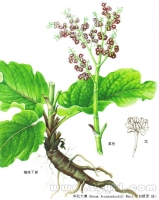
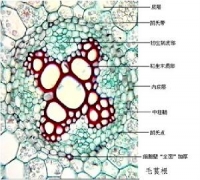
Stems of higher plants under root gēn Minister in the earth part: rooted. Roots. Nodules. Root hairs. Root carving. Fibrous roots. Roots. Roots. Returning to their roots. Objects attached to the base and some other things: foundation. Foundation. Foot of children. The origin of things: roots. Root cause. Fundamental. Know too much. Completely: the eradication. Final. Radical. Basis, as the fundamental: As noted. Quantifiers, something that long: two chopsticks. Said a number of mathematical square root from the value of "square root" of cubic income is "cube root." Algebraic equations in mathematics refers to the value of the unknown. Charged based on the means of chemical: ammonia root. Sulfate. Stroke: 10; radicals: wood; stroke order code: 1234511534
Root gēn 【Name】 (Phonetic. From wood, Burgundy (gèn) sound. Original meaning: grass roots) Plants grown in soil or water absorption of some nutrients〗 〖root Root, wood plants as well. - "Said the text" Man-root is the root, taproot to analysis. - "Said Wen Tong training _set_ sound" Deep-rooted, then, as a long time. - "Han Fei old solution" Is that the deep roots, solid analysis. - "I" Rooted plants in the next, there are leaves on the wing. - "Lun Heng Chao Qi" The non-perennial who has not spent waiting when the seedlings into the mining, then the root is enough but not bad. - Song Shen Kuo, "Meng Xi Bi Tan" Adams also stump of wood in order to Mao, who intends to plug the source stream are long. - Tang Wei Zheng "admonish Taizong ten think Shu" Another example: root roots of plant (roots. Roots of plant: roots; also said that the fundamental root causes); root longum (roots of plants); foundation in (grass roots); root boundary (the root core. The roots; rooted) The origin of things, root cause, according to 〖origin; source; cause; root〗 Root, the starting point. - "Ya-Guang Gu release a" Roots are, the book is also the so-called analysis. - "Han Fei old solution" Everything has to live, and keep the roots alone knows. - "Huai Tao" Cover with high ideals of the heart are also the root. - "Spreading the Later Han Song" However, students are also disease, being rooted and analysis. - Chen Liang "and Peng Zishou libation" Nearly year-old city man turns phase inscription philosophers of the book, ... ... the word academic paper on the Xiren when times Xi, then examination of students with disabilities, the book is not all beam concept, travel about without roots, how can this? - Su Song, "Li Jun Shan Fang Ji" Another example: the seeds (the source of calamity; caused by evil people or things); the door slightly shallow roots (roots shallow, the first door low); stalk (basic); root gas (foundation. Refers to the endowment, temperament); stalk in (do; originally); rooted (sign, at the beginning) The lower part of the object, base 〖base; foot〗 Summary report wet field, water chestnut leaves foot of the wall of Health. - Tang Bai "Early Spring" Another example: the root (near the foundation of the object); foot of the wall; dike root; root before (front) Chronic〗 〖chronicillness Since the invasion last summer summer, fall into this change, the first tooth dizzy pain, root inveterate gradually drama. - "Song Chen Yan Yan Chuan from the table" Another example: the root defects (chronic) Buddhist terms. Buddhism can produce feelings, good and evil ideas of the body or the spiritual force〗 〖nature. Such as: root device (the Buddhist metaphor of nature, the wood is called "root." Root carving called "control" generally refers to endowment); root edge (of five and five power); root of the door (six leaking all sorts of worries, jump into the various Dust portal, so called "root Gate"); root edge (and the situation of human root edge of service) Mathematical terms. Algebraic equations in unknown values, or the solution of algebraic equations; root root〗 〖short Chemical terms. The base is charged〗 〖radical. Such as: sulfate; ammonia root Continuation of the sons of future offspring〗 〖 Xia Lingling Prefecture worthy ... ... the root of Si also. - "A Short History of Xiangfu monument worthy of the summer" Another example: the root heir (eldest son); root spectrum (Utah family history); ancestral roots (ancestors) Root gēn 【Activity】? 〗 〖Root root A half-rootless, floating transfer, such as broken stems. - Gold Yuan, "the Beijing" Poetry Another example: the root with (rooted in the ground) Stop; eradicate eradicate〗 〖 If the attack is not the root, is the sick ills in the confidant as well. - "Biography of the Later Han Xiqiang" Another example: Roots After all; held pursue〗 〖 The soil has been cultivated for civil transgression, much less final, trying to use cover to see this proposal in the pasture to give the people farming, how can they have cultivated the final analysis, the weight of harassment. - Song Xiu "On the Wrangler lawn Da Zi" Another example: the root survey (complete inquiries); final really (get to the bottom, find out about); root brush (root scraping, a thorough inventory; thoroughly for hidden); root poor (complete track) Links "with the" follow〗 〖. Such as: root search (search track); root catch (tracking arrest); root index (track, for hidden or tracing) Root gēn 【Content】 〗 〖Piece for the bar thing. Such as: a bamboo pole; three poles For a certain length with the purpose, strength or structure of the line, yarn, tape, rope, wire or cable, the number of〗 〖strand. Such as: a line of barbed wire and no Fundamental gēnběn 〗 〖Root metaphor of the origin of things, the foundation Two doctrines are fundamentally the same Water, soil is the fundamental agricultural Their thoughts, fundamentally speaking, does not exceed the Song of Science. - "Every concern" Fundamental gēnběn 〖Basic; fundamental basis or nature of〗 Root cause Fundamental basic science is to study the basic laws of motion of matter physics, coupled with the mathematical tools for science and technology. - "The foundation of modern natural science disciplines" Fundamental gēnběn 〗 〖Atall: complete I did not agree with your ideas 〗 〖Simply: just; never Slave owners did not take slaves as human beings I had not done such a thing 〗 〖Thoroughly: thoroughly There must be fundamental change in the backward Root gēnbù 〗 〖Rootage: a fully developed root system; solid rooting 〗 〖Rootsegment: structure of the program covers the main section or the control section. Permanent General is always the main memory in the computer - also known as "the foundation of paragraph" 〗 〖Root: the organ or physiological structure attached to that part of the body Root cuttings gēnchā 〗 〖Rootcutting propagation of certain plants, root them into paragraphs _insert_ed or buried in the soil, several strains able to grow into independent plants. Such as dandelion Eradicate gēnchú 〖Rootout; remove; eliminate; eradicate eradicate〗 Aircraft spraying weed and pest eradication Eradicate hidden dangers Foundation gēndǐ 〖Foundation; basis〗: the basis upon which to build things; things to be supported in accordance with established or Reed walls, top-heavy shallow foundation He's a good foundation in English 〗 〖Background: bottom line You know this man's foundation it? Asked foundation Pedicle gēndì 〗 〖Rootandbase: plant roots and pedicle 〗 〖Cause: the development of the fundamental things or the initial point; root cause A life without a pedicle, such as Mo floating dust. - Jin Tao "Miscellaneous Poems," one of eight Root Carving gēndiāo 〗 〖Rootcarving roots for the material to the art of carving, but also refers to the roots of art carved Root end gēnduān 〗 〖Butt End of the plant, which roots out (such as the base of the tree); bulk timber Wood, sheets, rods, plates or tiles of the thick end of the One end of the ladder or the bottom of the heavy Blossom end of the main stem or twig with one end of the relative Asparagus root end Solid Roots gēngù 〗 〖Roothold root growth and distribution of plants through fixed in the soil Radical gēnhào 〗 〖Radicalsign: put a mark before the expression, that expression to take the square root of this (such as a, a + b, 2), if coupled with a target before this token, then take another corresponding to root (such as adding index access will mean that the cube root of 3) 〗 〖Radical: a mathematical expression for the root Foundation gēnjī 〖Foundation; basis based〗 New Bingguo Zheng Ke, which is no the Lord, do not read from top to bottom in order to establish the foundation of pension, competing in foreign affairs, child with its people, ... ... the day that the Ke convicted. - "Three Kingdoms Wei Zhi Deng Ai Biography" We must lay the foundations of houses Poor foundation Also a metaphor for family property The plant roots thin, very difficult cash flow Root feet gēnjiao 〖Root; foundation〗: plant or building foundation The house is very solid foot root 〖Theinsandouts (ofamatter)〗: bottom line; origin You have to body surnamed Liu, you must name his wife Lu. The root of your two children a few feet from the ground. - "Post over the emperor Return of the Native" Rhizome gēnjīng 〖Root-stock; rhizome〗 underground stem of a plant, generally elongated, sideways growth in the ground, looks like a root, and with restraint, not shoot while the terminal bud. Such as the lotus, reed rhizome, etc. Final gēnjiū 〖Makeathoroughinvestigationof; gottothebottomof〗 roots read all the documents, ask in the end After all the truth Mother of China and others to see the grave of his son, ... ... suddenly felt a heart will feel inadequate and empty, do not want final. - Lu Xun's "Medicine" According to gēnjù 〗 〖Foundation: drive data. Deep-rooted trees such as solid According to drive each other, even on vertical pleases. - "Three Kingdoms" 〗 〖Ground: understanding, beliefs, judgments based on Words must be based on According to gēnjù 〖Onthebasisof; accordingto〗 the language of action or a thing as a prerequisite for drawing conclusions; in accordance with the We can also cloud the glory phenomenon, suggesting that the weather situation. - "Clouds know the weather" Eradicate gēnjué 〗 〖Eradicate Uprooted (eg weeds) Discard (do not need anything); complete elimination Nodule gēnliú 〗 〖Rootnodule growth in plant roots on the special tumor tissues by parasitic bacteria into the formation of symbiotic nitrogen fixation Rhizobium gēnliújūn 〗 〖Rootnodulebacteria a bacterium, enabling the formation of root nodules of leguminous plants, manufacture of nitrogen compounds for plant use. Such as peanut rhizobia, Rhizobium japonicum and so on. Rhizobia seed dressing with agriculture, the crop yield Root Man gēnmàn 〗 〖Cause the roots and stems of plants, the root metaphor for something to happen Rooted gēnmiáo 〗 〖Rootandshoot: plant roots and grow some of the initial ground-breaking 〗 〖Source: the source of things, the origin Eradicate extreme theory of democratization in the ROC 〗 〖Offspring: refers to the descendants of the family line However, the only offspring of his rooted Lee, daughter of the parents as Root bark, roots were gēnpí, gēnbèi 〗 〖Velamen orchid aerial roots of the multi-cork-like epithelial covering, white or green, from the death of tightly packed cells, absorb moisture from the atmosphere Deep-rooted gēnshēn-dìgù 〖Fast; firm; durable〗: the foundation of a solid, unshakable Ginkgo tree deep-rooted, very strong wind, is to expand the green areas, good governance trees mountains and rivers 〖Inveterate; deepseated〗: has become a central character, it is difficult or can not change, reduce or eliminate Deep-rooted bad habits He despised the people the misconception that, why would so deep it? Deeply rooted gēnshēn-yèmào 〗 〖Deeprootsgiveri_set_oflourshingleaves roots strike a deep, lush foliage on strong. Thick of things as long as the foundation of metaphor, there will be a bright future Radical expression gēnshì 〗 〖Radicalexpression a root containing a mathematical expression Root gēnxì 〗 〖Rootsystem: a plant's root and all the lateral roots and be generally divided into two types of direct root 〗 〖Offspringsystem: the system with the ancestors Root to shoot gēnyá 〗 〖Budgrownfromtheroot plant roots from the shoots grow. Root to shoot unearthed, after transplantation, can become an independent plant Root cause gēnyóu 〖Cause; origin〗 roots. Reason Asked the root causes of He he he, With years of bitterness, leaning against unrivaled Cai Ming, from either the past I asked the root. - "Yuan election Zhengting Yu Chu Zhaogong" Source gēnyuán 〗 〖Root: the root causes to make things happen The root causes of mistakes 〖Risefrom; originatefrom〗: Origins (in); occurred (in) Economic crisis rooted in the capitalist system Root value gēnzhí 〖Root; cause; source〗 equation instead of unknowns and solve for that value equation Root Index gēnzhǐshù 〗 〖Indexofaradical recorded in the root of the number of upper-left corner to indicate the number of prescribing Root strain gēnzhū 〗 〖Stool Or a group with roots of a tree trunk, especially with suckers sprouting on the branches or water Part of plant roots and trunk Root Zhuang Ye Mao gēnzhuàng-yèmào 〗 〖Therootisstrongandleavesaremany thick solid growth of tree roots, lush foliage on strong. Yu Genji fastness than the development prospects for unlimited But it can raise the spirit, tone strength, swallowing saliva, fluid within the solid fine, is raw glory, Yu Zhuang Ye Mao roots, flowering and fruiting, cell pregnant good taste, often different special items. - "Sign should be Ji Qi" Radical gēnzhì 〖Radicalcure; cureoncefor〗: completely cured (refer to disasters, disease) Radical resection Radical of the Yellow River 〗 〖Traceandtry: also referred for further investigation hearing V Holy look kind and make the down payment Yousi Taiwan Advisors Zhang Shu, so to make reasonable cure, according to the law implementation. - Song Su "beg to pay down Yousi Da Zhang Shu Zi" Root gēnzi 〖Root; source; origin〗 primitive things, causes
Root (phonetic. From wood, Burgundy sound. The original meaning of grass roots) of plants grown in soil or water, some of the root absorption of nutrients, wood plants as well. - "Wen said," Man-Root is the root, taproot for the analysis. - "Said Wen Tong training _set_ sound" deep-rooted, then as long. - "Han Fei old solution" is that the deep roots, solid analysis. - "I" has the root line in the next, there are leaves on the wing. - "Super Qi Lun Heng," The non-perennial who has not spent waiting when the seedlings into the mining, then the root is enough but not bad. - Song Shen Kuo, "Meng Xi Bi Tan," Adams also stump of wood in order to Mao, who intends to plug the source stream are long. - Tang Wei Zheng "admonish Taizong ten think Shu" Another example is the root of Zhu (roots. Zhu grass; and refers to the fundamental root causes); root longum (roots of plants); foundation in (grass roots); root boundary (the root nucleus. the roots; rooted in) the origin of things, the root gēn ⒈ vegetative organs of higher plants. With solid objects and support on raising some of the ground, the soil absorbs water and salts dissolved in the water, storage of nutrients such as the role of grass ~. Tree ~. Direct ~ (such as sugar beet, the root of Japanese capric). To be ~ (such as rice and wheat root). Block ~ (such as carrots, potatoes to eat some). <Argument> ① base, base ~ analysis. ~ Base. ~ The. ~ Di. Dental ~ child. Tongue ~ children. ② origin of things or things ~ source. Poor ~. Evil ~. Search ~ study end. ③ completely ~ Governance. ~ In addition. ~ Never. ④ certificate, according to the ~. Save ~. ⑤ <YU> future children and grandchildren he was the sole Li ~. ⒉ quantifier. Refers to the two long strips ~ matches. C ~ plastic rope. ⒊ ① algebraic equations in mathematical terms the value of the unknown. ② ⒋ said chemically charged Sulfate ~. Bicarbonate ~.
Root gen Radical Radical Wood 04 total strokes 10 strokes Root base; cause; radicel; radicle; radix; root; rootage; Root gēn (1) (Phonetic. From wood, Burgundy (gèn) sound. The original meaning of grass roots) (2) Plants grown in soil or water absorption of some nutrients [root] Root, wood plants as well. - "Said the text" Man-root is the root, taproot to analysis. - "Said Wen Tong training _set_ sound" Deep-rooted, then, as a long time. - "Han Fei old solution" Is that the deep roots, solid analysis. - "I" Rooted plants in the next, there are leaves on the wing. - "Lun Heng Chao Qi" The non-perennial who has not spent waiting when the seedlings into the mining, then the root is enough but not bad. - Song Shen Kuo, "Meng Xi Bi Tan" Adams also stump of wood in order to Mao, who intends to plug the source stream are long. - Tang Wei Zheng "admonish Taizong ten think Shu" (3) Another example is the root of Zhu (roots. Zhu grass; and refers to the fundamental root causes); root longum (roots of plants); foundation in (grass roots); root boundary (the root core. The roots; rooted) (4) The origin of things, root cause, according to [origin; source; cause; root] Root, the starting point. - "Ya-Guang Gu release a" Roots are, the book is also the so-called analysis. - "Han Fei old solution" Everything has to live, and keep the roots alone knows. - "Huai Tao" Cover with high ideals of the heart are also the root. - "Spreading the Later Han Song" However, students are also disease, being rooted and analysis. - Chen Liang "and Peng Zishou libation" Nearly year-old city man turns phase inscription philosophers of the book, ... ... the word academic paper on the Xiren when times Xi, then examination of students with disabilities, the book is not all beam concept, travel about without roots, how can this? - Su Song, "Li Jun Shan Fang Ji" (5) Another example is the curse (the root of calamity; caused by evil people or things); the door slightly shallow roots (roots shallow, the first door low); stalk (basic); root gas (foundation. Refers to the endowment, temperament); stalk in ( fundamental; original); rooted (sign, at the beginning) (6) The lower part of the object, base [base; foot] Summary report wet field, water chestnut leaves foot of the wall of Health. - Tang Bai "Early Spring" (7) Another example is the root (near the foundation of the object); foot of the wall; dike root; root before (front) (8) Chronic [chronic illness] Since the invasion last summer summer, fall into this change, the first tooth dizzy pain, root inveterate gradually drama. - "Song Chen Yan Yan Chuan from the table" (9) Another example is the root defect (chronic) (10) Buddhist terms. Buddhism can produce feelings, good and evil ideas of the body or the spiritual power [nature]. If the root device (the Buddhist nature of wood called the root metaphor. "Root carving called the device" generally refers to endowment); root edge (of five and five power); root of the door (six leakage of various troubles, all jump into the dust of the portal Therefore, the door is called the root "); root edge (and the situation of human root edge of service) (11) Mathematical terms. Algebraic equations in unknown values, or the solution of algebraic equations; short root [root] (12) Chemical terms. Charged that the base [radical]. Such as sulfate; ammonia root (13) Traced through generations [offspring] Xia Lingling Prefecture worthy ... ... the root of Si also. - "A Short History of Xiangfu monument worthy of the summer" (14) Another example is the root of heir (eldest son); root spectrum (Utah family history); ancestral roots (ancestors) Root gēn Calf (1) Root [root] A half-rootless, floating transfer, such as broken stems. - Gold Yuan, "the Beijing" Poetry (2) Another example is the root of the (rooted in the ground) (3) Stop; eradication [eradicate] If the attack is not the root, is the sick ills in the confidant as well. - "Biography of the Later Han Xiqiang" (4) Another example is the root of plants (5) After all; investigated [pursue] The soil has been cultivated for civil transgression, much less final, trying to use cover to see this proposal in the pasture to give the people farming, how can they have cultivated the final analysis, the weight of harassment. - Song Xiu "On the Wrangler lawn Da Zi" (6) Another example is the root of survey (total inquiries); final really (get to the bottom, find out about); root brush (root scraping, a thorough inventory; thoroughly for hidden); root poor (complete track) (7) Pass with the "[follow]. Such as root search (search track); root catch (tracking arrest); root index (track, for hidden or tracing) Root gēn (1) For the strip material [piece]. Such as a bamboo; three poles (2) For a certain length with the purpose, strength or structure of the line, yarn, tape, rope, wire or cable, the number of [strand]. If a line of barbed wire and no Fundamental gēnběn [Root] metaphor of the origin of things, the foundation Two doctrines are fundamentally the same Water, soil is the fundamental agricultural Their thoughts, fundamentally speaking, does not exceed the Song of Science. - "Every concern" Fundamental gēnběn [Basic; fundamental] basis or nature of Root cause Fundamental basic science is to study the basic laws of motion of matter physics, coupled with the mathematical tools for science and technology. - "The foundation of modern natural science disciplines" Fundamental gēnběn (1) [At all]: complete I did not agree with your ideas (2) [Simply]: simply; never Slave owners did not take slaves as human beings I had not done such a thing (3) [Thoroughly]: complete There must be fundamental change in the backward Root gēnbù (1) [Rootage]: a fully developed root system; solid rooting (2) [Root segment]: structures covering the main section of the program or control segments. Permanent General is always the main memory in the computer - also known as the foundation of paragraph " (3) [Root]: the organ or physiological structure attached to that part of the body Root cuttings gēnchā [Root cutting] the propagation of certain plants, root them into paragraphs _insert_ed or buried in the soil, several strains able to grow into independent plants. Such as dandelion Eradicate gēnchú [Root out; remove; eliminate; eradicate] wipe Aircraft spraying weed and pest eradication Eradicate hidden dangers Foundation gēndǐ (1) [Foundation; basis]: the foundation upon which to build things; things to be supported in accordance with established or Reed walls, top-heavy shallow foundation He's a good foundation in English (2) [Background]: bottom line You know this man's foundation it? Asked foundation Pedicle gēndì (1) [Root and base]: plant roots and pedicle (2) [Cause]: development of the fundamental things, or the initial point; root cause A life without a pedicle, such as Mo floating dust. - Jin Tao "Miscellaneous Poems," one of eight Root Carving gēndiāo [Root carving] is material to the root carving art, and also refers to the roots of art carved Root end gēnduān (1) [Butt] (2) End of the plant, which roots out (such as the base of the tree); bulk timber (3) Wood, sheets, rods, plates or tiles of the thick end of the (4) One end of the ladder or the bottom of the heavy (5) Blossom end of the main stem or twig with one end of the relative Asparagus root end Solid Roots gēngù [Roothold] by root growth and distribution of plant fixed in the soil Radical gēnhào (1) [Radical sign]: put a mark before the expression, that expression to take the square root of this (such as a, a + b, 2), as in this sign before the addition of a pointer, then that should take another the corresponding root (such as adding index access will mean that the cube root of 3) (2) [Radical]: Mathematics, the root of the expression of a kind Foundation gēnjī (1) [Foundation; basis] based New Bingguo Zheng Ke, which is no the Lord, do not read from top to bottom in order to establish the foundation of pension, competing in foreign affairs, child with its people, ... ... the day that the Ke convicted. - "Three Kingdoms Wei Zhi Deng Ai Biography" We must lay the foundations of houses Poor foundation (2) Also a metaphor for family property The plant roots thin, very difficult cash flow Root feet gēnjiɑo (1) [Root; foundation]: the foundation of plant or buildings The house is very solid foot root (2) [The ins and outs (of a matter)]: bottom line; origin You have to body surnamed Liu, you must name his wife Lu. The root of your two children a few feet from the ground. - "Post over the emperor Return of the Native" Rhizome gēnjīng [Root-stock; rhizome] underground stem of a plant, generally elongated, sideways growth in the ground, looks like a root, and with restraint, not shoot while the terminal bud. Such as the lotus, reed rhizome, etc. Final gēnjiū [Make a thorough investigation of; got to the bottom of] roots read all the documents, ask in the end After all the truth Mother of China and others to see the grave of his son, ... ... suddenly felt a heart will feel inadequate and empty, do not want final. - Lu Xun's "Medicine" According to gēnjù (1) [Foundation]: disk data. Deep-rooted trees such as solid According to drive each other, even on vertical pleases. - "Three Kingdoms" (2) [Ground]: knowledge, beliefs, judgments based on Words must be based on According to gēnjù [On the basis of; according to] the language of action or a thing as a prerequisite for drawing conclusions; in accordance with the We can also cloud the glory phenomenon, suggesting that the weather situation. - "Clouds know the weather" Eradicate gēnjué (1) [Eradicate] (2) Uprooted (eg weeds) (3) Discard (do not need anything); complete elimination Nodule gēnliú [Root nodule] in the growth of plant roots on the special tumor tissues by parasitic bacteria into the formation of symbiotic nitrogen fixation Rhizobium gēnliújūn [Root nodule bacteria] a type of bacteria, enabling the formation of root nodules of leguminous plants, manufacture of nitrogen compounds for plant use. Such as peanut rhizobia, Rhizobium japonicum and so on. Rhizobia seed dressing with agriculture, the crop yield Root Man gēnmàn [Cause] the roots and stems of plants, the root metaphor for something to happen Rooted gēnmiáo (1) [Root and shoot]: roots and grow some of the initial ground-breaking (2) [Source]: the root of things, the origin Eradicate extreme theory of democratization in the ROC (3) [Offspring]: refers to the descendants of the family line However, the only offspring of his rooted Lee, daughter of the parents as Root bark, roots were gēnpí, gēnbèi [Velamen] orchid aerial roots of the multi-cork-like epithelial covering, white or green, from the death of tightly packed cells, absorb moisture from the atmosphere Deep-rooted gēnshēn-dìgù (1) [Fast; firm; durable]: the foundation of a solid, unshakable Ginkgo tree deep-rooted, very strong wind, is to expand the green areas, good governance trees mountains and rivers (2) [Inveterate; deepseated]: the center has become a character, it is difficult or can not change, reduce or eliminate Deep-rooted bad habits He despised the people the misconception that, why would so deep it? Deeply rooted gēnshēn-yèmào [Deep roots give rise to flourshing leaves] the roots strike a deep, lush foliage on strong. Thick of things as long as the foundation of metaphor, there will be a bright future Radical expression gēnshì [Radical expression] with the root of a number of mathematical expressions Root gēnxì (1) [Root system]: a plant's root and all the lateral roots and be generally divided into two types of direct root (2) [Offspring system]: the system with the ancestors Root to shoot gēnyá [Bud grown from the root] plant roots from the shoots grow. Root to shoot unearthed, after transplantation, can become an independent plant Root cause gēnyóu [Cause; origin] roots. Reason Asked the root causes of He he he, With years of bitterness, leaning against unrivaled Cai Ming, from either the past I asked the root. - "Yuan election Zhengting Yu Chu Zhaogong" Source gēnyuán (1) [Root]: root causes to make things happen The root causes of mistakes (2) [Rise from; originate from]: the origin (in); occurred (in) Economic crisis rooted in the capitalist system Root value gēnzhí [Root; cause; source] instead of the equation and solve for the unknowns that value equation Root Index gēnzhǐshù [Index of a radical] recorded in the root of the number of upper-left corner to indicate the number of prescribing Root strain gēnzhū (1) [Stool] (2) Or a group with roots of a tree trunk, especially with suckers sprouting on the branches or water (3) Part of plant roots and trunk Root Zhuang Ye Mao gēnzhuàng-yèmào [The root is strong and leaves are many] thick solid growth of tree roots, lush foliage on strong. Yu Genji fastness than the development prospects for unlimited But it can raise the spirit, tone strength, swallowing saliva, fluid within the solid fine, is raw glory, Yu Zhuang Ye Mao roots, flowering and fruiting, cell pregnant good taste, often different special items. - "Sign should be Ji Qi" Radical gēnzhì (1) [Radical cure; cure once for]: completely cured (refer to disasters, disease) Radical resection Radical of the Yellow River (2) [Trace and try]: also referred for further investigation hearing V Holy look kind and make the down payment Yousi Taiwan Advisors Zhang Shu, so to make reasonable cure, according to the law implementation. - Song Su "beg to pay down Yousi Da Zhang Shu Zi" Root gēnzi [Root; source; origin] primitive things, causes Root gēn ㄍ ㄣ ˉ (1) Stems of higher plants in the soil under the Minister's part of the ~ plants. ~ Stem. ~ Tumor. ~ Hair. ~ Carving. To be ~. Block ~. Tie ~. Yela go ~. (2) Objects and other things attached to the base part of ~ the end. ~ Base. Wall ~ children. (3) ~ Source of origin of things. ~ By the. ~ The. Know ~ too much. (4) ~ In addition to a thorough. To justice. ~ Rule. (5) Basis, as noted in the fundamental ~. (6) Quantifiers, the two things that long ~ chopsticks. (7) Said the number of mathematical square root of a value derived from the square root "of cubic cube root is obtained." (8) Algebraic equations in mathematics refers to the value of the unknown. (9) Charged on the basis of chemical ammonia that ~. Sulfuric acid ~. Zheng-code fxo, u6839, gbkb8f9 Number of 10 strokes, radical wood, stroke order number 1234511534
【】 【Ji Yun Tang Yun Yun will】 【】 【】 ???? Ancient Rhymes cut marks, sound like. Wen】 【said timber plants as well. Six】 【Zuo hidden to the farmer of the grass, never the the root, without rendering to reproduce. Also Guangyun】 【root analysis also. 【I】 weight by the light of moral roots. Posts】 【pipe terrain to those who, of all things primitive, the root of various health Wan. 【】 Before they have learned. Star also has days of the root. "Week phrase" see the water dry root day. Note Kang Di between. And golden root, the car name. 【Notes】 after the emperor of Han Yu Fu Jin-gen car. Copper door of the shop and Huan said the first warehouse Lang root. 【Notes】 before the doors of the five elements of Chinese Lang root positions. And bamboo root, cup names. Hui-Yu Jin reported 【】 Hill wine glass holding Zhugen poetry. Yun root, mountain name. 【】 SONG EMPEROR XIAOWU poetry board for Leshan cloud water drowning roots. Another name. Zhou Yuan】 【name root Muzi, good write books. And leaves cut by the day, sound strong. Prophecy】 【military invasion of the three little people under the insult, the domestic uproar noise. Chen shelter without saying, is that chaos root. Research: 〔Do not allow to plant. 〕 Planted wish to change according to the original colonial Zuo. 〔Days, root, Di stars also. 【】 Days Zuo Huan fourteen years, see the water dry up the root. 〕 Would like to see Zuo-free days and the water dried roots of the language, check the Department of weekly language. According to another day this star is also the root. Language day week dry root see the water. Note Kang Di between. 〔】 【Former Han the five elements of wood were positions Chi Lang root. Original Name〕 would like to change according to the door.
Roots: The Saga of an American Family is a novel written by Alex Haley and first published in 1976. It was adapted into a hugely popular, 12-hour television miniseries, Roots, in 1977, and a 14-hour sequel, Roots: The Next Generations, in 1979.
Plot introduction
Brought up on the stories of his elderly female relatives—including his Grandmother Cynthia, whose father was emancipated from slavery in 1865—Alex Haley purported to have traced his family history back to "the African," Kunta Kinte, captured by slave traders in 1767. For generations, each of Kunta's enslaved descendants passed down an oral history of Kunta's experiences as a free man in Gambia, along with the African words he taught them. Haley researched African village customs, slave-trading and the history of African Americans in America—including a visit to the griot (oral historian) of his ancestor's African village—to produce this colourful and imaginative recreation of his family's history from the mid-eighteenth century through the mid-twentieth century which led him back to his heartland, Africa.
Characters in "Roots"
* Kunta Kinte – original protagonist: a young man of the Mandinka people, grows up in the Gambia in a small village called Juffure and is raised as a practising Muslim before being captured and enslaved. Renamed "Toby"
* Master Lord Calvert – plantation owner who buys Kunta (called John Reynolds in the TV series)
* Dr. William Waller – doctor of medicine and John's brother: buys Kunta from him (called William Reynolds in the TV series)
* Belle Waller – cook to the doctor who Kinte marries (called Belle Reynolds in the TV series)
* Kizzy Waller – daughter of Kinte and Belle (called Kizzy Reynolds in the TV series)
* Missy Anne – Dr. Waller's niece, who lives on his brother's plantation but visits Dr Waller regularly. She befriends Kizzy and teaches her the basics of reading/writing by playing "school".
* Tom Lea – slave owner in North Carolina to whom Kizzy is sold (called Tom Moore in the TV series)
* George Lea – son to Kizzy and Tom Lea, he is called "Chicken George"
* Matilda – who George marries
* Tom Murray – son of Chicken George and Matilda (called Tom Harvey in the TV series)
* Cynthia – the youngest of Tom and Irene's eight children (grand daughter of Chicken George)
* Bertha – one of Cynthia's children; mother of Alex Haley
* Simon Alexander Haley – professor and husband of Bertha; father of Alex Haley
* Alex Haley – author of the book and central character for last 30 pages; great-great-great-great-grandson (7 generations) of Kunta Kinte.
Literary significance and criticism
Historical marker in front of Alex Haley's boyhood home in Henning, Tennessee (2007)
Haley earned a Pulitzer Prize special award in 1977 for Roots and the television miniseries garnered many awards, including nine Emmys and a Peabody.
Haley's fame was marred, however, by charges of plagiarism. After one trial, in which he admitted that passages of Roots were copied from The African by Harold Courlander, Haley settled out-of-court for $650,000. Haley claimed that the appropriation of Courlander's passages had been unintentional. In 1988, Margaret Walker also sued Haley, claiming that Roots violated the copyright for her novel Jubilee. Walker's case was dismissed by the court.
Additionally, the veracity of those aspects of the story which Haley claimed to be true have been challenged. Although Haley acknowledged the novel was primarily a work of fiction, he did claim that his actual ancestor was Kunta Kinte, an African taken from the village of Juffure in what is now The Gambia. According to Haley, Kunta Kinte was sold into slavery where he was given the name Toby and, while in the service of a slavemaster named John Waller, went on to have a daughter named Kizzy, Haley's great-great-great grandmother. Haley also claimed to have identified the specific slave ship and its specific voyage that transported Kunta Kinte from Africa to North America in 1767.
In the concluding chapter of Roots Alex Haley stated:
“ To the best of my knowledge and of my effort, every lineage statement within Roots is from either my African or American families' carefully preserved oral history, much of which I have been able conventionally to corroborate with documents. Those documents, along with the myriad textural details of what were contemporary indigenous lifestyles, cultural history, and such that give Roots flesh have come from years of intensive research in fifty-odd libraries, archives, and other repositories on three continents. ”
Haley goes on to say that most of the dialogue and necessary incidents are novelized, based on what he knew took place and what the research led him to feel took place.
Genealogist Elizabeth Shown Mills and historian Gary B. Mills revisited Haley's research and concluded that his claims were not true. According to the Millses, the slave named Toby who was owned by John Waller could be definitively shown to have been in North America as early as 1762. They further said that Toby died years before the supposed date of birth of Kizzy.
There have been suggestions that the griot in Juffure, who, during Haley's visit there, confirmed the tale of the disappearance of Kunta Kinte, had been coached to relate such a story.
Although a friend of Haley's, Harvard University professor Dr. Henry Louis Gates, Jr., one of the general editors the Norton Anthology of African-American Literature, has acknowledged the doubts about Haley's claims, saying, "Most of us feel it's highly unlikely that Alex actually found the village whence his ancestors sprang. Roots is a work of the imagination rather than strict historical scholarship. It was an important event because it captured everyone's imagination."
There is no doubt, however, that Roots led to a surge of interest in family genealogy across the country.
Scholarship
* Gerber, David A. “Haley’s Roots and Our Own: An Inquiry Into the Nature of a Popular Phenomenon.” Journal of Ethnic Studies 5.3 (Fall 1977): 87-111.
* Hudson, Michelle. "The Effect of 'Roots' and the Bicentennial on Genealogical Interest among Patrons of the Mississippi Department of Archives and History," Journal of Mississippi History 1991 53(4): 321-336
* Ryan, Tim A. Calls and Responses: The American Novel of Slavery since Gone with the Wind. Baton Rouge: Louisiana State UP, 2008.
* Skaggs, Merrill Maguire. “Roots: A New Black Myth.” Southern Quarterly 17. 1 (Fall 1978): 42-50.
* Taylor, Helen. “‘The Griot from Tennessee’: The Saga of Alex Haley’s Roots.” Critical Quarterly 37.2 (Summer 1995): 46-62.
Television and audio adaptations
Roots was made into a hugely popular television miniseries that aired over eight consecutive nights in January 1977. ABC network television executives chose to "dump" the series into a string of airings rather than space out the broadcasts, because they were uncertain how the public would respond to the controversial, racially-charged themes of the show. However, the series garnered enormous ratings and became an overnight sensation. Approximately 130 million Americans tuned in at some time during the eight broadcasts. The concluding episode on January 30, 1977 has been ranked as the fourth most watched telecast of all time by the Nielsen corporation.
The cast of the miniseries included LeVar Burton as Kunta Kinte, Leslie Uggams as Kizzy and Ben Vereen as Chicken George. A 14-hour sequel, Roots: The Next Generations, aired in 1979, featuring the leading African-American actors of the day. In December 1988, ABC aired a two-hour made-for-TV movie: Roots: The Gift. Based on characters from the book, it starred LeVar Burton as Kunta Kinte, Avery Brooks as Cletus Moyer, Kate Mulgrew as bounty hunter Hattie Carraway, and Tim Russ as house slave Marcellus (Coincidentally, all four actors have become prominent as leading actors in the Star Trek franchise).
In August 2006, author Ilyasah Shabazz, (daughter of Malcolm X) recorded a public service announcement for Deejay Ra's 'Hip-Hop Literacy' campaign encouraging reading of Alex Haley's books to commemorate Haley's 85th birthday.
In May 2007, BBC America released Roots as an audiobook narrated by Avery Brooks. The release coincided with Vanguard Press's publication of a new paperback edition of the book, which had gone out of print in 2004, and with Warner Home Video's release of a 30th anniversary DVD boxed set of the mini-series.