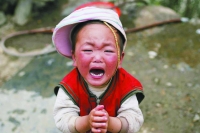
哭 kū 因痛苦或悲哀而流淚聲:哭喊。哭泣。哭訴。哭腔。啼哭。長歌當哭。 crylaugh on the wrong side of one's mouthweep 泣笑
筆畫數:10; 部首:口; 筆順編號:2512511344
Kū cry tears of pain or sorrow and sound: cry. Cry. Cry. Tearful. Crying. Long song when crying. crylaugh on the wrong side of one's mouthweep sobbing laugh stroke: 10; radicals: port; stroke order code: 2512511344
Cry kū 【Activity】 (Knowing. Oracle shape, from (xuān), said the call number; the middle of one Pi leap like the look. Original meaning: grief out loud, tearful) With the original meaning (with sound and tears) 〖cry; weep; sob〗 Cry, and cry too. - "Said the text" Cry the skies and earth. - Zhang Bo "five tombstones in mind" Qinbo wearing clothes of mourning rural views, the teacher cried. - "Thirty-three years of public Zuo Xi" Jian Shu and Shi's son, crying and send it. - "Zuo Xi male and three years" A woman who wept at the tomb of the grief. - "Tyranny is fiercer than a tiger" Another example: weeping and hissing (weeping, shouting); cry nagging (dialect. Tearfully telling); cry leap (leaped to cry. As a kind of ancient funeral rites); cry Pro (to the scene crying. the death of the emperors, often called the _set_ of all the wailing cry Pro) Condolences and sympathy to the families of the deceased memorial〗 〖condole To tired of the crying. - "Han Chuan Wang Mang." Note: "cried a man who told sad also." Another example: cry ancestors 〗 〖Sing song Xi Yong seen Mengchang Siemens to cry. - "Huainanzi view training offerings" Freak kūbízi Port〗〗 〖〖snivel: cry (with humor intended) Crying kūkū-títí 〗 〖Weepandwailendlessly crying continuously Sad face kūliǎn 〗 〖Weep [dialect]: cry 〗 〖Snivel: freak Crying soul kūlíng 〗 〖Weeporcrybeforethebier or the souls of the deceased before the coffin crying Cry kūqì 〖Weep; cry〗 have claimed to cry, weep no claim; refers sniveled They cry together Poor-mouth kūqióng 〖Verballycomplainofone'spoverty; goabouttellingpeoplehowharduponeis; complainofbeinghardup〗 to others tell their own poor, many point to the people so poor Autumn tears kūqiūfēng 〗 〖Tofeelsadwiththecomingofautumn Autumn, facing the autumn cry. Complained kūsāng 〗 〖Wailatfuneral: a funeral, the wake to mourn the people who wail loudly 〗 〖Sad: sad look See this gem he complained, see he is for the exigencies of Jinchuan Er. - "Dream of Red Mansions" Kusang Bang kūsāngbàng 〗 〖Thestickheldforsupportbyasoninfuneralprocession old at a funeral for their parents, the "dutiful son" to be hands on a "filial piety stick" to express grief is difficult for Distressed kūsangzheliǎn 〖Putonalongface; wearalongface; goaroundwithalongface〗 show annoyed face Cry kūsù 〗 〖Plaint can hear the sorrow of bitter resentment to tell sound like Lost the baby doll cry Cry kūsù 〖Complaintearfully; accuseintears〗 crying and tell or complaints Cry day Ma Lei kūtiān-mǒlèi 〗 〖Wailandwhine like crying (with disgust Italy) She frequently cried day Ma Lei Dumbfounding kūxiào-bùdé 〖Findsth.bothfunnyandannoying; beatalosswhethertocryorlaugh〗 describe both nasty and very funny Look at this program is really dumbfounding
Cry <action "(knowing. Oracle shape, from that call number; the middle of one Pi leap like the look. The original meaning of grief out loud, tearful) with the original meaning (with sound and tears) to cry, and cry too. - "Said Wen," cries the skies and earth. - Zhang Bo "five tombstones in mind," Qinbo wearing clothes of mourning rural views, the teacher cried. - "Zuo Xi public thirty years," the son of Shu and Shi Jian, cry and get it. - "Zuo Xi male and three years," a woman who wept at the tomb of the grief. - "Tyranny is fiercer than a tiger" Another example is the weeping and hissing (weeping, shouting); cry nagging (dialect. Tearfully telling); cry leap (leaped to cry. As a kind of ancient funeral rites); cry Pro (to the scene crying. of the emperors of funeral, often called the _set_ of all the wailing cry Pro) condolences and sympathy to the families of the deceased memorial to cry tears of sorrow or excitement kū tears and pain ~ sound. Burst into big ~. She moved to ~ the.
更多详解
哭 ku
部首 口 部首筆畫 03 總筆畫 10
哭 cry;laugh on the wrong side of one's mouth;weep;
泣;
笑;
哭 kū
〈動〉
(1)
(會意。甲骨文字形,從(xuān),示號呼;中間象一人擗踴的樣子。本義悲痛出聲,聲淚俱下)
(2)
同本義(有聲有淚) [cry;weep;sob]
哭,哀聲也。--《說文》
哭聲震天動地。--張博《五人墓碑記》
秦伯素服郊次,師而哭。--《左傳·僖公三十三年》
蹇叔之子與師,哭而送之。--《左傳·僖公三十二年》
有婦人哭於墓者而哀。--《苛政猛於虎》
(3)
又如哭哭嘶嘶(邊哭邊喊);哭嘮叨(方言。邊哭邊訴說);哭踴(哭泣踴跳。為古代喪禮的一種儀節);哭臨(到現場啼哭。古代帝王的喪事,往往集衆舉哀叫哭臨)
(4)
吊唁,祭奠死者慰問屬 [condole]
則哭以厭之。--《漢書·王莽傳》。註哭 者所以告哀也。”
(5)
又如哭先祖
(6)
歌 [sing]
昔雍門子以哭見於孟君。--《淮南子·覽冥訓》
哭鼻子
kū bízi
[snivel] [口]∶哭(含詼諧意)
哭哭啼啼
kūkū-títí
[weep and wail endlessly] 不間斷地哭泣
哭臉
kūliǎn
(1)
[weep] [方]∶哭 (2)
[snivel]∶哭鼻子
哭靈
kūlíng
[weep or cry before the bier] 在死者靈柩或靈位前痛哭 哭泣
kūqì
[weep;cry] 有聲稱哭,無聲稱泣;泛指小聲地哭 他們在一起哭泣
哭窮
kūqióng
[verbally complain of one's poverty;go about telling people how hard up one is;complain of being hard up] 告別差別別人人訴說自己窮,多指人裝窮
哭風
kū qiūfēng
[to feel sad with the coming of autumn] 悲,對着風哭泣。
哭喪
kūsāng
(1)
[wail at funeral]∶有喪事時,吊祭的人和守靈的人大聲號哭 (2)
[sad]∶悲哀的樣子
寶玉見他還是這樣哭喪,便知他是為金釧兒的原故。--《紅樓夢》
哭喪棒
kūsāngbàng
[the stick held for support by a son in funeral procession] 舊時在為父母喪時,孝子”手扶一根孝杖”,以示悲痛難支
哭喪着臉
kūsɑngzhe liǎn
[put on a long face;wear a long face;go around with a long face]臉上現出不高興的樣子
哭訴
kūsù
[plaint] 可以聽得見的悲哀苦怨之類的訴說聲
哭訴把娃娃玩偶丟
哭訴
kūsù
[complain tearfully;accuse in tears] 哭着訴說或控訴
哭天抹淚
kūtiān-mǒlèi
[wail and whine] 哭哭啼啼的樣子(含厭惡意)
她動不動就哭天抹淚
哭笑不得
kūxiào-bùdé
[find sth.both funny and annoying;be at a loss whether to cry or laugh] 形容既令人難受又令人笑
看這節目,真是讓人哭笑不得
哭 kū ㄎㄨˉ
因痛苦或悲哀而流淚聲~喊。~泣。~訴。~腔。啼~。長歌當~。
鄭碼jjgs,u54ed,gbkbfde
筆畫數10,部首口,筆順編號2512511344
Cry ku Radical Radical port 03 total strokes 10 strokes Cry cry; laugh on the wrong side of one's mouth; weep; Weep; Laugh; Cry kū <Action> (1) (Knowing. Oracle shape, from (xuān), said the call number; the middle of one Pi leap like the look. The original meaning of grief out loud, tearful) (2) With the original meaning (with sound and tears) [cry; weep; sob] Cry, and cry too. - "Said the text" Cry the skies and earth. - Zhang Bo "five tombstones in mind" Qinbo wearing clothes of mourning rural views, the teacher cried. - "Thirty-three years of public Zuo Xi" Jian Shu and Shi's son, crying and send it. - "Zuo Xi male and three years" A woman who wept at the tomb of the grief. - "Tyranny is fiercer than a tiger" (3) Another example is the weeping and hissing (weeping, shouting); cry nagging (dialect. Tearfully telling); cry leap (leaped to cry. As a kind of ancient funeral rites); cry Pro (to the scene crying. Ancient Emperor's funeral, often _set_ the public mourning called crying Pro) (4) Condolences and sympathy to the families of the deceased memorial [condole] To tired of the crying. - "Han Chuan Wang Mang." Note cry is a man who told Lamentable. " (5) Another example is the cry ancestors (6) Song [sing] Xi Yong seen Mengchang Siemens to cry. - "Huainanzi view training offerings" Freak kū bízi [Snivel] [port]: cry (with humor intended) Crying kūkū-títí [Weep and wail endlessly] uninterrupted cry Sad face kūliǎn (1) [Weep] [side]: cry (2) [Snivel]: freak Crying soul kūlíng [Weep or cry before the bier] or the souls of the deceased before the coffin crying Cry kūqì [Weep; cry] have claimed to cry, weep no claim; refers sniveled They cry together Poor-mouth kūqióng [Verbally complain of one's poverty; go about telling people how hard up one is; complain of being hard up] to others tell their own poor, many point to the people so poor Autumn tears kū qiūfēng [To feel sad with the coming of autumn] Autumn, facing the autumn cry. Complained kūsāng (1) [Wail at funeral]: When a funeral, to mourn the people who wake and wail aloud (2) [Sad]: sad look See this gem he complained, see he is for the exigencies of Jinchuan Er. - "Dream of Red Mansions" Kusang Bang kūsāngbàng [The stick held for support by a son in funeral procession] old at a funeral for their parents, the filial son "to be a filial hand stick" to express grief is difficult for Distressed kūsɑngzhe liǎn [Put on a long face; wear a long face; go around with a long face] show annoyed face Cry kūsù [Plaint] can hear the sorrow of bitter resentment to tell sound like Lost the baby doll cry Cry kūsù [Complain tearfully; accuse in tears] crying and tell or complaints Cry day Ma Lei kūtiān-mǒlèi [Wail and whine] like crying (with disgust Italy) She frequently cried day Ma Lei Dumbfounding kūxiào-bùdé [Find sth.both funny and annoying; be at a loss whether to cry or laugh] to describe both nasty and very funny Look at this program is really dumbfounding Cry kū ㄎ ㄨ ˉ Because of pain or sorrow and tears ~ cry sound. ~ Sob. ~ V.. ~ Cavity. Cry ~. Long song when ~. Zheng code jjgs, u54ed, gbkbfde Number of 10 strokes, radical population, Stroke No. 2512511344
Guangyun 【】 【】 【Ji Yun Yun】 ???? the Valley would be cut, audio 㲄. Wen also said】 【cry. From the Song, prison provincial sound. 【】 Crying fan said Xu Kai, so from the two. Said to cry loudly, softly said, sobbing with tears. 【】 Sorrow voice jade articles. Li Tan Gong】 【songs on here and cry in Sri Lanka.
说文解字
編號:976 Number: 976 哀聲也。從吅,獄省聲。凡哭之屬皆從哭。 苦屋切
Cry too. From the Song, prison provincial sound. Where are all the crying from crying. Hard house cut