《渔父》
和平岛
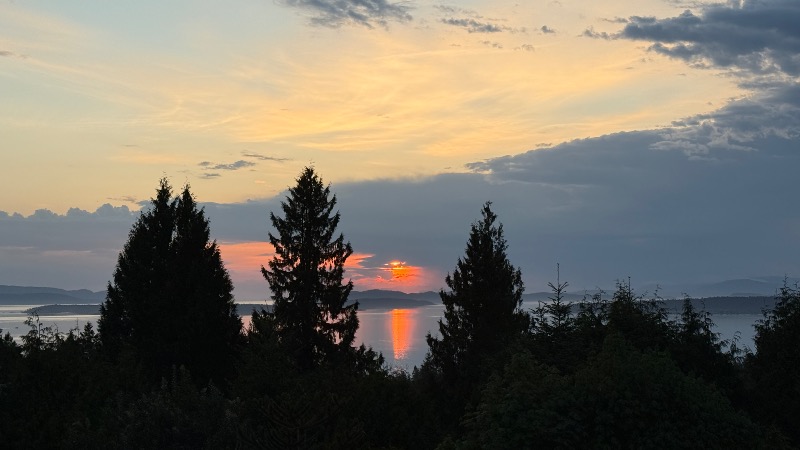
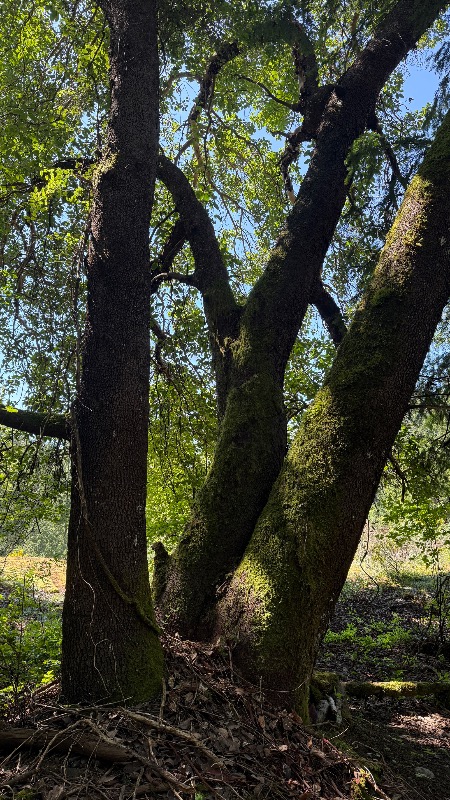
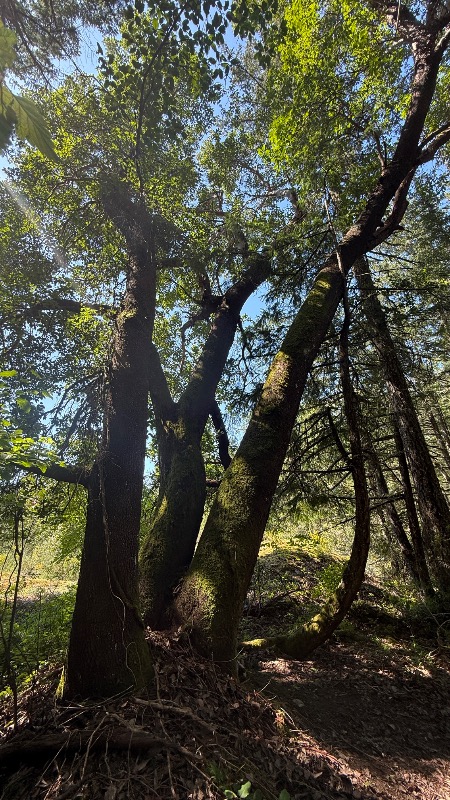
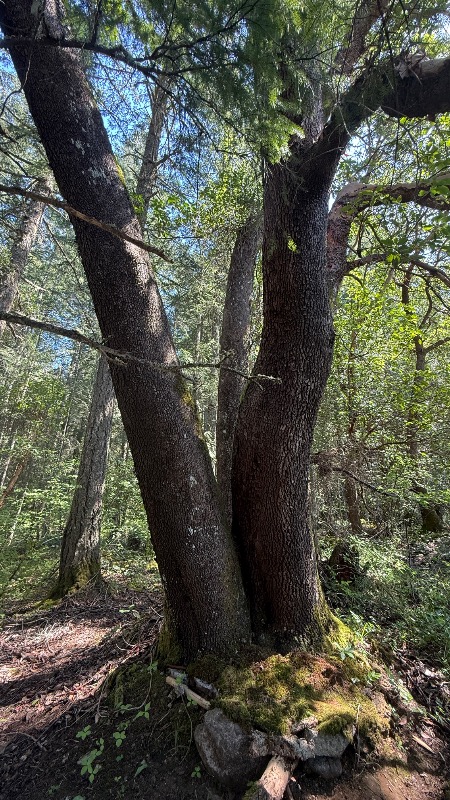
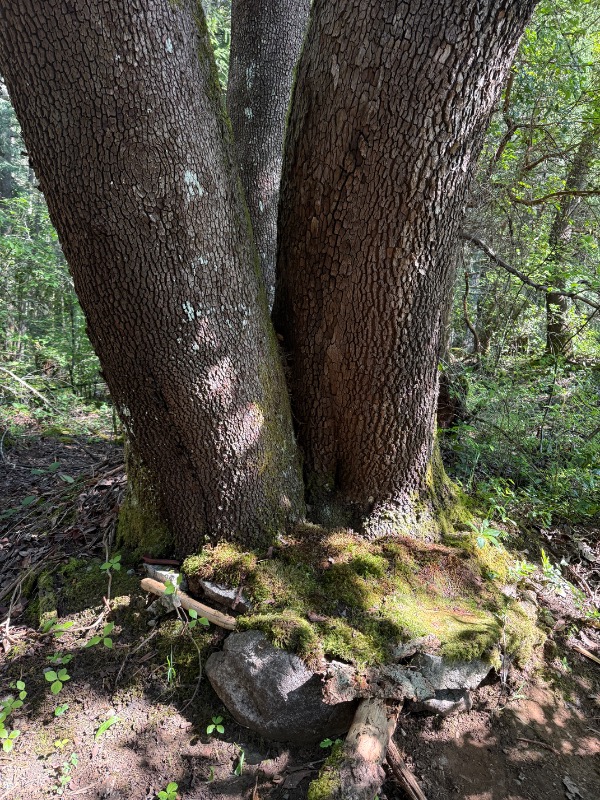
在红皮神树下
静坐沉思——
树分三株,看着
一鼎三足
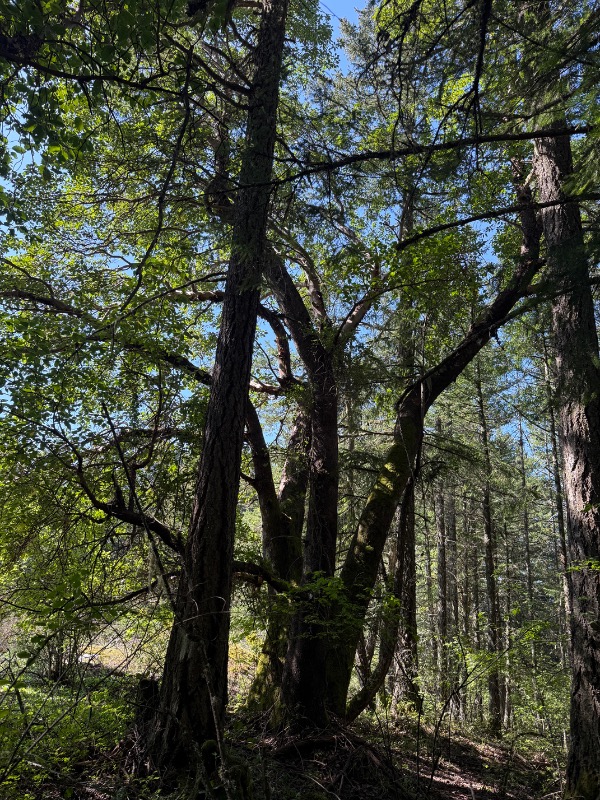
倒立蓝天
鼎内,苦思冥想,七天七夜,子曰:三生万物
于是乎,蓝天当纸,空间折叠,构思宏伟如斯之蓝图——
从1、3、9到27的几何序列,倒立分形的创世纪录
钟鼎山巅的红皮神树
东方、西方、土著,三足鼎立
生长出第二层——
东方之鼎:道家、儒家、佛教,代表自然、家国、内心的平衡
西方之鼎:宗教、科学、艺术,代表灵魂、理性、感性的冲突
土著之鼎:独木舟、三文鱼、图腾,代表地球母亲的慈爱、乳汁、信仰的救赎
至尊九鼎,高悬蓝天的第三层——
头戴鹰羽战帽,这位睿智的族长
化身救世的避难所——
顶天立地的钟鼎山啊
拥抱您,来自长江的龙舟
欢迎您,来自楚地的诗人
请您用最华丽庄严的楚辞
用楚大巫通鬼娱神的巫语
编织出大紫、火红、深蓝、雪白、金黄的花环
给钟鼎山加冕
给一排排硬头钢鳟的英勇武士,披戴盔甲龙鳞
“沧浪之水清兮,可以濯吾缨;沧浪之水浊兮,可以濯吾足。”
我从树下站起,莞尔而笑,鼓枻而去
头顶,身后
漫天的一根根羽毛
化作渡鸦,不死鸟,凤凰,金龙
消失在地平线,造物主、变形金刚,偷走的太阳的火光里
The Fisherman
By He Ping Dao (Peace Island)
Beneath the Arbutus, the sacred tree of red skin,
I sit in silent meditation—
The trunk splits into three, watching
A tripod of three legs
Standing inverted in the blue sky.
Inside the cauldron, I wrestle with thoughts for seven days and nights,
As the Master said: The One gives birth to Three, and Three to ten thousand things.
Thus, taking the sky as my paper and folding the space,
I sketch a blueprint as grand as this—
A geometric sequence from 1, 3, 9 to 27,
A Genesis recorded in inverted fractals.
The Arbutus atop the peak of Mount Zhongding,
Where East, West, and Indigenous cultures stand in tri-fold balance.
Sprouting the second tier—
The Cauldron of the East: Taoism, Confucianism, Buddhism,
Representing the equilibrium of Nature, Nation, and the Inner Heart.
The Cauldron of the West: Religion, Science, Art,
Representing the conflict of Soul, Reason, and Sensibility.
The Cauldron of the Indigenous: Canoes, Salmon, Totems,
Representing Mother Earth’s mercy, her milk, and the redemption of faith.
The Supreme Nine Cauldrons, suspended on the third tier of the blue—
Crowned with the Eagle-Feather War Bonnet, that wise Patriarch
Transforms into a refuge for the salvation of the world—
O, Mount Zhongding, standing between heaven and earth!
Embrace the dragon boat from the Yangtze River,
Welcome the poet from the ancient land of Chu.
I implore you, with the most magnificent and solemn Chu Ci,
With the shamanic chants of the High Priest that summon ghosts and delight gods,
Weave a garland of Royal Purple, Fiery Red, Deep Blue, Snow White, and Golden Yellow,
To crown Mount Zhongding,
To clothe the brave warriors—rows of Steelhead trout—in armor and dragon scales.
"When the waters of the Canglang are clear, they can wash my tassels;
When the waters of the Canglang are turbid, they can wash my feet."
I rise from beneath the tree, with a faint smile,
And row away, my oar beating against the current.
Above my head, behind my back,
The vast sky filled with drifting feathers
Transform into the Raven, the Phoenix, the Fenghuang, and the Golden Dragon,
Vanishing into the horizon,
Into the Creator, the Transformers, and the stolen fire of the sun.
Notes:
1. The Fisherman (渔父): The title refers to a famous dialogue in the Chu Ci (Songs of Chu) attributed to the ancient Chinese poet Qu Yuan (c. 340–278 BC). In the original text, a fisherman advises the exiled, idealistic poet to adapt to the world’s changes rather than suffer for his principles. Here, the persona is reimagined as an observer of global and cosmic evolution.
2. Arbutus (红皮神树): Known as the Pacific Madrone (Arbutus menziesii). Its distinctive peeling red bark and twisting limbs make it a sacred landmark on Vancouver Island. In the poem, it serves as the physical and spiritual anchor for meditation.
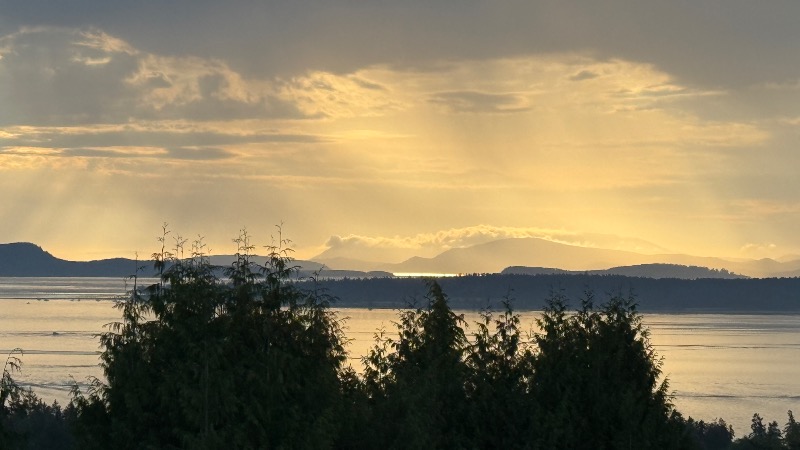
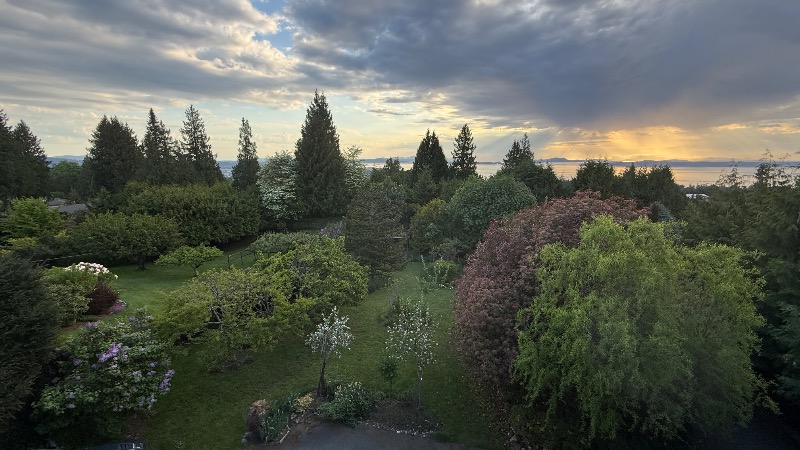
3. Mount Zhongding (钟鼎山): The poet’s personal designation for John Dean Provincial Park (ȽÁU,WELṈEW̱) in Saanich, BC. The name "Zhongding" (Bells and Cauldrons) evokes ancient Chinese ritual bronzes, symbolizing cultural weight and historical resonance.
4. The Inverted Tripod (倒立一鼎): A Ding (鼎) is an ancient Chinese three-legged cauldron symbolizing state power and social order. By presenting it "inverted" in the blue sky, the poem suggests a deconstruction of traditional hierarchies and a shift toward a cosmic, fluid perspective.
5. "The One gives birth to Three..." (三生万物): A foundational quote from Laozi’s Tao Te Ching. It describes the process of cosmic creation. The poem uses this to trigger a geometric expansion (1 to 3 to 9 to 27), reflecting the complexity of modern civilization.
6. The Three Tiers (三层塔):
- Eastern Cauldron: Represents the "Three Teachings" (Confucianism, Taoism, Buddhism) that shaped Chinese social and spiritual life.
- Western Cauldron: Represents the pillars of Post-Renaissance Western thought—Science, Religion, and Art.
- Indigenous Cauldron: Honors the Coast Salish people. The inclusion of the canoe, the salmon, and the totem recognizes the land's original stewards and a spirituality rooted in ecological reciprocity ("Mother Earth’s milk").
7. Eagle-Feather War Bonnet: A reference to the regalia of Indigenous leaders, symbolizing wisdom and protection. Here, the "至尊" (Supreme) authority of the Nine Cauldrons is transformed into a figure of a "Patriarch" or "Refuge," softening rigid power into spiritual guardianship.
8. Dragon Boat and Chu Ci (龙舟与楚辞): Dragon boat racing originated in the ritual search for the body of Qu Yuan. By bringing the "Dragon Boat from the Yangtze" to the "Mount Zhongding" of Canada, the poet explores the theme of cultural displacement and synthesis.
9. Shamanic Chants (大巫巫语): Refers to the Jiuge (Nine Songs) and the shamanistic roots of the state of Chu, known for its vivid colors and supernatural imagery.
10. Steelhead (硬头钢鳟): A species of trout native to the Pacific Northwest. By crowning them with "dragon scales," the poet blends local biology with Chinese mythical iconography.
11. "Canglang Waters" (沧浪之水): A direct quote from the Fisherman’s song in the Chu Ci: "When the Canglang River is clear, I can wash my hat-strings; when it is muddy, I can wash my feet." It signifies a state of "positive awakening" (正觉)—living in harmony with the world’s reality without being tainted by it.
12. The Four Divine Birds (渡鸦、不死鸟、凤凰、金龙):
- Raven: The creator and light-bringer in PNW Indigenous mythology.
- Phoenix: The Western symbol of rebirth from fire.
- Fenghuang: The Eastern symbol of grace and virtue.
- Golden Dragon: The ultimate symbol of vitality and divinity.
13. Transformers and Stolen Fire (变形金刚与偷走的太阳):
A sudden shift into modern pop culture and science fiction. "Transformers" represent the pinnacle of mechanical/digital "Science and Art." "Stolen fire" links the Prometheus myth and the Raven myth to our modern consumption of energy, suggesting that all civilization is a fleeting spark taken from the cosmic sun.
20260502 17:34:07
科学的诗歌👍🏻
0 回复 查看 0 回复